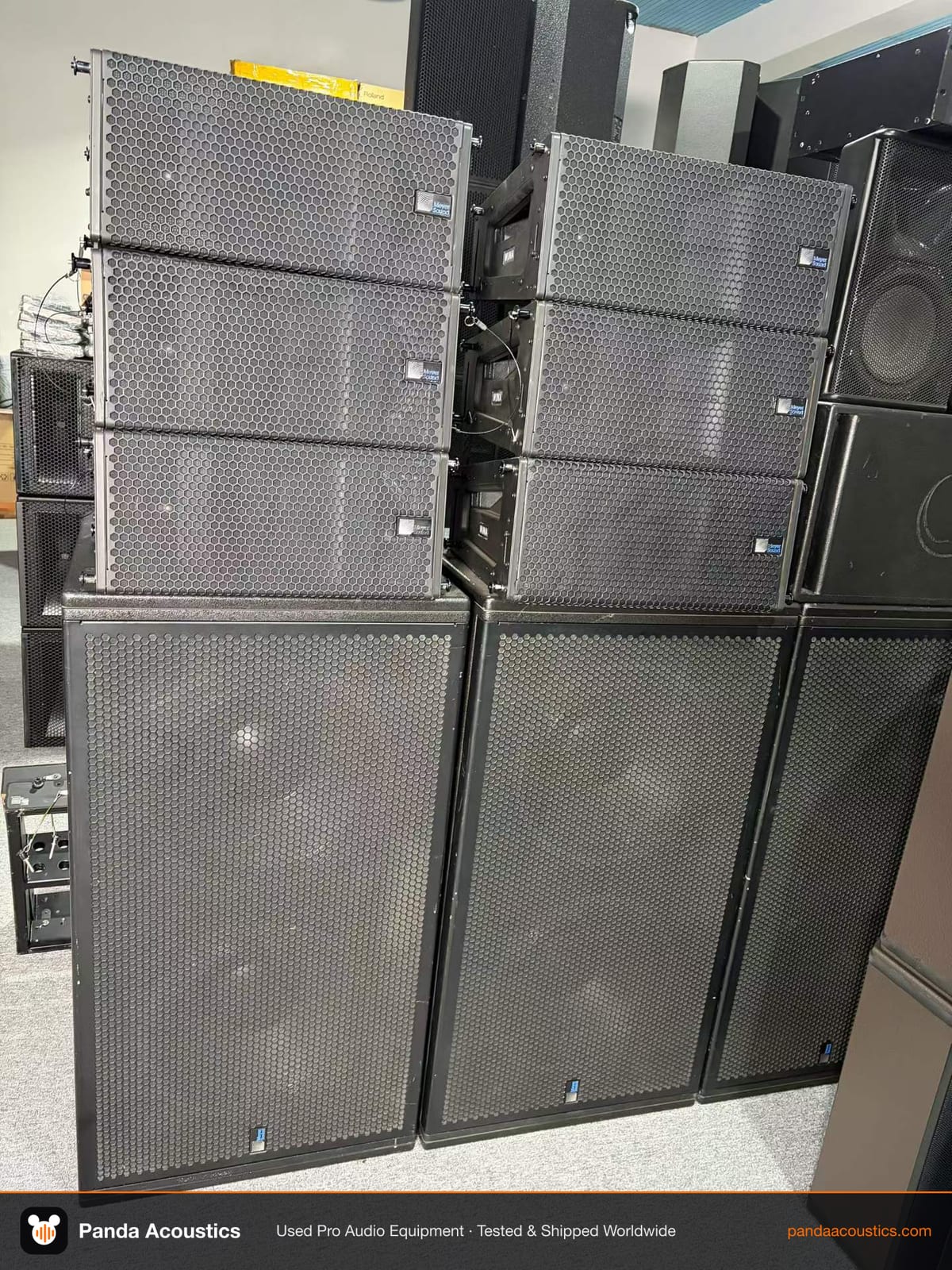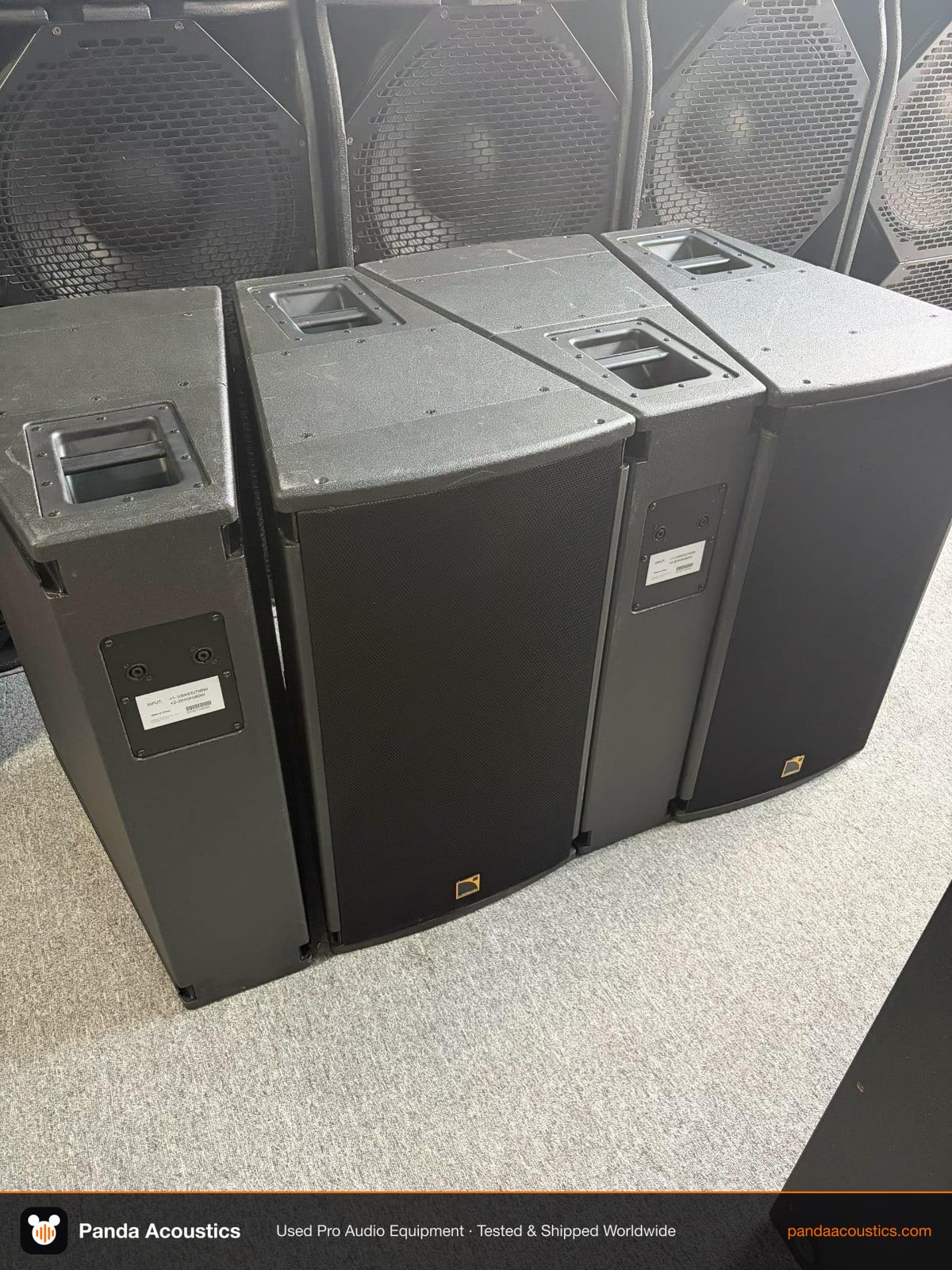
If you are searching for a used line array for sale, you are likely equipping a KTV chain, a touring company, or a mid-sized venue. You care about what the boxes have been through, not glossy brochures. This guide covers how to evaluate used line array modules, what to ask sellers, and how to avoid the most common traps when buying in volume.
Start with the enclosure and rigging hardware
The first thing to inspect on any used line array module is the physical structure. Cracks, deep gouges, or swollen wood indicate water damage or heavy impact. Check the rigging points, fly bars, and quick-release pins for wear or bending. A module that has been dropped or improperly flown may have deformed metal parts that compromise safety and array alignment. Ask the seller for close-up photos of every rigging component, and if possible, a short video showing the hardware in operation.
For Meyer Sound MINA modules, pay attention to the proprietary rigging system. Replacement parts can be expensive and slow to source, so confirm that all original pins and links are present. If any are missing, factor that into your offer. You can read a dedicated guide on the Meyer Sound MINA used buying process for model-specific details.
Test the drivers and electronics
Used line arrays often have drivers that have been replaced or reconed. Ask the seller to provide impedance readings for each driver and a sweep test from low to high frequency. Any rubbing, distortion, or significant deviation between modules is a red flag. If the modules are self-powered, like the Meyer Sound MINA, test each amplifier channel and check for error logs or fault history. For passive models, inspect the crossover and wiring for signs of overheating or amateur repairs.
Do not rely on a quick “it works” claim. Request a video of the actual unit playing pink noise or a known music track at moderate level. Better yet, arrange a live inspection or use a third-party inspector if the seller is overseas. Our line array inspection checklist lists the exact steps to follow.
Verify model authenticity and parts availability
Counterfeit or misrepresented line array modules exist, especially for popular brands. Check serial numbers against the manufacturer’s database where possible. For Meyer Sound, the MINA has a distinct label and serial plate; ensure it matches the seller’s description. Also research parts availability: some older models may have discontinued drivers or DSP boards, making long-term maintenance difficult. If you are buying a large quantity, ask the seller about the history of the units—whether they came from a single rental fleet or were mixed from different sources.
Consider the full system, not just the boxes
A line array is only as good as the subwoofers, amplifiers, and processing that support it. If you are building a complete system, look for used subwoofers that match the array’s output and coverage. The L-Acoustics KS28 is a common pairing for high-output applications, and our KS28 used buyer guide explains what to check. Also confirm that the seller can provide or recommend compatible amplification and processing, or that you have the in-house expertise to integrate the system safely.
Buying in volume: logistics and import
When purchasing multiple modules from abroad, factor in shipping, customs, and handling. Used audio equipment is heavy and fragile; proper crating is essential. Ask the seller how they pack arrays—original flight cases are ideal, but not always available. Confirm voltage requirements for powered modules; the Meyer Sound MINA is available in different voltage versions, so make sure the units match your region. For a broader overview of importing used gear, see our importing used audio equipment guide.
Finally, request a written condition report and agree on a testing period before final acceptance. Reputable sellers will stand behind their description. If a seller refuses basic testing or documentation, walk away. For more general advice on buying used line arrays, including price-per-box considerations, visit our used line array price per box guide.