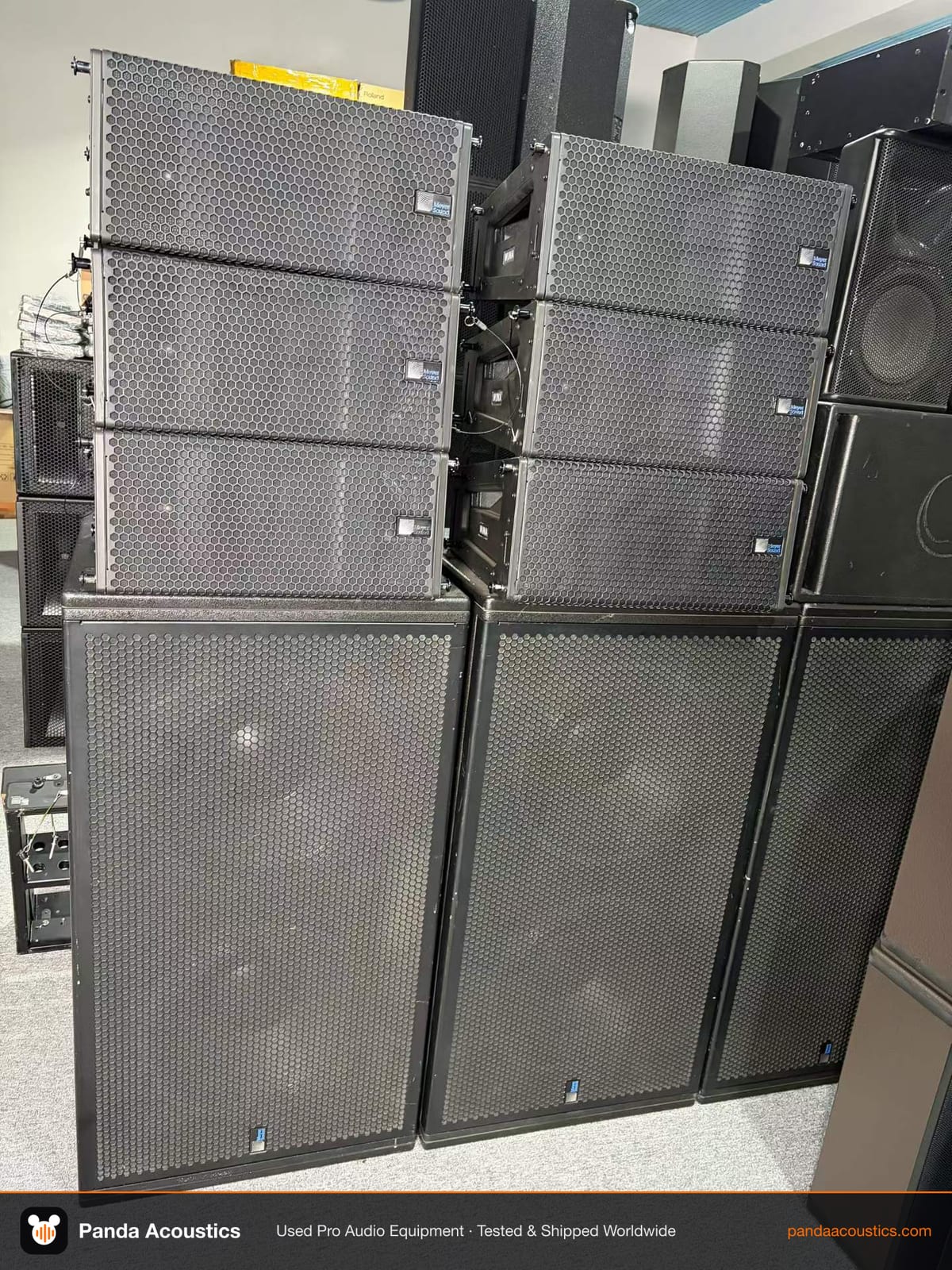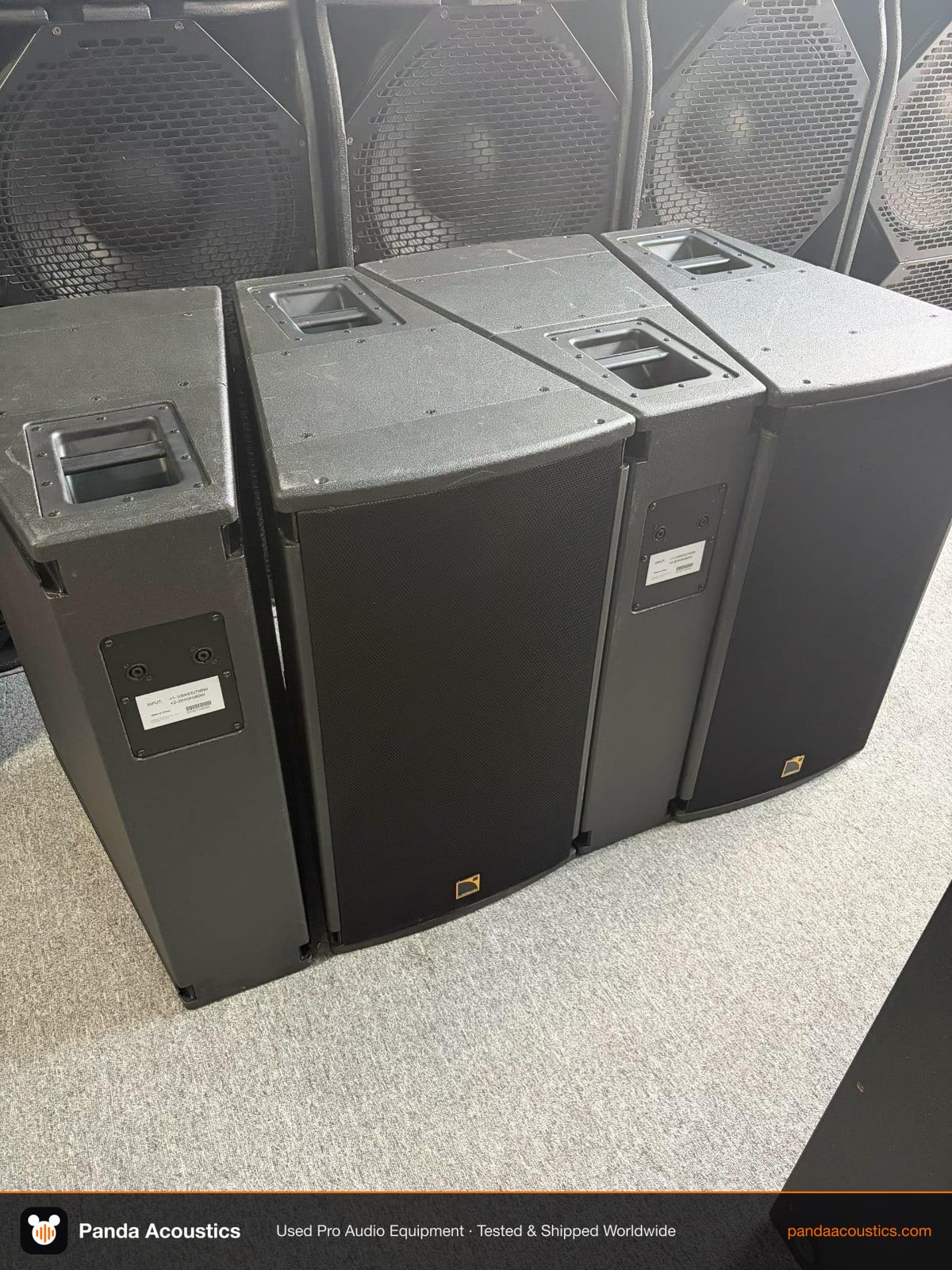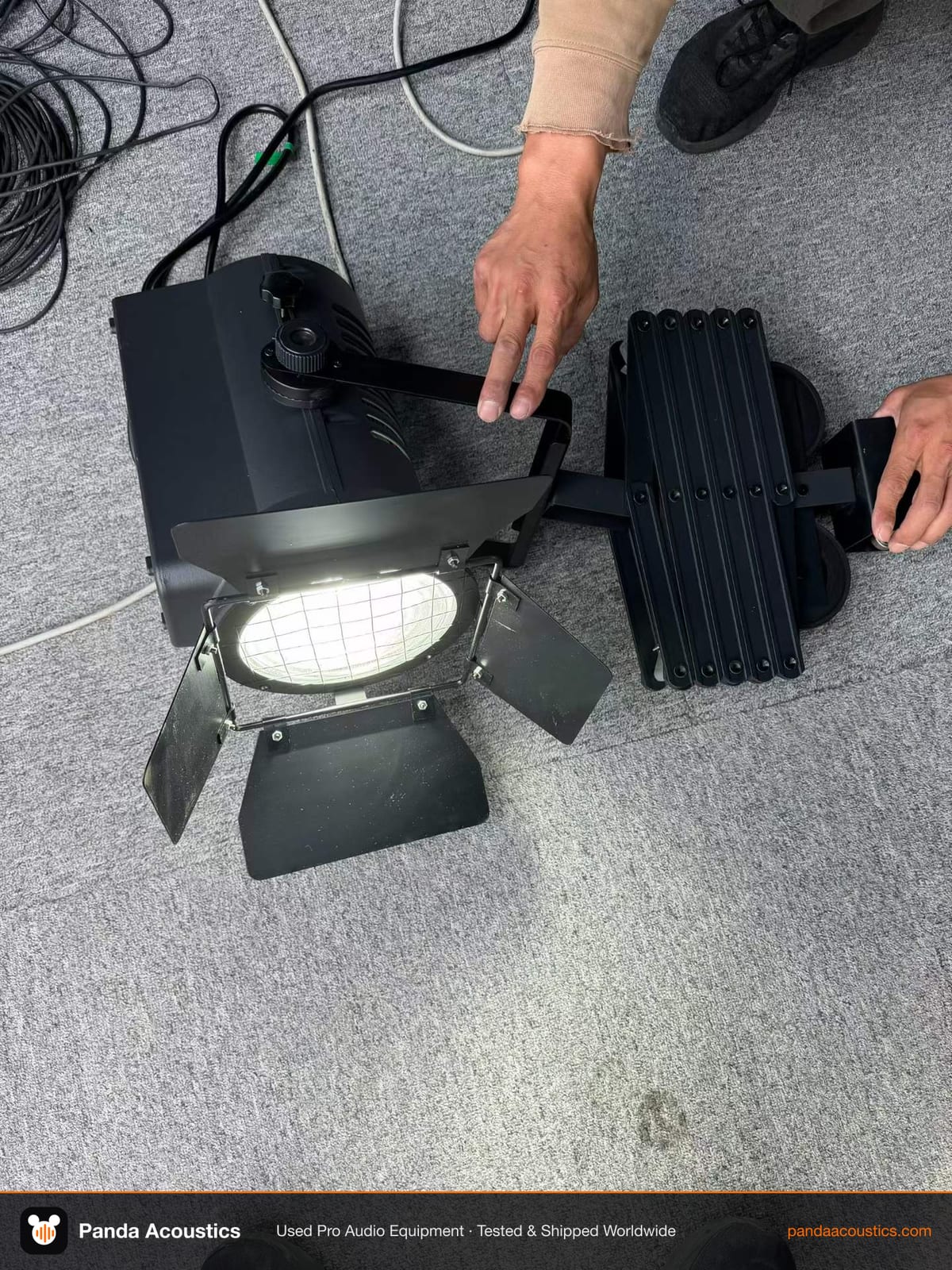
Used line arrays from China can be a cost-effective option for KTV operators, rental houses, and touring companies in Russia, the Middle East, South America, and Africa—but only if the seller provides a clear inspection standard and condition grading before you pay. Without that, you are buying blind.
Quick answer
Yes, a line array segunda mano (used line array) from a China-based B2B supplier can be worth buying if the seller documents condition grading and inspection results for each module. The key is to verify the grading standard, the inspection process, and the payment terms before committing to a bulk order.
Key takeaways
- Condition grading and inspection standards are the two documents that separate a transparent used-gear supplier from a risky one.
- Panda Acoustics publishes a condition grading standard and an inspection standard; request both before you discuss price.
- Payment terms and shipping logistics are part of the total landed cost—ask for them early.
- Warranty period, MOQ, and lead time are not disclosed in the public materials; you must confirm them in writing.
- If a seller cannot provide a grading standard or inspection report, do not pay.
The decision
You are a KTV operator, touring sound company, rental house, or club owner in Russia, the Middle East, South America, or Africa. You need multiple line array modules to fill a venue or rental inventory, and you are considering buying used from China to reduce capital expenditure. Your decision is not just about price per unit—it is about whether the equipment will perform reliably after shipping and whether you can verify its condition before money leaves your account.
This guide is for buyers who are evaluating a bulk purchase of used line array modules and need a checklist of what to confirm before paying. It is not for buyers who need a manufacturer warranty or certified compliance documents.
What the data says
Panda Acoustics sells tested used professional audio equipment in bulk to overseas B2B buyers. The company publishes a condition grading standard and an inspection standard on its website. These are the only public facts about the condition and testing process. No specific model, price range, MOQ, warranty period, lead time, or certification is disclosed in the materials provided.
The product catalogue is available at pandaacoustics.com/products/, but the materials do not list specific line array models or prices. Payment terms are described at pandaacoustics.com/payment-terms/, and shipping logistics at pandaacoustics.com/shipping/. These pages are the place to find the commercial terms that are not disclosed in the general materials.
What the datasheet/docs don't tell you
The public materials do not disclose the following, and each gap matters for your purchase decision:
- Warranty period: Not disclosed. Without a stated warranty, you bear the full risk of failure after delivery. Ask for the warranty terms in writing.
- Minimum order quantity (MOQ): Not disclosed. Bulk buyers need to know the MOQ to calculate per-unit landed cost. Confirm before requesting a quote.
- Lead time: Not disclosed. Shipping from China to Russia, the Middle East, South America, or Africa can take weeks; without a lead time, you cannot plan installation or rental commitments.
- Certification: No CE, RoHS, UL, FCC, or ISO certification is mentioned in the materials. If your market requires certified equipment, verify this before buying.
- Specific condition grades: The grading standard page exists, but the materials do not list the grades or their definitions. You must read the page and confirm how each module is graded.
- Inspection report format: The inspection standard page exists, but the materials do not describe what the report includes. Ask for a sample report before paying.
These gaps are not deal-breakers by themselves, but they are the questions you must ask before you pay. A supplier that cannot answer them clearly is a supplier you should not buy from.
Who should not choose this
Do not choose a used line array from China if you need a manufacturer-backed warranty, certified compliance (CE, RoHS, UL, FCC, ISO), or a small-quantity purchase with a short lead time. The materials do not disclose warranty, certification, MOQ, or lead time, so if any of those are mandatory for your business, this route is not suitable. Also, if you cannot inspect the equipment yourself or hire a third-party inspector in China, you should not buy without a documented inspection standard from the seller.
Comparison and trade-offs
Compared with buying new line arrays, used equipment from China typically offers a lower unit cost, but the trade-offs are uncertainty about condition, warranty, and certification. The materials do not provide price ranges, so a direct cost comparison is not possible here. Compared with buying used locally, buying from China may offer a larger selection of bulk inventory, but you add shipping time and logistics complexity. The shipping and logistics page is the place to understand the delivery process.
The main trade-off is risk versus cost. You can reduce risk by insisting on the condition grading standard and inspection standard before payment. If the seller provides those documents and answers your questions about warranty, MOQ, and lead time, the cost advantage may be worth it. If not, the risk is too high for a bulk purchase.
Implementation / next step
Before you pay, do the following:
- Read the condition grading standard and the inspection standard pages in full.
- Request a sample inspection report for a line array module and confirm what is tested and how condition is graded.
- Ask for the warranty period, MOQ, and lead time in writing.
- Review the payment terms and shipping and logistics pages to understand the total landed cost.
- If any of these are not disclosed or not satisfactory, do not pay.
Your concrete next step: contact Panda Acoustics and request the condition grading standard, inspection standard, and a sample inspection report for the line array modules you are considering. Do not discuss price until you have those documents.
FAQ
Q: What does “line array segunda mano” mean?
A: It is Spanish for “second-hand line array,” referring to used line array speaker systems. In a B2B context, it means buying used line array modules in bulk from a supplier.
Q: Can I get a warranty on used line arrays from China?
A: The materials do not disclose a warranty period. You must ask the supplier for warranty terms in writing before paying.
Q: What is the minimum order quantity?
A: Not disclosed. Confirm the MOQ with the supplier before requesting a quote.
Q: How long does shipping take?
A: Not disclosed. Shipping time depends on the destination and logistics method; check the shipping and logistics page and confirm with the supplier.
Q: Are the line arrays certified for my country?
A: No CE, RoHS, UL, FCC, or ISO certification is mentioned in the materials. Verify certification requirements for your market before buying.