A line array is a tool for a specific problem: getting even, controlled sound to a large audience from a position where a point-source box would either be too loud at the front or too quiet at the back. If you are buying used line array stock in volume for rental or venue work, the first question is not which brand — it is which occasions you will actually deploy it on. Get that wrong and you buy boxes that sit in the warehouse while your two-way inventory does the paying work.
This article walks through the occasions where a line array earns its cost, the ones where it does not, and the condition checks that matter when you are inspecting tested used modules before a bulk purchase.
Occasions where a line array is the correct choice
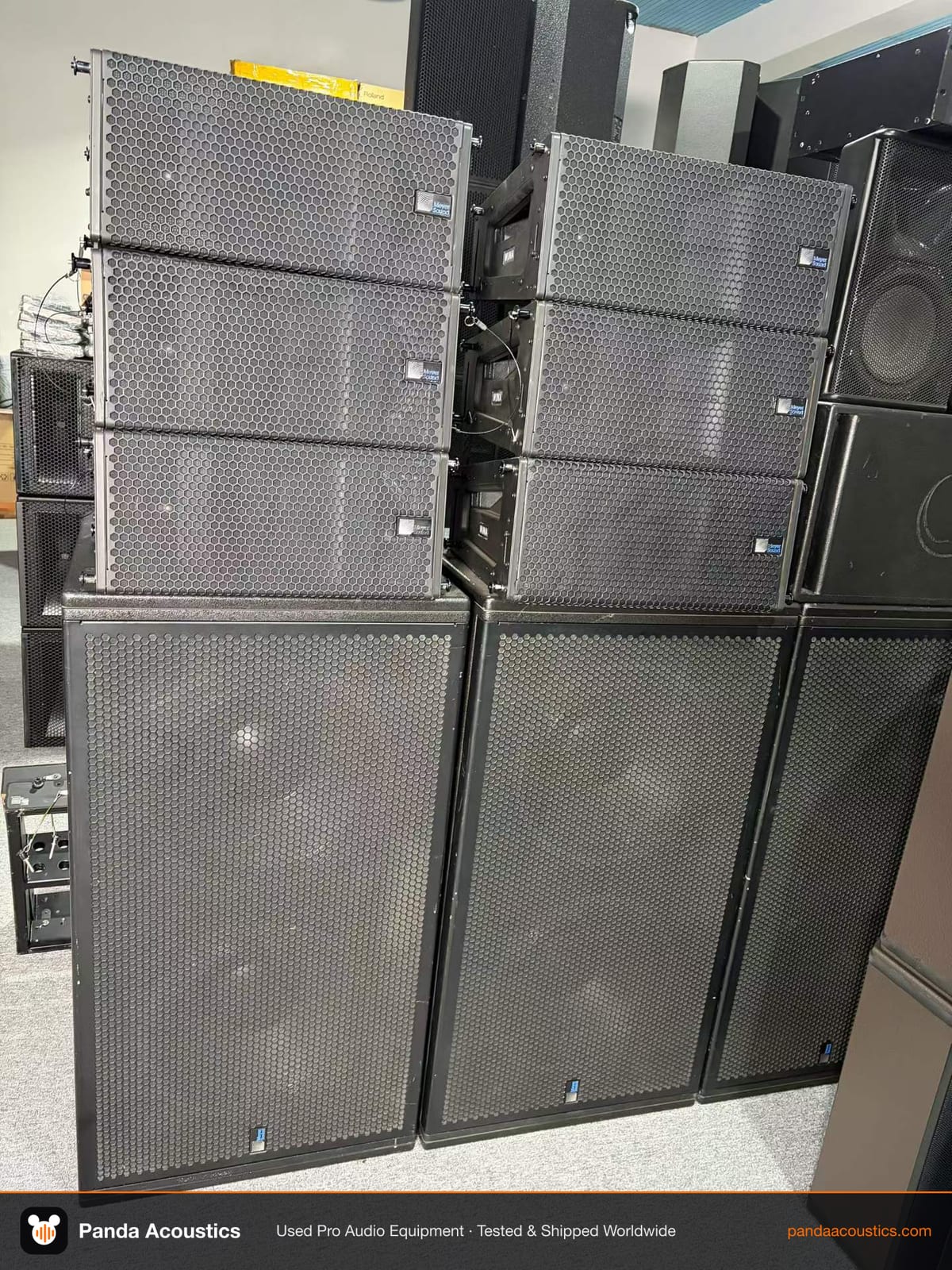
Outdoor and large-hall concerts, touring productions, and multi-day festivals are the classic cases. The audience is deep rather than wide, the throw distance is long, and you need vertical pattern control to keep energy off the front rows and away from reflective surfaces. A properly rigged array of modules like the Meyer Sound MINA lets you aim energy at the back of the crowd while keeping the near field manageable.
Large club and live-house installs also qualify when the room is long and narrow with a raised stage, or when the ceiling height allows proper trim and splay. In those rooms a line array solves coverage problems that a cluster of point-source boxes cannot solve without heavy delays.
Corporate and arena events with speech plus music programming benefit too, provided you can fly the array at the right height. If you cannot get the box above head height with clear line of sight to the audience plane, the advantage largely disappears.
Occasions where a line array is the wrong buy
Low-ceiling KTV rooms, small bars, and intimate clubs are point-source territory. A line array needs vertical space to work; hung low over a short room, you get comb filtering, uneven coverage, and a rig that costs more to transport and rig than it returns. For those rooms, a two-way full-range cabinet such as the Two-Way Full-Range PA Speaker is the practical choice, and a dedicated KTV system layout is better still — see our KTV sound system overview.
Weddings, conference breakout rooms, and small corporate stages rarely justify the rigging labour. If the audience is under a few hundred people and the room is wider than it is deep, a line array is usually the more expensive way to solve the problem.
One more caution: if your market is rental companies that mostly do mixed small events, a large line array inventory can sit idle. Buy to your booking calendar, not to the brochure.
Matching the array to the room and the subwoofer
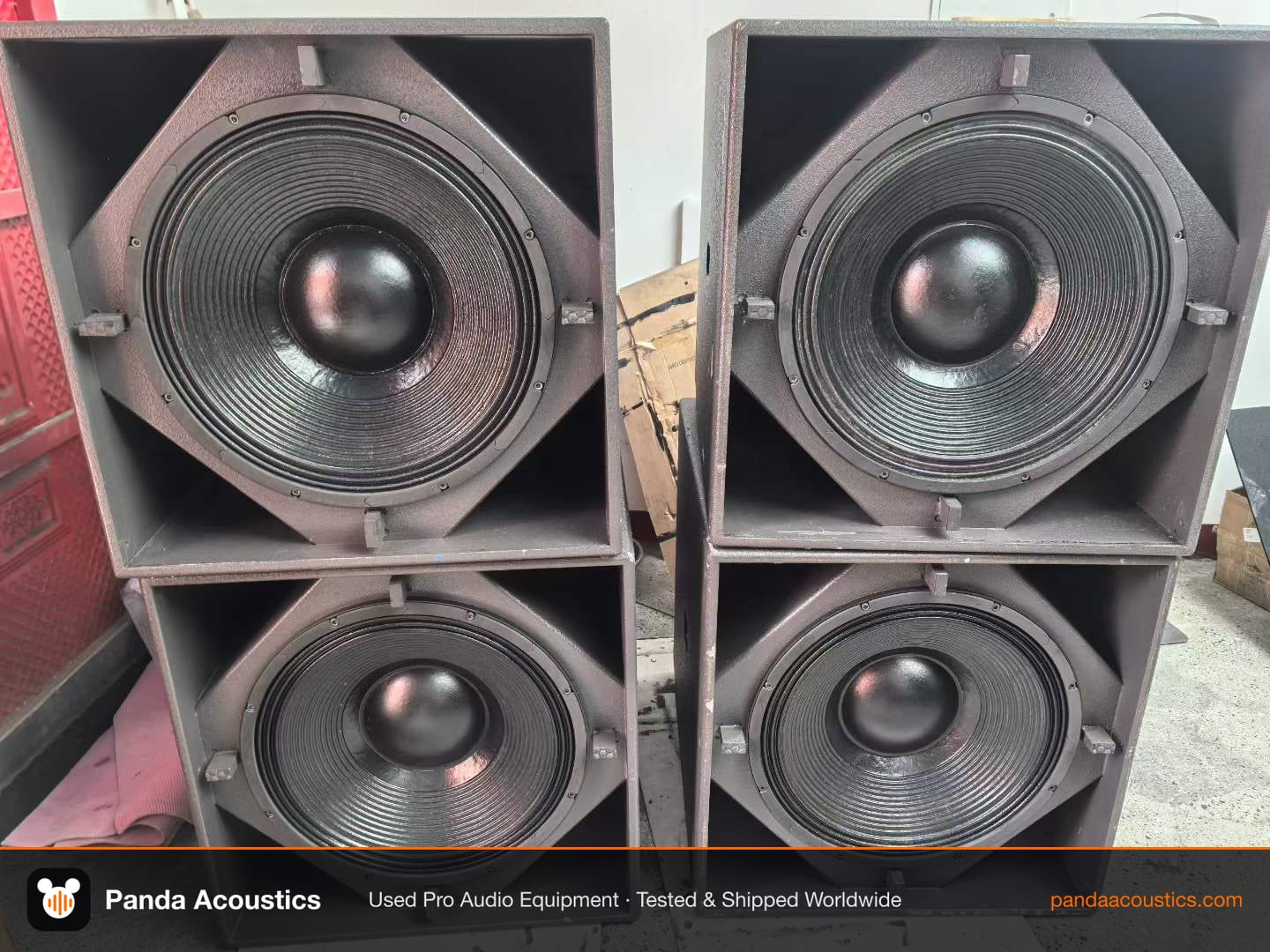
Array length, splay angle, and trim height determine coverage more than the model name does. Decide how many modules per side your typical rooms need, then confirm your amp and processing can drive that count. A line array without adequate low-frequency support sounds thin, so plan the subwoofer package alongside it. The L-Acoustics KS28 is a common pairing for larger rooms and outdoor stages; smaller rooms may only need a modest sub count, which changes your total budget considerably.
Do not forget the control side. A used digital console with enough output buses to feed array processing, monitors, and subs is part of the occasion equation. The Soundcraft Vi1 and the Allen & Heath SQ-6 both appear in rental inventories for this reason. Our comparison of the SQ-6 versus Vi1 covers the practical differences.
What to inspect on used line array modules
Used line array buying is condition buying. Work through a fixed checklist rather than trusting a listing photo. Our used line array inspection checklist is a good template; the short version follows.
Check the rigging hardware first: bent frame pins, worn quick-release fittings, cracked fly bars, and any deformation at the cabinet attachment points. Rigging is a safety item, not a cosmetic one, and replacement hardware availability varies by model.
Then inspect the cabinets for water damage, delamination, and repaired cracks, especially on touring stock that has seen outdoor work. Look at the waveguide and horn throats for debris or impact damage. Test every driver at low and moderate level and listen for rub, rattle, and level mismatch between adjacent boxes.
Ask for the history: touring, install, or mixed. Install stock is often cleaner; touring stock may have better-documented service. Either can be a good buy if the inspection supports it. Confirm that processing presets and amplifier compatibility are still supported for the model you are buying, because a bargain box with no supported processing is not a bargain.
Buying in volume without overcommitting
For volume buyers in Russia, the Middle East, South America, and Africa, the practical approach is to buy matched groups rather than a mixed lot. Matched modules from the same production run behave predictably together, which matters when you are splaying them. Mixed lots are cheaper but require more testing and often end up as spares.
Ask for test documentation per box, not per lot. A supplier who can show per-unit test results is telling you something about how the stock was handled. Read our importing used audio equipment guide before you commit, and check the used line array system buying guide for lot-level questions.
Finally, buy against a calendar. If you can name the events where the array will deploy in the next twelve months, the purchase is grounded. If you cannot, buy subwoofers, consoles, or point-source boxes that serve more occasions instead.