If you are searching for HH speakers used for sale, you are most likely buying subwoofer cabinets in volume for a KTV room build, a bar install, or a touring rack. HH is a UK-origin brand with a long history in bass enclosures, and used HH sub cabinets turn up regularly on the secondary market. The problem is that most listings tell you almost nothing useful. This guide is about what to inspect and what to ask before you send money.
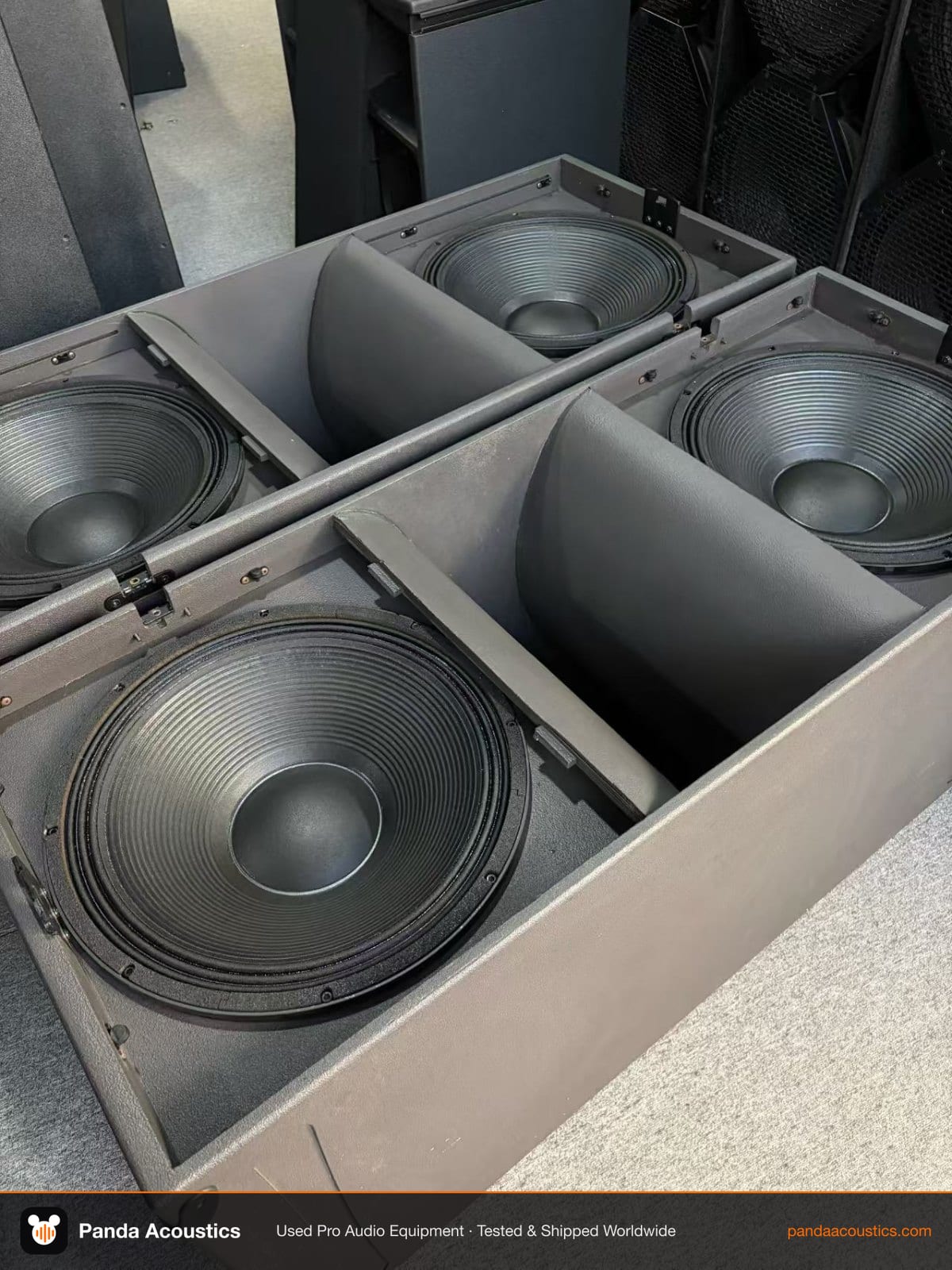
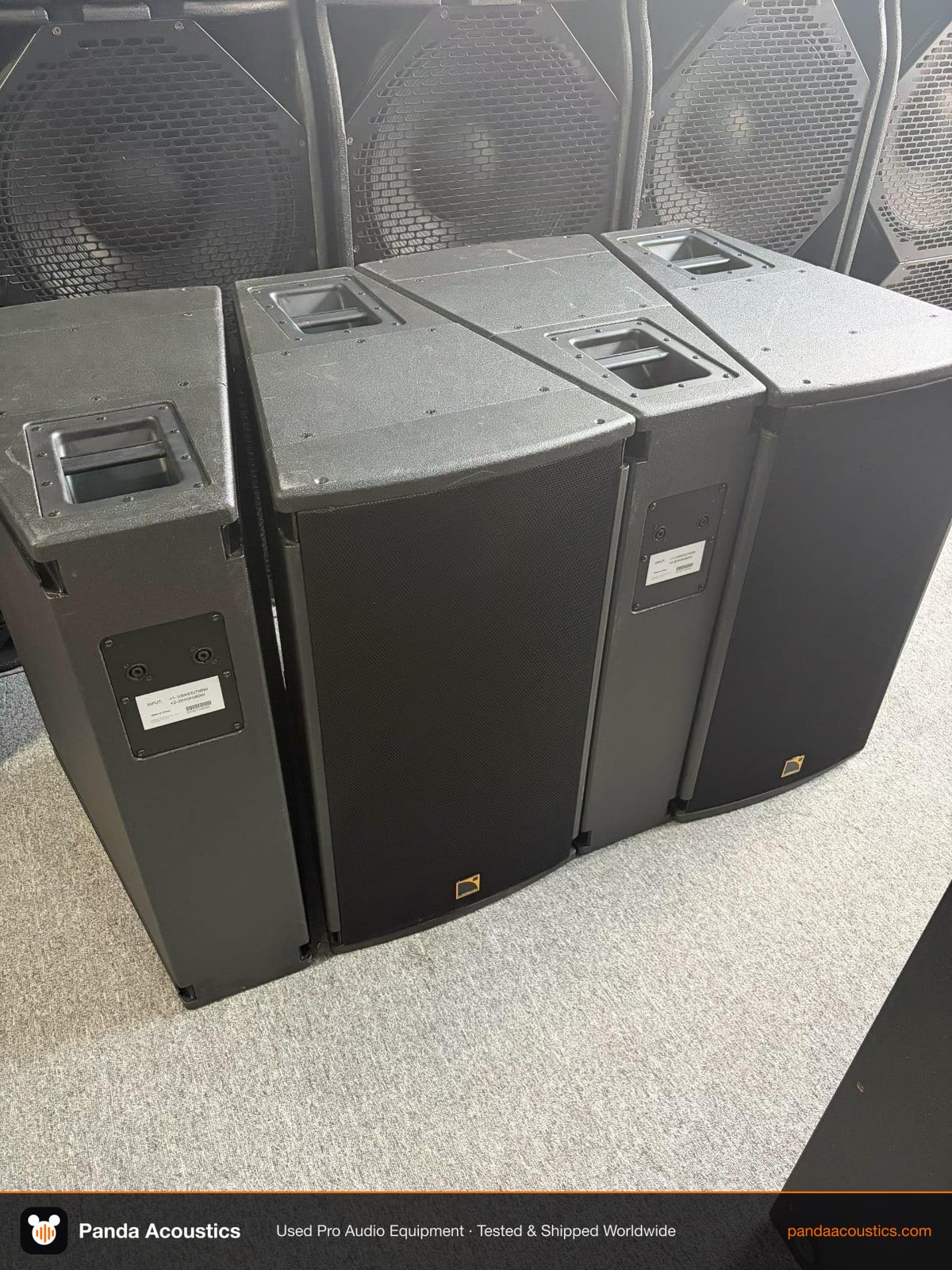
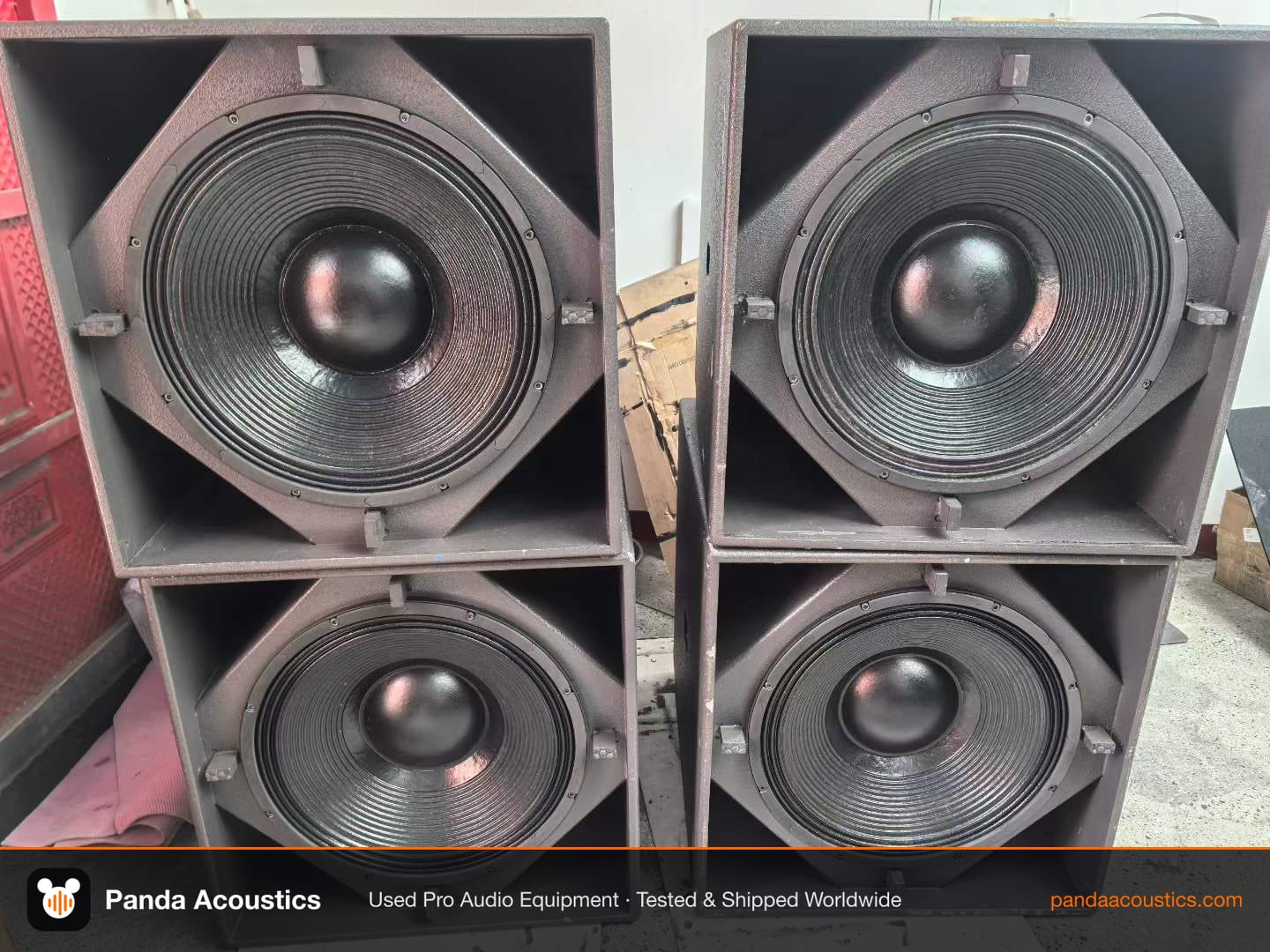
The single most relevant unit in our inventory is the HH Speakers Subwoofer Cabinet (Set of 4). Sets like this are how most operators actually buy — four or eight boxes at a time, not one. Buying as a set also makes it easier to judge whether the cabinets have lived the same life: same venue, same amp, same wear pattern.
Know which HH subwoofer you are actually buying
HH has produced many bass cabinet designs over the years, and the model name on the back plate matters more than the badge on the grille. Before you agree to anything, get photos of the rear label, the connector panel, and the driver from the front with the grille off. You want the impedance, power handling, and driver model confirmed from the label, not from the seller's description.
Ask whether the cabinet is passive or has any internal processing. Most older HH sub cabinets are straightforward passive boxes, which is good for serviceability — a failed driver can be swapped without dealing with a proprietary module. If a seller cannot tell you whether the box is passive, that is already a warning sign about how well they know the stock.
Cabinet condition is the first filter
Subwoofers live hard lives. They sit on dirty club floors, get wheeled over thresholds, and absorb moisture in storage. Check these points on photos or in person:
Corners and edges: look for crush damage and split joints. Cosmetic scuffs are fine; a cabinet that has been dropped on a corner may have a compromised baffle seal. Grille and fixings: bent grilles are common and cheap to replace, but missing screws and stripped inserts suggest rough handling. Ports: check for blockage, foam deterioration, and any sign that the port has been used as a storage hole. Handles and pole mounts: these take the load in touring use, so loose handles and cracked mount plates are real defects, not cosmetic ones.
Wood or composite swelling around the base is the one thing to walk away from. Once the panel has taken on water, the cabinet never quite behaves the same way again.
Test the drivers, not just the box
A subwoofer can look perfect and still be junk. The driver is where the money is, and recone or replacement costs can erase any saving on a used box. Run these checks before you commit:
Push test: with the system off, gently press the cone inward and release. You should feel smooth resistance and no scraping. A gritty or scratching feel means the voice coil is rubbing. Cone and surround: look for tears, hardening, and separation where the surround meets the basket. Foam surrounds on older boxes are a known weak point. Coil smell: a burnt smell from the vent is a strong indicator of abuse. Sweep test: play a low-frequency sweep at moderate level and listen for rattles, buzzing, or a driver that cuts in and out.
For a more structured checklist, see our guide on how to test a used subwoofer and the broader B2B subwoofer inspection guide. If you are buying blind from overseas, insist on a short video of each cabinet being swept, not just photos.
Matching a set of four to your system
Volume buyers usually want a set to behave as one. Before you buy four HH sub cabinets, confirm the impedance of each box and how you plan to wire them. Four cabinets at a given impedance can present your amplifier with a load it cannot handle if you parallel them carelessly. Check the amplifier's minimum load and plan the wiring accordingly, or budget for a processor with proper subwoofer management.
If you are running KTV rooms rather than a single big room, four subs may be better split across rooms than stacked in one. That changes what you should buy: matched pairs matter more than a matched set of four. Our KTV sound system overview covers the typical room-by-room layout.
What to ask the seller before paying
Ask for the history: were these cabinets in a fixed install or on tour? Fixed installs generally have less handling damage; touring boxes have more. Ask whether any driver has been reconed or replaced, and whether the replacements are original. Ask for the serial numbers so you can confirm the set is actually matched. Ask how the cabinets will be packed — subwoofers are heavy, and poor packing is the most common cause of damage in transit.
If you are comparing HH against other bass options, our used PA subwoofer buying guide and 18-inch subwoofer guide cover the same inspection logic across brands. For larger touring systems, the L-Acoustics KS28 is a different class of product, but the inspection questions are the same.
Bottom line
Used HH subwoofer cabinets can be a sensible way to put real bass into a venue without paying new prices, provided you buy on condition rather than on the badge. Confirm the model, test every driver, check the cabinets for structural damage, and make sure the impedance and wiring plan match your amplifiers. Buy the set that has been looked after, not the set that is cheapest.