If you run a KTV, bar, club, or touring company, you already know that subwoofers take the hardest hit in any PA system. They work the longest hours at the highest power levels, and when they fail, the whole low end disappears. Buying used subwoofers in volume can stretch your budget, but only if you know what you are looking at. This guide covers the practical checks that separate a working cabinet from a paperweight.
Why the Used Subwoofer Market Is Different
Unlike mixers or amplifiers, subwoofers are mechanical as much as they are electrical. The cone, surround, spider, and voice coil all wear out. A used subwoofer that looks clean on the outside can still have a shifted magnet, a rubbing voice coil, or a fatigued surround that will tear within weeks of heavy use. In regions like Russia, the Middle East, South America, and Africa, where import costs and lead times matter, the risk of buying a bad batch is real. That is why volume buyers should focus on condition reports and test data, not cosmetics.
What to Inspect Before You Commit
Start with the cone. Look for creases, moisture stains, or any sign of repair. A reconed driver is not automatically bad, but you need to know it was done correctly. Press gently on the cone near the center—there should be no scraping sound. If you hear a rub, the voice coil is misaligned.
Check the surround. Foam surrounds degrade faster in humid climates, while cloth surrounds can dry out and crack. Rubber surrounds generally last longer, but they can still harden. Look for cracks or separation where the surround meets the cone or frame.
The spider and voice coil are harder to see, but you can test them. Connect the subwoofer to an amplifier at low volume and listen for distortion or buzzing. A clean sine sweep will reveal mechanical issues that a music test might hide. If you cannot test in person, ask for a sweep test video or a impedance curve reading.
Inspect the cabinet. Particle board swells when wet, and MDF can crumble if it has been dropped. Check all corners and edges for separation. Look at the mounting holes—stripped T-nuts or screw holes mean the driver has been removed multiple times, which increases the chance of air leaks.
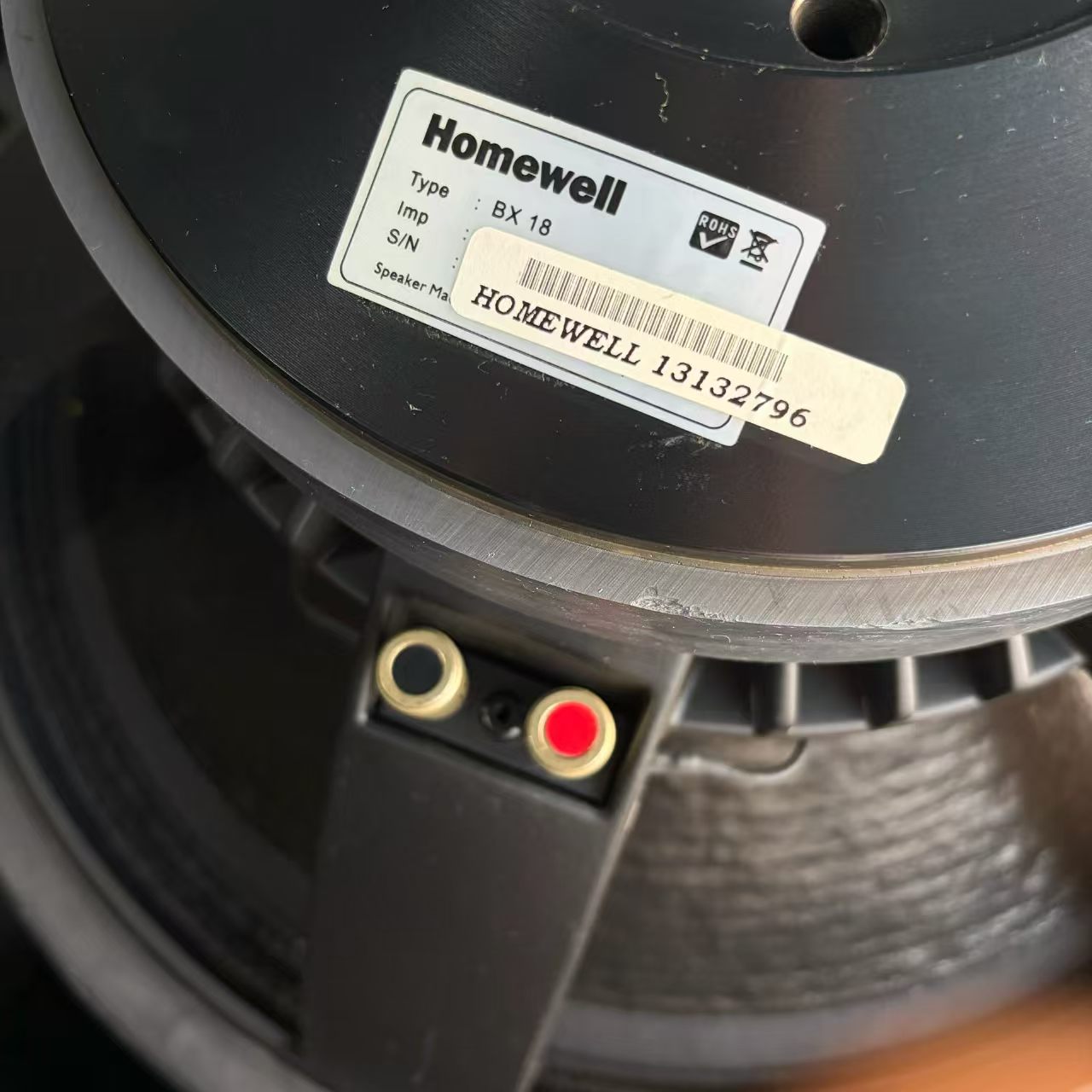
Finally, check the terminals and wiring. Corroded terminals add resistance and can cause intermittent signal loss. If the cabinet has a built-in crossover or speakON connectors, make sure they are intact and not bypassed with tape or wire nuts.
Matching Subwoofers to Your System
Not every subwoofer works in every room. For KTV rooms, you typically want a subwoofer that delivers tight, punchy bass without overwhelming the vocals. A single 18-inch subwoofer per room is common, but the cabinet design matters. Bass reflex cabinets are efficient but can sound boomy in small rooms. Horn-loaded designs are louder but heavier and more directional.
For touring and club systems, you need subwoofers that can handle high continuous power and integrate well with your top boxes. Impedance and sensitivity ratings should match your amplifier capabilities. If you are buying a batch of used subs, try to get identical models. Mixing different subwoofers in the same array causes uneven coverage and phase issues that no processor can fully fix.
At Panda Acoustics, we test every used subwoofer before it leaves our facility. We measure impedance, run a sweep test, and inspect the cone and surround. We do not list a subwoofer as working unless it passes those checks. For volume buyers, we can provide test data for each unit so you know exactly what you are getting.
Where Used Subwoofers Fit in Your Inventory
Used subwoofers make sense when you need to expand quickly or replace failed units without waiting for new stock. They are also a good option for rental companies that need backup cabinets. However, if you are building a new system from scratch, consider whether the savings justify the risk. In some cases, a new subwoofer with a warranty may be a better long-term investment, especially if you cannot inspect the used units yourself.
If you are buying from overseas, factor in shipping and import duties. A cheap subwoofer that costs a fortune to ship is not a bargain. Ask for dimensions and weight before you commit. Also, confirm that the subwoofer can be repaired locally. If the driver is proprietary and parts are unavailable, a failure could mean scrapping the entire cabinet.
Working with a Supplier You Can Trust
Panda Acoustics is a China-based supplier of tested used professional audio equipment. We work with KTV operators, touring companies, bars, and clubs across Russia, the Middle East, South America, and Africa. We do not claim to be the biggest or the cheapest. We focus on providing accurate condition reports and reliable testing so you can make informed decisions.
If you are looking for used PA subwoofers for sale, browse our current inventory or contact us with your requirements. We can help you find the right cabinets for your application and budget.