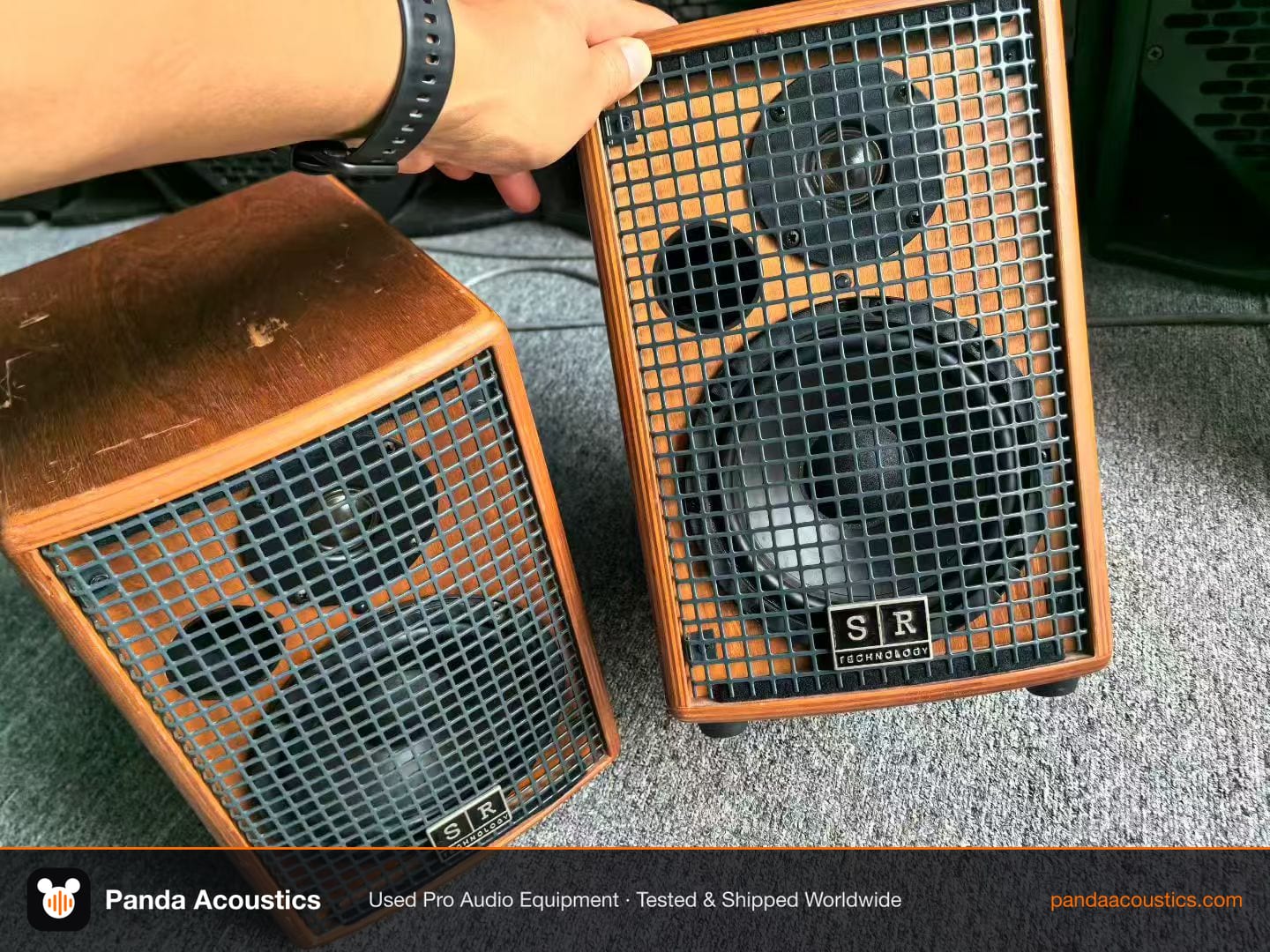
The KORG CLUB 60/A is a 60W RMS active monitor speaker with MIC and LINE inputs, a MIXED LINE OUTPUT and dual 100-120V / 220-240V voltage support, and units in Condition A are listed as in stock at Panda Acoustics. It is a small, low-power active box — worth buying used in bulk only for small rooms, monitor duty and low-SPL fills, and only after voltage, driver condition and cosmetic grade are confirmed in writing before you pay.
Key takeaways
- The documented power figure is 60 Watts RMS, with power consumption stated at 92W — this is a small active monitor, not a main PA cabinet.
- Voltage is listed as 100-120V / 220-240V at 50/60 Hz, so confirm the exact configuration of each unit for your market before ordering.
- Inputs are MIC and LINE, with a MIXED LINE OUTPUT — useful for simple room setups, not for complex multi-box signal chains.
- Condition is graded A and stock status is in-stock, but the listing does not publish a price per unit.
- The broader used speaker price band across this catalogue runs from 200 to 1500 USD per unit — the CLUB 60/A sits inside that band, but its own price is Not disclosed.
The decision
You are a KTV operator, rental house, bar or club buyer in Russia, the Middle East, South America or Africa, sourcing in volume from China. You have seen the KORG CLUB 60/A used for sale and you need to decide whether this model belongs in a bulk order at all, and if so, what you must verify before releasing payment.
The real decision is not "is KORG a good brand" — it is whether a 60W RMS active monitor fits the job you have in mind, and whether the specific units you are quoted are in the condition and voltage configuration you need. Those are two separate questions, and the second one is where bulk buyers lose money.
What the data says
The listing for the KORG CLUB 60/A gives a short, specific set of facts. Power is 60 Watts RMS. Voltage is 100-120V / 220-240V. Frequency is 50/60 Hz. Power consumption is 92W. Inputs are MIC and LINE. Output is a MIXED LINE OUTPUT. Condition is A and stock status is in-stock. Price is not published.
That is the whole documented picture. Everything else — driver condition, cabinet cosmetics, accessory completeness, per-unit landed cost — has to be established through the supplier's process rather than assumed from the listing.
For scale, the catalogue's used speaker price band is 200 to 1500 USD per unit. The CLUB 60/A's own price is Not disclosed, so treat that band as context only, not as a quote.
What the datasheet/docs don't tell you
Several things a bulk buyer needs are simply not in the materials, and each one matters:
- Price per unit: Not disclosed. You cannot build a landed-cost model until you have a written quote.
- Woofer and driver condition: Not stated. A 60W RMS active monitor with a tired driver will not meet its rated output, and replacement parts availability is Unknown.
- Cabinet and cosmetic grade detail: Condition A is assigned, but the specific defects behind that grade are Not disclosed in the listing. The condition grading standard is where the grade definitions live.
- Inspection scope: The materials do not state which tests were run on these units. The inspection standard page describes the process; the listing does not restate it.
- Warranty, MOQ, lead time, certification: Not disclosed. Do not assume any of these.
- Voltage configuration per unit: The listing shows both ranges, but which configuration each physical unit is set to is Not stated.
Why this matters: a 60W RMS active monitor is a low-headroom product. Small condition problems — a tired woofer, a noisy input, a mismatched voltage setting — have a proportionally larger effect on usable output than they would on a high-power cabinet. The lower the rated power, the less margin you have for degradation.
Who should not choose this
Do not buy the CLUB 60/A in bulk if you are equipping a bar, club or touring rig where the speaker is expected to carry main program material at high level. At 60W RMS with 92W consumption, this is a monitor-class active box, and pushing it into main-PA duty will produce failures and returns, not savings.
Also skip it if you cannot get voltage configuration and driver condition confirmed in writing before payment. A bulk order of active monitors in the wrong voltage for your market is a total loss in most destinations, and the listing alone does not tell you which configuration you are receiving.
Finally, if your business model depends on a single standardized cabinet across many rooms, a low-power niche monitor creates a mixed inventory you will have to support separately.
Comparison and trade-offs
Within the same catalogue, the trade-offs are visible in the documented numbers:
- KORG CLUB 60/A: 60W RMS active, MIC and LINE inputs, MIXED LINE OUTPUT, 100-120V / 220-240V. Self-powered, simple signal path, low output.
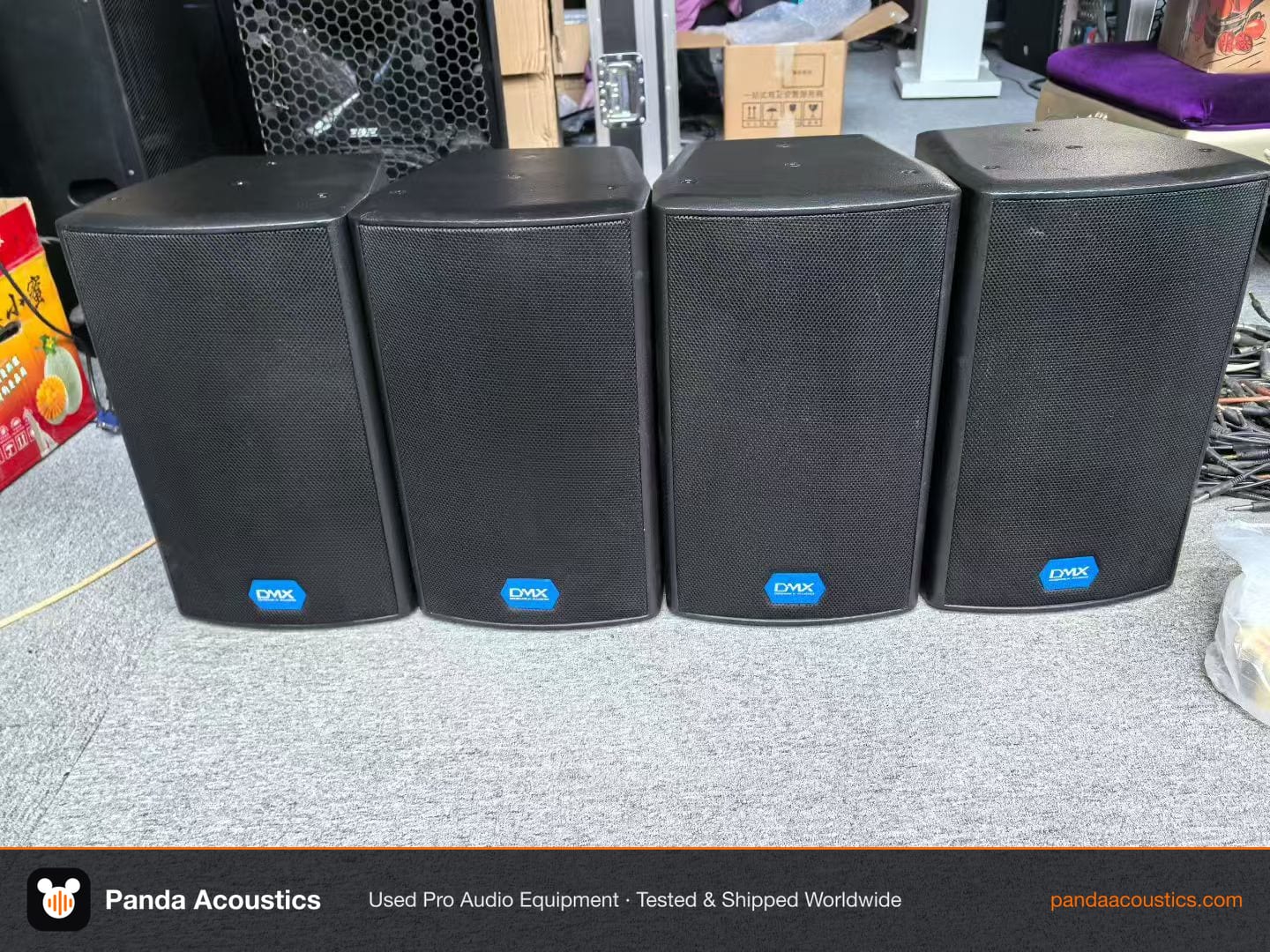
- DMX ES-10: two-way full-range, 200W, 8Ω, 58Hz-18kHz, 2 x speakON. Passive, higher power, needs amplification.
- Vieta VT-12: 250W RMS, 8Ω, 2x Speakon IN/OUT, made in EC. Passive, higher power again.
- Meyer Sound HD-1: active high definition monitor, XLR input, 90-130V / 200-250V. Active like the KORG, different input set.
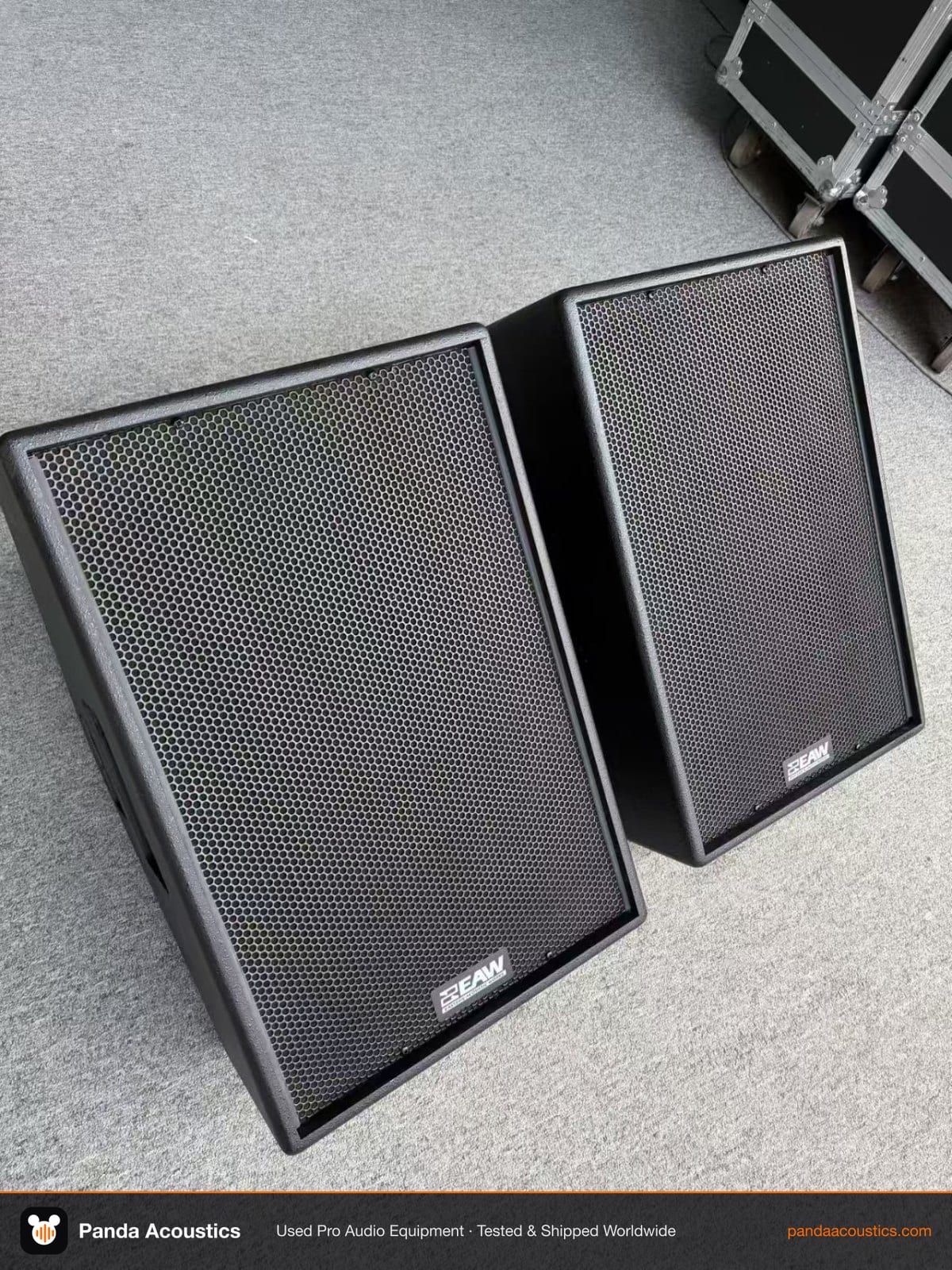
- EAW SM129zi: stage monitor, 2x Speakon NL4, made in China. Passive, stage-monitor format.
The honest trade-off: the CLUB 60/A is the simplest to deploy because it is active with MIC and LINE inputs and a mixed line output — no amplifier planning needed. The cost of that simplicity is low output. If your rooms need level, the passive 200W and 250W options are the documented alternatives, but they require amplification you must budget for separately.
Implementation / next step
Before paying, do this in order. First, request a written quote with the per-unit price, since the listing price is Not disclosed, and confirm the total against the 200-1500 USD per-unit band as a sanity check. Second, ask for the voltage configuration of the exact units being offered — 100-120V or 220-240V — in writing, per unit. Third, request the inspection record for the batch and read it against the inspection standard and the condition grading standard. Fourth, confirm what is included with each unit and what the packing and freight terms are via the shipping and logistics page. Fifth, get payment terms in writing before any deposit.
Concrete next step: open the KORG CLUB 60/A listing, then send one message requesting price, voltage configuration and inspection record for the batch — and do not pay until all three come back in writing.