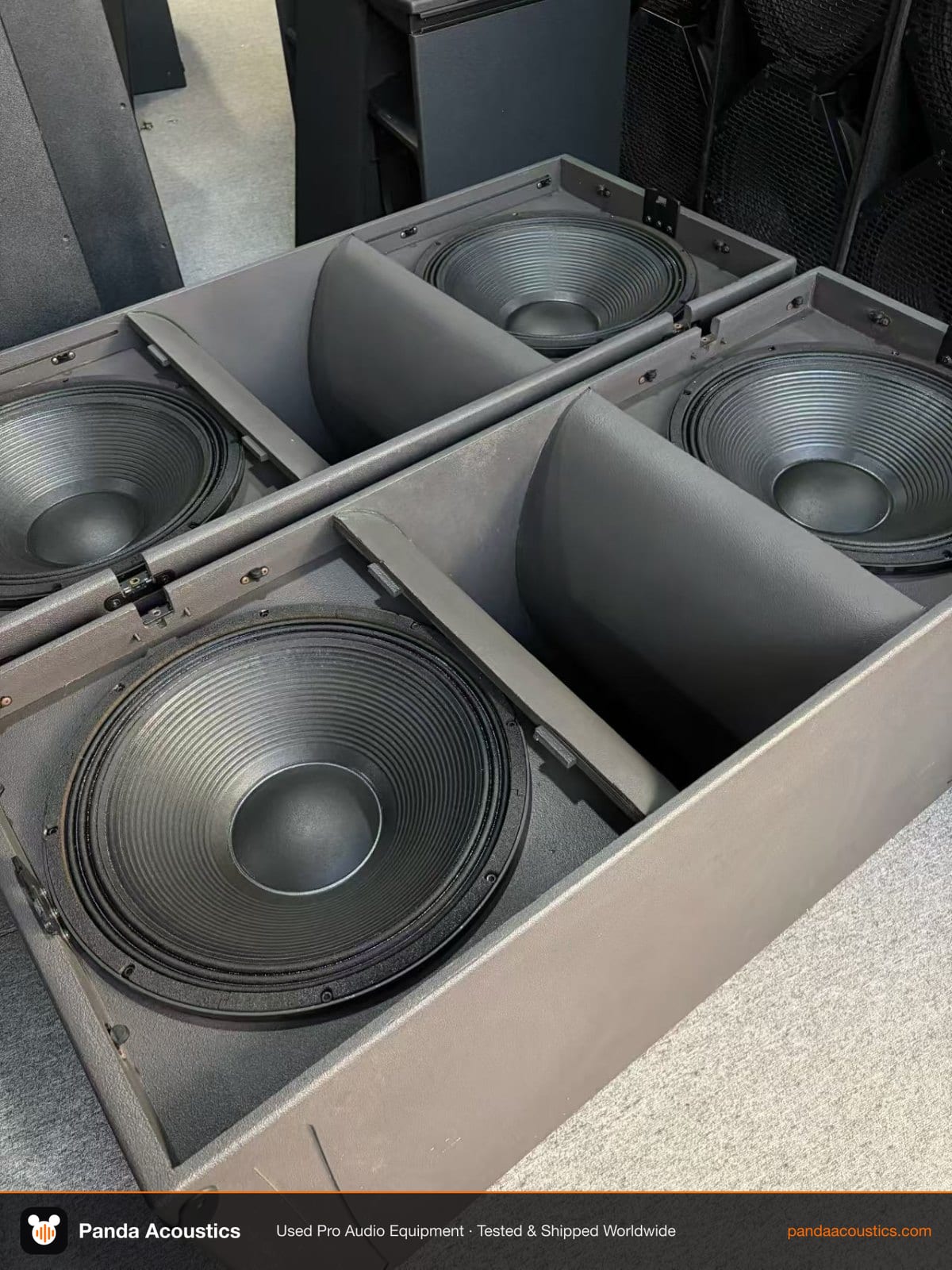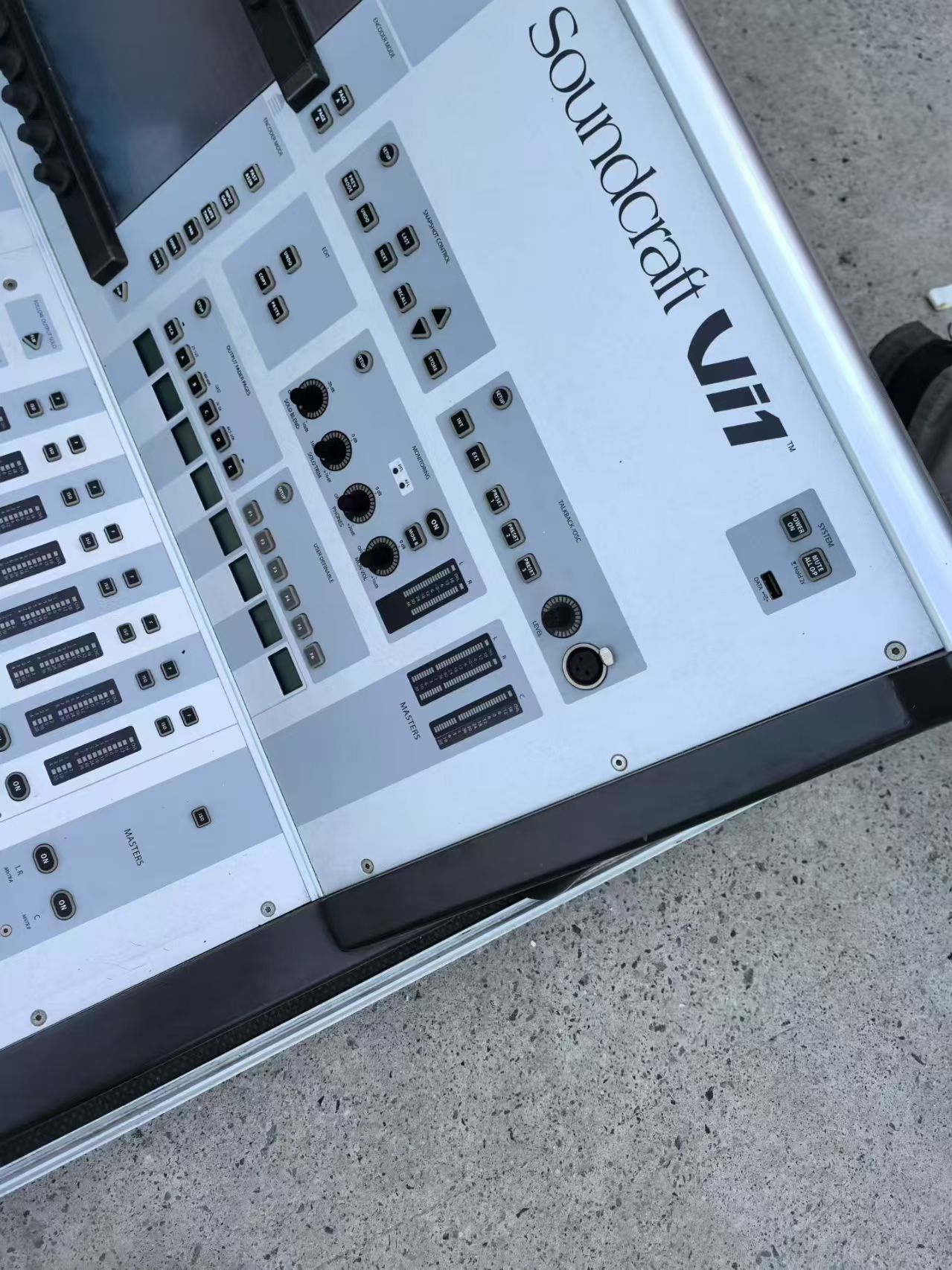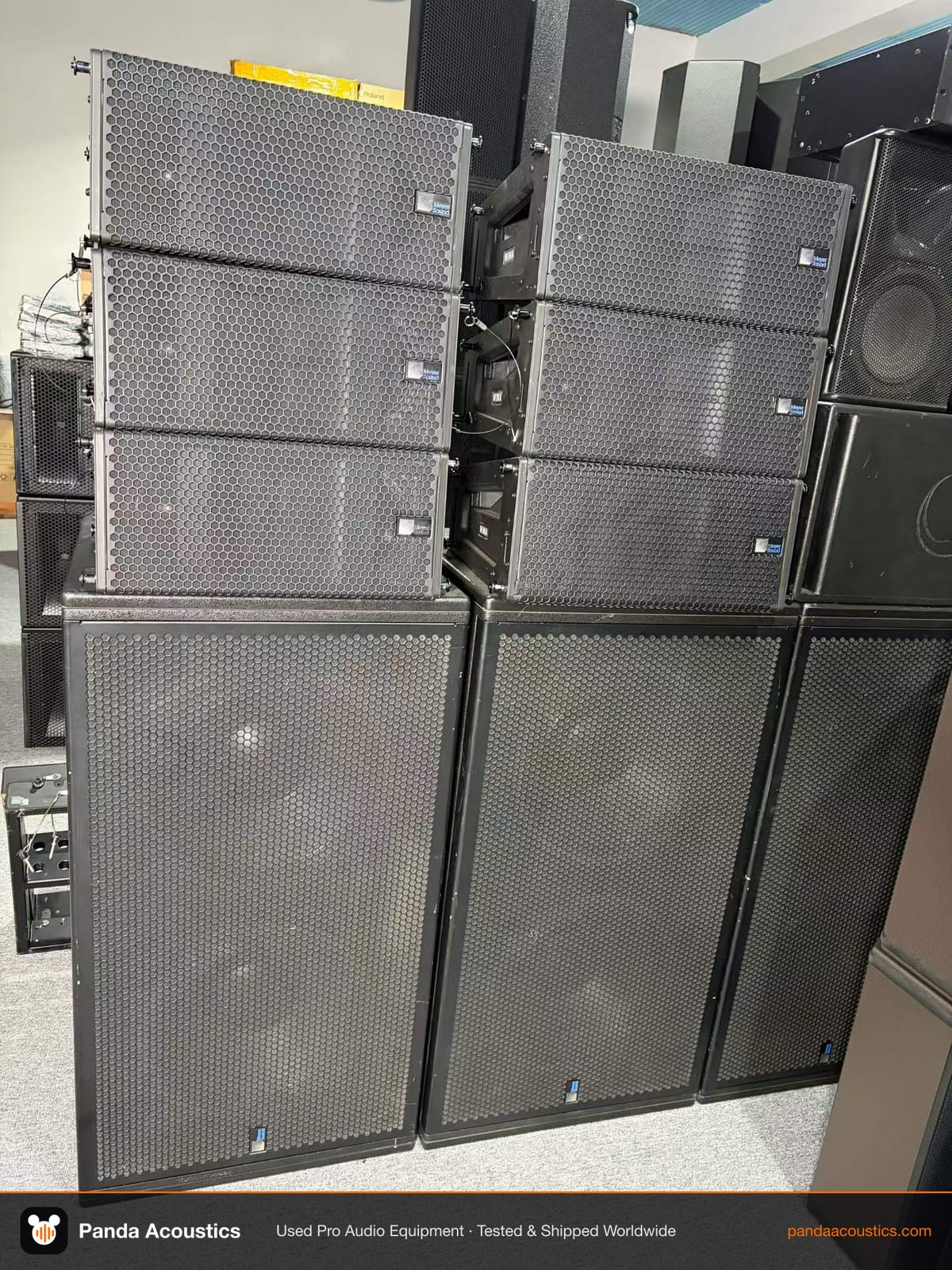
If you are searching for a used Meyer Sound MINA line array, you already know what it is: a compact, self-powered line array module that has been a staple in touring and installation for years. The MINA is not the newest box on the market, but it remains a workhorse for mid-sized venues, corporate events, and club systems where rider acceptance still matters. For KTV operators, touring companies, and bar/club owners in Russia, the Middle East, South America, and Africa, the used market is often the only realistic way to get this level of gear at a workable cost per box.
This article is not a sales pitch. It is a checklist for people who are about to spend real money on used MINA modules. We will cover what to look for, what questions to ask, and how to avoid the most common traps when buying used line array in volume.
Why the MINA still holds value in the used market
The MINA is a three-way, self-powered line array module with a 100-degree horizontal coverage and a vertical array of 12 drivers. It was designed for small to mid-sized applications, but it is often used in larger arrays when paired with the 750-LFC or 900-LFC subwoofers. The fact that it is self-powered means you do not need external amplifiers or long speaker cable runs, which simplifies rigging and reduces setup time. That matters for touring companies and rental houses that need to turn events quickly.
In the used market, MINA modules are typically sold in lots, often 8, 12, or 16 boxes at a time. Prices vary widely based on condition, age, and whether the original flight cases and rigging hardware are included. But because Meyer Sound does not publish list prices and the used market is opaque, the only way to know if a deal is fair is to understand what you are actually buying.
One more thing: the MINA is often cross-shopped against the L-Acoustics KARA or the newer K2, but those are different beasts. The MINA is lighter and smaller, which can be an advantage in venues with low ceilings or limited truck space. If you are building a system for a KTV or a bar, the MINA might be overkill, but for a touring company or a club that hosts international acts, it is a credible box.
What to inspect on a used MINA module
When you are buying used line array, the condition of the drivers and the amplifier module is everything. The MINA uses a proprietary amplifier and DSP section, and replacement parts are not cheap. If a module has been abused, you will pay for it later.
Start with the physical inspection. Look at the cabinet for cracks, deep gouges, or signs of water damage. The MINA is made of plywood with a polyurea coating, so it can take some abuse, but water damage will delaminate the cabinet and ruin the internal components. Check the rigging hardware: the fly bars, quick-release pins, and link bars should be present and not bent. Missing rigging hardware is a red flag because it often means the boxes were used in a fixed installation and then stripped, or that the seller is piecing together a kit from multiple sources.
Next, check the grille and the drivers. Remove the grille if the seller allows it. Look for tears in the cone, dust caps that are pushed in, or signs of reconing. Meyer Sound drivers are not generic; if a driver has been replaced with a non-Meyer part, the performance will be off. Ask for the serial number of each module and verify it with Meyer Sound if possible. Meyer Sound keeps a database of their products, and they can tell you the original manufacturing date and whether the module has been serviced.
The amplifier module is the most critical part. The MINA uses a self-powered design, so each box has its own amplifier and DSP. You need to power up each module and listen for noise, distortion, or hum. Check that the LED indicators work and that the module responds to the Meyer Sound RMS or Compass control software. If you cannot test the module, assume it needs repair and price accordingly.
For a more detailed inspection checklist, see our guide on used line array inspection. It covers the steps in a logical order, from visual inspection to acoustic testing.
How to verify condition before you buy
Never buy used MINA modules based on photos alone. If you are sourcing from overseas, ask for a video call where the seller powers up the modules and plays music through them. Listen for any rattles, buzzes, or dropouts. Ask the seller to sweep the module with a sine wave or pink noise if they have the equipment. If they refuse, that is a sign to walk away.
Ask for the history of the modules. Were they used on tour, in a fixed installation, or in a rental fleet? Touring modules tend to have more cosmetic wear but are often better maintained because they are serviced regularly. Installation modules might look clean but could have been driven hard in a club environment. Either way, the service history matters more than the cosmetics.
If you are buying a large lot, consider hiring a third-party inspector. In some markets, there are audio technicians who will travel to the seller's location and provide a condition report for a fee. This is common in the used car world, and it is becoming more common in pro audio. The cost of an inspection is small compared to the cost of replacing a few amplifier modules.
Also, check the firmware version on each module. Meyer Sound has released updates over the years, and older firmware might not be compatible with newer control software. You can update the firmware yourself, but you need the right cables and software. If the seller has not updated the firmware, it is not a deal-breaker, but it is a negotiating point.
Rigging, accessories, and system integration
The MINA is designed to be flown, and the rigging system is part of the value. When buying used, make sure you get the correct fly bars, link bars, and quick-release pins. The MINA uses a proprietary rigging system that is not compatible with other brands. If the seller does not have the original rigging, you will need to source it separately, which can be expensive and time-consuming.
Also consider the subwoofers. The MINA is often paired with the 750-LFC or 900-LFC. If you are buying a full system, make sure the subwoofers are included and that they are in good condition. The L-Acoustics KS28 is a popular alternative, but it is a different brand and will not integrate seamlessly with Meyer Sound presets. If you are building a mixed-brand system, you will need a speaker management system to handle the crossover and EQ. See our guide on speaker management systems for more on that.
If you are buying MINA modules to add to an existing Meyer Sound inventory, check that the firmware and DSP presets match your current system. Meyer Sound has different presets for different array configurations, and using the wrong preset can affect coverage and performance. You can download the presets from the Meyer Sound website, but you need to know which version you need.
For touring companies, consider the transport cases. Original Meyer Sound flight cases are heavy but they protect the investment. If the seller does not have cases, you will need to buy them or build them. That adds to the total cost. If you are shipping overseas, cases are essential.
Importing used Meyer Sound gear: what to know
If you are buying from a seller in another country, you need to understand the import process. Used audio equipment is subject to customs duties and taxes, and the rules vary by country. In some markets, used gear is inspected for safety and electromagnetic compatibility. You will need to provide documentation, including the commercial invoice, packing list, and bill of lading. If the seller is experienced in exporting, they will handle this, but you should confirm who is responsible for what.
Shipping costs for line array modules are significant because they are bulky and heavy. A single MINA module weighs around 34 kg (75 lbs), so a lot of 16 modules is over 500 kg. Air freight is expensive; sea freight is cheaper but slower. If you are buying in volume, sea freight is usually the way to go. Make sure the seller uses proper export crates and that the modules are secured inside to prevent movement during transit.
For a broader overview of importing used audio equipment, see our guide on importing used audio equipment. It covers the basics of customs, documentation, and logistics.
One more thing: check the voltage. The MINA is available in different voltage versions, typically 100V, 120V, 230V, or 240V. If you are buying from a seller in a different region, make sure the modules are compatible with your local power. If not, you will need step-up or step-down transformers, which adds cost and complexity. Meyer Sound can sometimes convert the voltage, but it is not a cheap process.
Making an offer and negotiating
When you are ready to make an offer, base it on the condition and the market. Do not be afraid to ask for a discount if the modules need work. If the seller is motivated, they will negotiate. If they are firm on price, you need to decide if the value is there for you.
Remember that used Meyer Sound gear holds its value better than many other brands, but it is not an investment. It is a tool. If the price is right and the condition is good, it can be a great addition to your inventory. If the price is too high or the condition is questionable, walk away. There will be other opportunities.
If you are looking for used line array in general, our used line array buyer's guide covers the broader market. And if you are specifically interested in the MINA, you can see our current listings on the Meyer Sound MINA product page.
Finally, consider the total cost of ownership. The MINA is a professional tool, and it requires professional maintenance. If you do not have the in-house technical skills to service it, you will need to find a qualified technician. That is part of the cost. But if you do have the skills, the MINA can deliver years of reliable service.