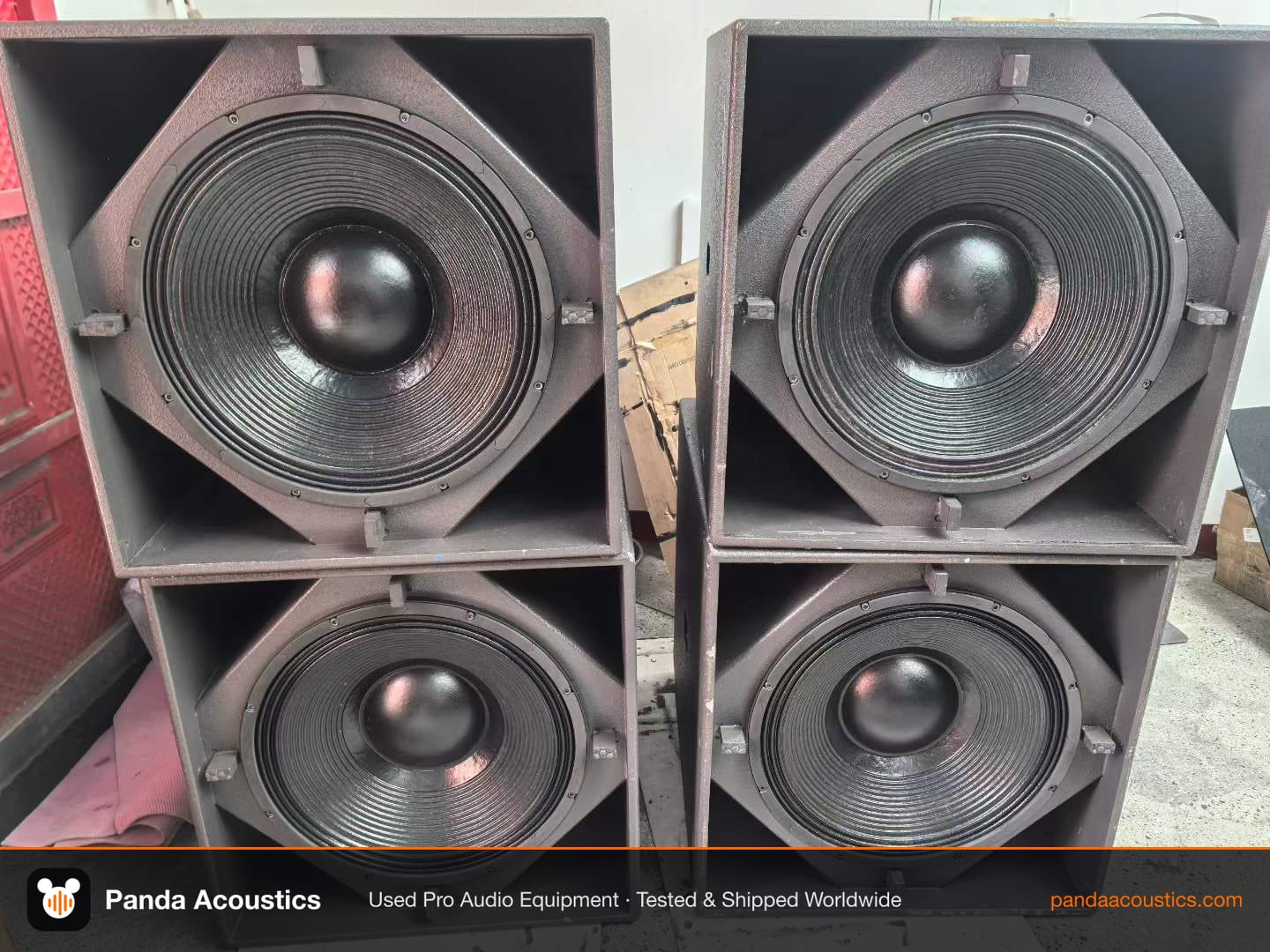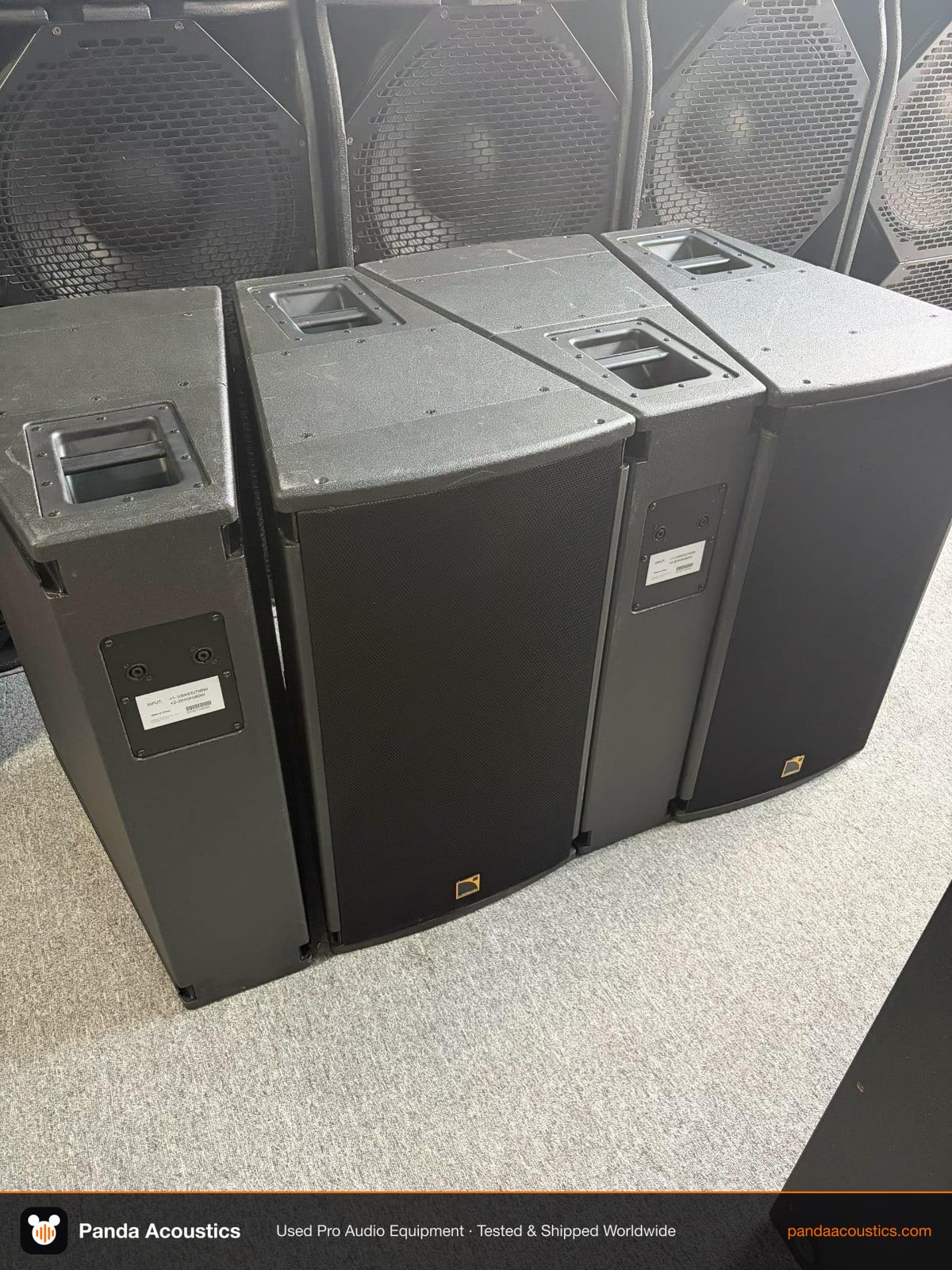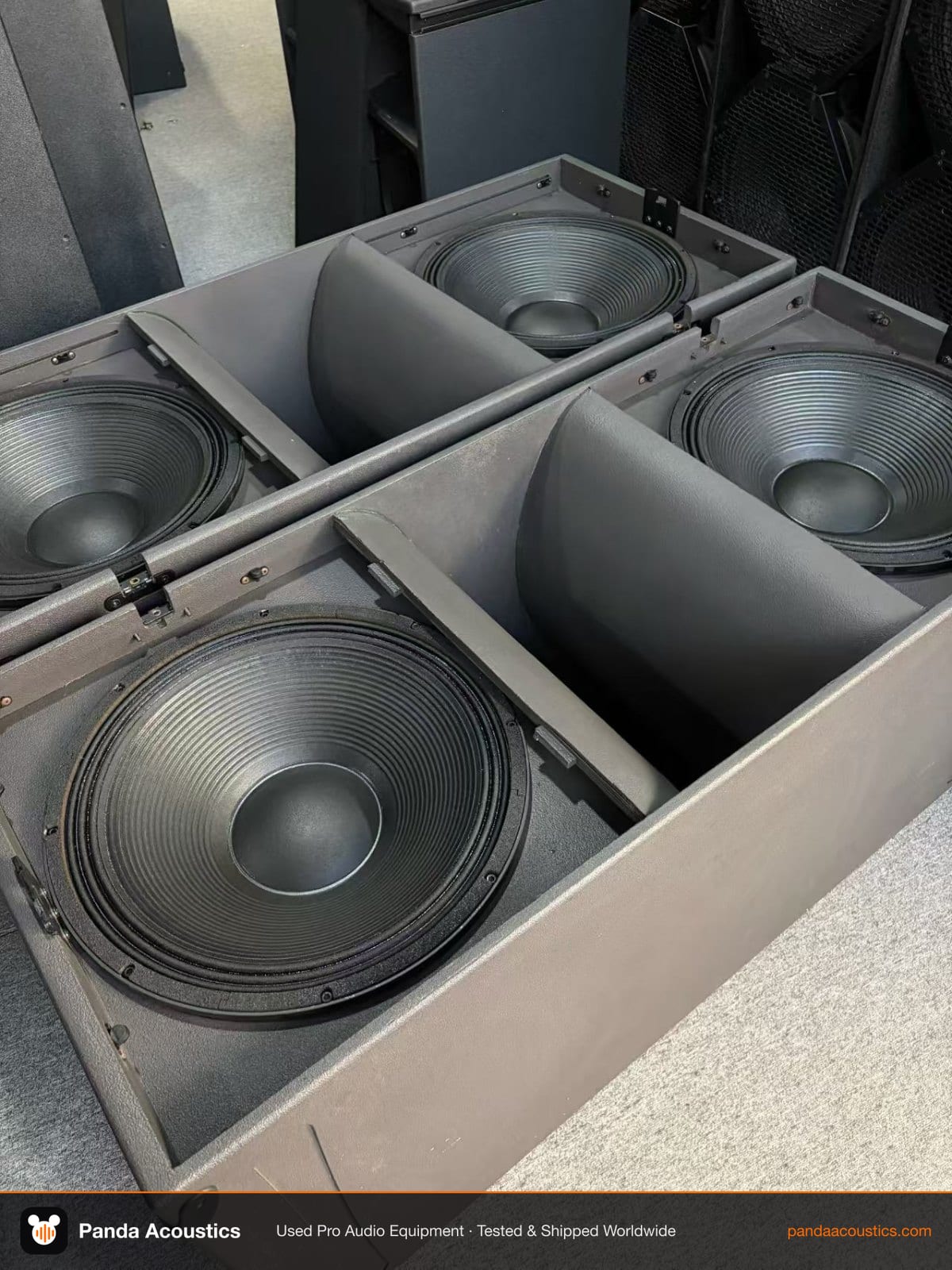
The L-Acoustics KS28 is a professional subwoofer category that bulk buyers ask about, and the short answer is this: used units can be a reasonable purchase only when the condition grade, inspection scope and payment terms are confirmed in writing before you pay. Nothing about the model name alone tells you whether a specific used unit is worth its landed cost.
Quick answer
Treat the L-Acoustics KS28 as a category to verify, not a product to assume. Ask for the condition grade under a published standard, the inspection items actually covered, and the payment release conditions, then compare those against your landed cost before committing volume budget.
Key takeaways
- Used professional audio equipment from Panda Acoustics is sold in bulk to overseas B2B buyers, so the unit of decision is a batch, not a single cabinet.
- Condition is described against a published grading standard, which you should read before accepting any grade label on a quote.
- Inspection is described against a published inspection standard; confirm which items apply to subwoofers specifically.
- Price per unit for the KS28 is Not disclosed in the available materials, so any figure you are quoted must be checked against the written quote, not a web page.
- Payment terms and shipping terms are separate documents you should obtain before paying.
The decision
The reader here is a KTV operator, touring sound company, rental house, bar or club buying in volume from Russia, the Middle East, South America or Africa. The decision is not "is the KS28 a good subwoofer" — it is "is this batch of used KS28 units, from this supplier, at this landed cost, safe to pay for." Those are different questions, and only the second one protects your money.
That decision usually arrives in one of three situations: you are expanding subwoofer capacity for low-frequency-heavy program material, you are replacing failed units in an existing inventory, or you are building a rental fleet and want a recognised model name that clients ask for. In all three, the model matters less than the condition of the specific units and the terms attached to them.
What the data says
The materials available for this article are limited, and that is itself the most useful fact. Here is what is actually stated:
- Panda Acoustics (Beijing Panda Acoustics Technology Co., Ltd.) sells tested used professional audio equipment in bulk to overseas B2B buyers.
- The buyer audience is KTV operators, touring sound companies, rental houses, bars and clubs in Russia, the Middle East, South America and Africa.
- The purchase decision is whether an equipment category or model is worth buying used from China, and what to verify before paying.
- A condition grading standard is published as a policy page.
- An inspection standard is published as a policy page.
- Payment terms are published as a policy page.
- Shipping and logistics are published as a policy page.
- A product catalogue exists for browsing available categories.
Price per unit for the KS28: Not disclosed. Minimum order quantity: Not disclosed. Warranty period: Not disclosed. Lead time: Not disclosed. Certification: Not disclosed. Those are not gaps in the article — they are gaps in the materials, and you should treat them as open questions to close with the supplier in writing.
What the datasheet/docs don't tell you
A model datasheet, if you find one elsewhere, describes a new unit as the manufacturer intended it. It does not describe the unit in the crate in front of you. The published policy pages on this site describe process, not the condition of any individual batch.
- Actual condition of a specific batch: not verified in these materials. The grading standard defines categories; it does not tell you what grade a given lot will receive.
- Inspection results per unit: not disclosed. The inspection standard defines what is checked; the pass/fail record for your lot is a separate document you must request.
- History of use: not disclosed. Whether units came from touring, install or rental stock is unknown from the materials.
- Recone or driver replacement history: not disclosed.
- Certification status: not disclosed. Do not assume CE, RoHS, UL, FCC or ISO status for any unit unless it appears in your supplier's written documents.
- Warranty: not disclosed. Assume nothing about coverage period or what voids it.
Why this matters: subwoofers take the hardest mechanical duty in a PA system. A grade label without an inspection record tells you very little about how much life is left in the drivers. The gap between "graded" and "verified for this lot" is exactly where bulk buyers lose money.
Who should not choose this
Do not buy used KS28 units in bulk from a China-based channel if any of the following describes you:
- You need a published warranty period stated up front before you can release budget. It is not disclosed here, so you cannot plan around it.
- You need documented certification for a tender, venue compliance file or insurance requirement. Certification is not disclosed in these materials.
- You cannot inspect or arrange third-party inspection before shipment and will not accept a written inspection record instead.
- You are buying a single unit for a small bar and cannot absorb the freight and handling cost of an international bulk shipment — the bulk model is not built for one-off purchases.
- You need a fixed unit price published online. Price per unit is Not disclosed; only a written quote is meaningful.
If you fall into the first two categories, the honest answer is that this channel does not fit your procurement rules, regardless of how attractive the model is.
Comparison and trade-offs
Only facts from the materials can be compared here, so the comparison is between buying approaches rather than between subwoofer models.
- Used bulk from China vs. new retail: the used bulk route gives you volume availability and a published grading and inspection process; new retail gives you manufacturer documentation. The materials do not disclose used pricing, so the cost gap is Unknown.
- Graded used vs. ungraded used: a published grading standard gives you a shared vocabulary with the supplier. Ungraded stock gives you nothing to appeal to if the goods arrive below expectation.
- Inspected vs. uninspected shipment: the inspection standard page defines the process. Whether your specific lot was inspected, and to what result, is Not disclosed until you request the record.
- Supplier-arranged shipping vs. your own forwarder: shipping and logistics are covered by a published policy page; the cost and Incoterms for your route are Not disclosed in these materials.
There is no defensible way to compare the KS28 against a named competitor model using these materials, because no competitor specifications, prices or test data are provided. Anyone who gives you a confident spec-by-spec comparison without that data is guessing.
Implementation / next step
Before any payment, do these in order:
- Read the condition grading standard and write down which grade you are willing to accept for subwoofers.
- Read the inspection standard and list the items you require for the KS28 lot specifically.
- Browse the product catalogue to confirm current availability of the category.
- Request a written quote that states grade, inspection record, quantity, price per unit, and Incoterms.
- Read the payment terms and the shipping and logistics page, then confirm the release conditions in writing.
Your concrete next step: send the supplier one written request asking for the grade, the inspection record and the payment release conditions for the specific KS28 lot you are considering, and do not pay until all three come back in writing.
FAQ
Is the L-Acoustics KS28 worth buying used from China? It can be, if the grade, inspection record and payment terms are confirmed in writing for your specific lot. The model name alone does not answer the question.
What is the price per unit? Not disclosed in the available materials. Only a written quote for your quantity and destination is meaningful.
Is there a warranty? Not disclosed. Ask for the warranty terms in writing before paying, and do not assume a period.
Is the equipment certified? Certification is not disclosed in these materials. Do not assume CE, RoHS, UL, FCC or ISO status.
What is the minimum order quantity and lead time? Both are Not disclosed. Confirm them in the written quote.