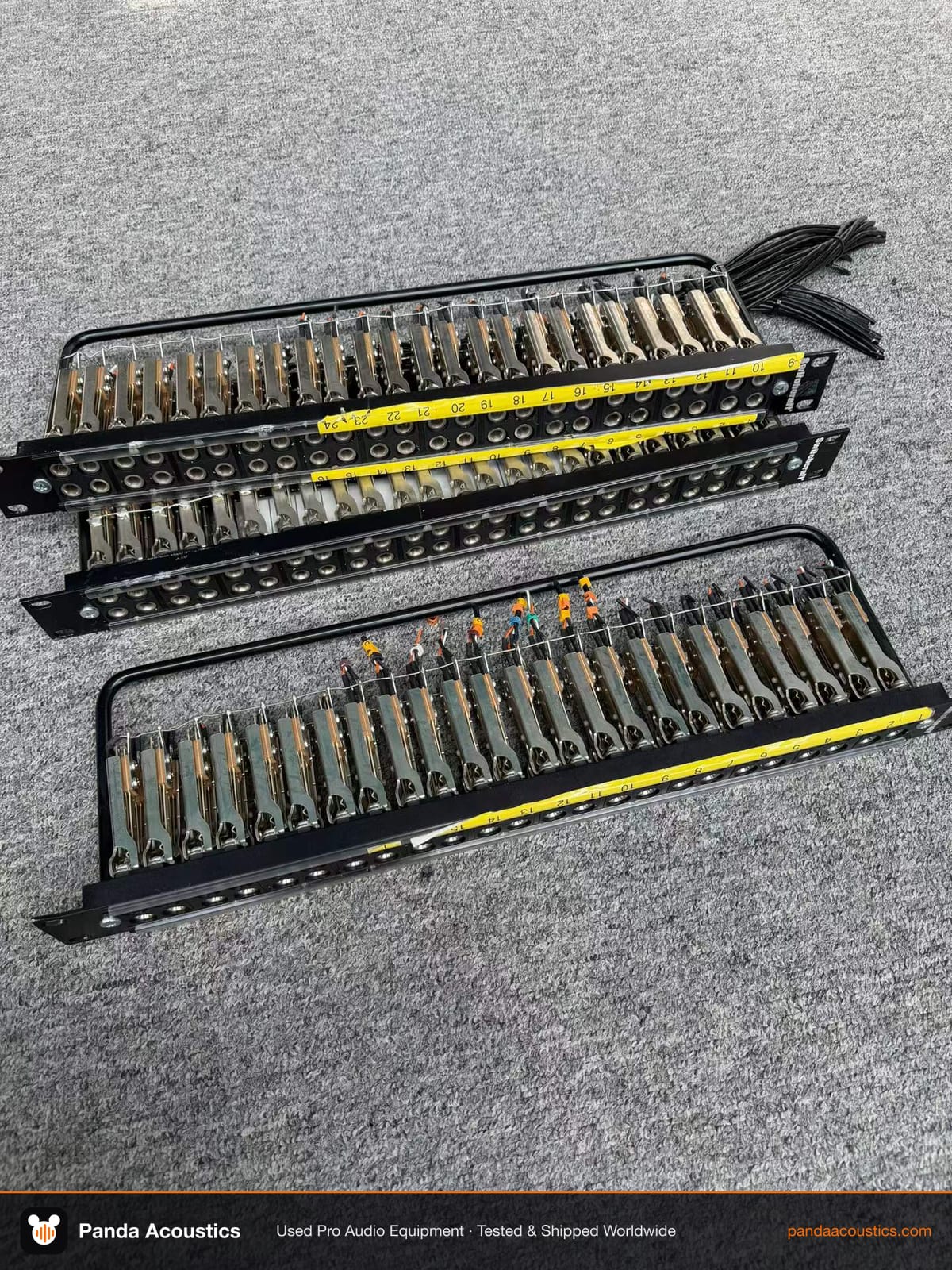
A used Switchcraft 24-channel rack-mount audio patch panel is a passive jackfield: 24 1/4-inch jack sockets numbered 1-24 on the front, mounting ears for rack installation, and a bundled black cable on the rear with unsoldered bare wire ends. It is worth buying used in bulk from China only when each unit's channel numbering, jack condition and rear termination are verified before payment, because the rear wiring — not the brand — is where your installation cost sits.
Key takeaways
- The unit in stock is a 24-channel rack-mount jackfield with 1/4-inch jack sockets and channel numbers 1-24 visible on the panels.
- Rear termination is a bundled black cable with unsoldered bare wire ends — you or your tech must terminate it on site; it does not arrive as a finished loom.
- Condition is graded A under the seller's grading standard, but grading is a category, not a per-unit measurement.
- Price is not published, so landed cost must be quoted per order rather than estimated from a list price.
- The general used line-array price band of USD 1,200–6,000 per unit does not apply to this passive panel; treat it as a separate line item.
The decision
You run a KTV floor, a rental house or a club install and you need patch points between stage boxes, mixers and outboard gear. New branded jackfields are priced per unit and often sold in small quantities; you want 10, 20 or 50 units to standardise racks across several rooms or a tour package. The question is not whether Switchcraft is a known name — it is whether a used, inspected batch of 24-channel panels will drop into your racks without a rework bill that erases the saving.
That decision has two halves. The first is physical: sockets, numbering, mounting ears, cable bundle. The second is commercial: what the unit actually costs delivered, and what happens if two of fifty arrive with a dead channel. A passive panel has almost nothing to fail except the jack contacts and the solder joints at the rear, which is exactly why it is a reasonable used-buy category — and exactly why inspection must be per channel, not per carton.
What the data says
From the current listing, the Switchcraft unit is a 24-channel rack-mount audio patch panel / jackfield in condition A, listed as in stock, with price not published, priced per unit in USD. Channel numbering 1-24 is visible on the panels. Connector type is 1/4-inch jack sockets. Mounting ears are present. Rear termination is a bundled black cable with unsoldered bare wire ends.
For context on how the seller grades and checks equipment, the site publishes a condition grading standard and an inspection standard; both are worth reading before you accept the word "A" as a specification. The seller's own description of its business is tested used professional audio equipment sold in bulk to overseas B2B buyers.
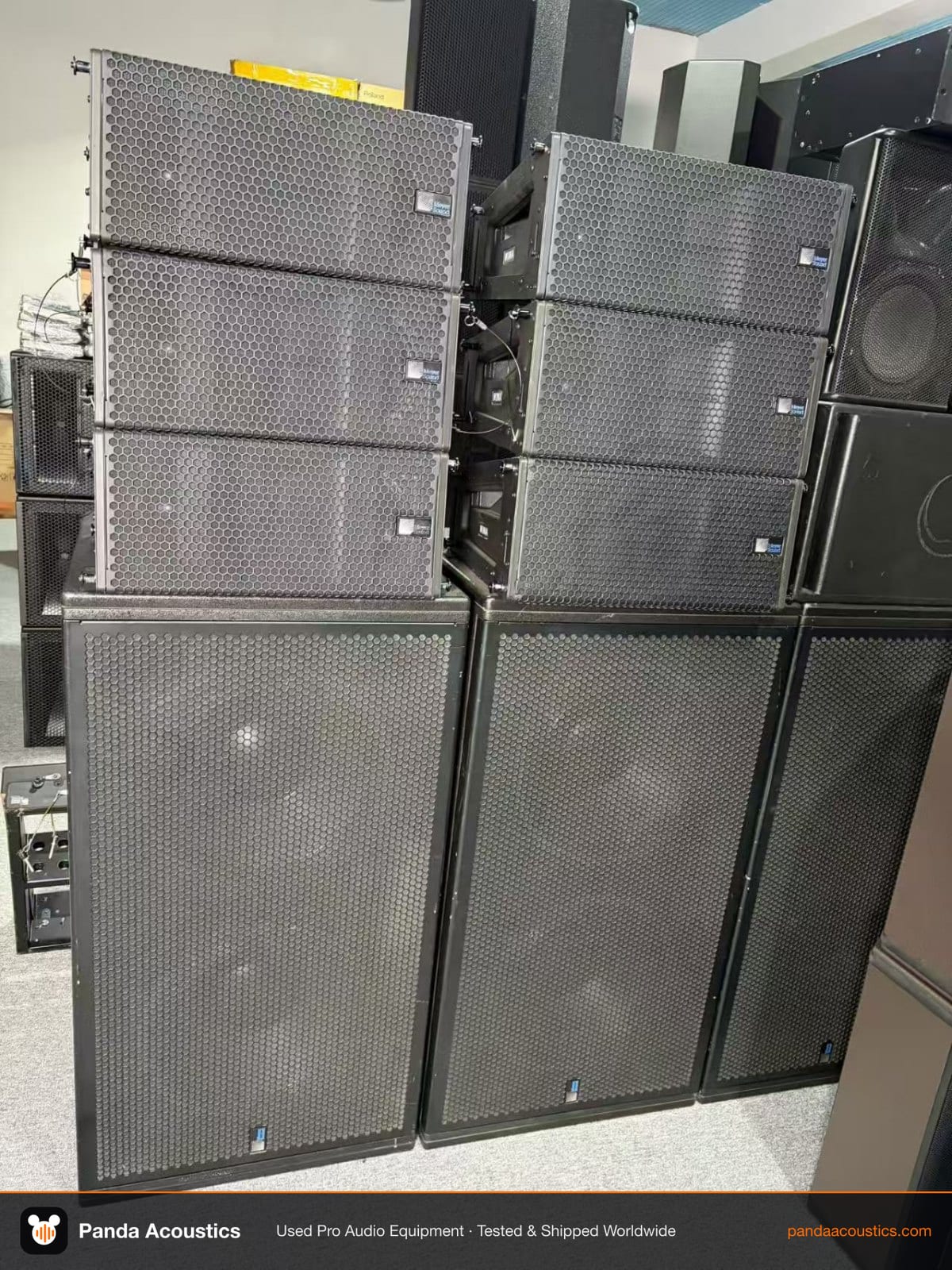
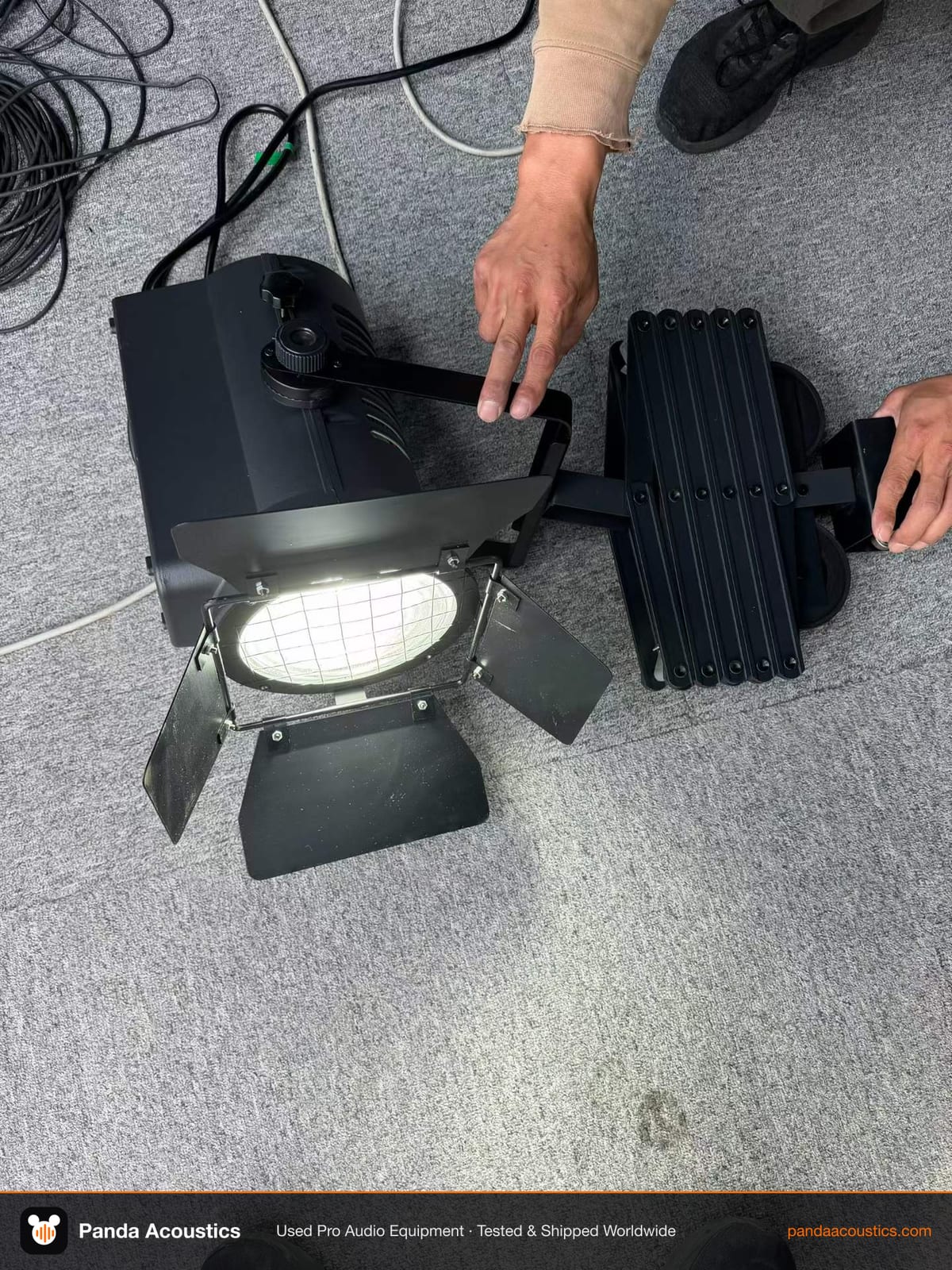
Other items in the same catalogue show the range of what a bulk order can include: a Meyer Sound MINA compact line array loudspeaker in condition A, black, with hex-punched steel grille and rigging frames and safety steel cables fitted; a Meyer Sound MINA self-powered line array module with NL4 connectors, honeycomb metal grille, condition A with scuffs and scratches on cabinet and rigging hardware, supplied with rigging hardware and connection cables; and an unbranded LED stage light with barn doors, DMX IN / DMX OUT, POWER IN / POWER OUT and a 4-digit LED display. Those are separate product lines, not substitutes for a jackfield, but they show the same grading vocabulary applied across categories.
What the datasheet/docs don't tell you
Price. Not disclosed. The listing shows no unit price, so any per-unit figure you see elsewhere is not from this source. The published USD 1,200–6,000 band belongs to the line-array category, not to this panel; using it here would overstate the cost by an order of magnitude. Ask for a quoted price per quantity break.
Minimum order quantity. Unknown. The listing is per unit and in stock, but nothing states whether a single panel can ship or whether bulk pricing starts at a stated quantity.
Warranty. Not disclosed. For a passive jackfield the practical question is whether dead-on-arrival channels are replaced or credited, and over what window.
Lead time and shipping. Not disclosed in the listing. The shipping and logistics page is the place to check how consolidated bulk orders are handled, but do not assume a schedule until it is confirmed in writing.
Channel-by-channel test results. Not published. Condition A is a grade; it does not tell you that channel 17 passes signal with no crackle. This matters because intermittent jack contacts are the classic failure mode in a used jackfield, and they are invisible in a photograph.
Cable length and gauge on the rear bundle. Unknown. The listing states a bundled black cable with unsoldered bare wire ends but gives no length or conductor specification. That determines whether the panel reaches your stage box in one pull or needs extension.
Wiring convention. Unknown. Whether the rear tails follow tip/ring/sleeve in a standard order, and whether the panel is balanced or unbalanced per channel, is not stated. Verify against your own rack before committing to a batch.
Certification. No CE, RoHS, UL, FCC or ISO certification is stated in the materials for this item. If your tender requires it, this listing does not satisfy that requirement on paper.
Who should not choose this
Do not buy this if you need a finished, pre-terminated loom that plugs straight into your stage box. The rear is unsoldered bare wire; someone has to terminate 24 channels per panel, and at 20 panels that is 480 solder or crimp joints. If your labour is expensive or your install window is short, the saving disappears.
Do not buy it if your procurement requires a named certification or a published warranty period, because neither appears in the materials. Do not buy it if you cannot test channels on arrival — a passive panel is easy to check with a signal source and a continuity meter, but only if someone actually does it.
And do not buy it as a substitute for a line array. Buyers searching for Switchcraft sometimes confuse the brand's connector reputation with a loudspeaker purchase; this is a patch panel, and the line-array budget band of USD 1,200–6,000 per unit belongs to a different product category entirely.
Comparison and trade-offs
Against a new retail jackfield, the used Switchcraft unit trades certainty for cost: you get the same 24-channel, 1/4-inch, rack-mount format with numbering 1-24 visible, but you accept unknown per-channel history and unsoldered rear tails. Against a custom-built patch bay with a finished loom, you trade installation labour for a lower unit price and simpler shipping, since bare wire bundles pack more densely than terminated connectors.
Within the seller's catalogue, the honest comparison is not Switchcraft versus Meyer Sound MINA — those are different jobs. The MINA loudspeaker and MINA module are active, self-powered items with NL4 connectors, rigging hardware and, in the module's case, disclosed cosmetic scuffs on cabinet and rigging hardware. The jackfield has no amplifier, no rigging and no power. What they share is the grading language and the bulk B2B channel. If your order mixes categories, expect the same grade label to mean different things in practice: a scuff on a line array cabinet is cosmetic, while a worn jack on a patch panel is functional.
The trade-off that matters most: a passive panel is repairable. A failed jack can be replaced by a competent tech, and the rear tails can be re-terminated. That is not true of an amplifier module. For a rental house standardising racks, that repairability is the strongest argument for buying used.
Implementation / next step
Before paying, request a per-unit quote for your target quantity, a written statement of the DOA policy, and a channel-by-channel test record or an agreement that you may reject units failing continuity on arrival. Confirm the rear cable length and wiring convention in writing, and check the condition grading standard and inspection standard so you know what "A" commits the seller to. Then order a small first batch, test every channel, and only scale to the full quantity once the first batch passes.
Start with the Switchcraft listing page and send your quantity, destination port and required rear-tail length as a single enquiry.
Related pages
- Used line array equipment
- Full used equipment catalogue
- Switchcraft listing