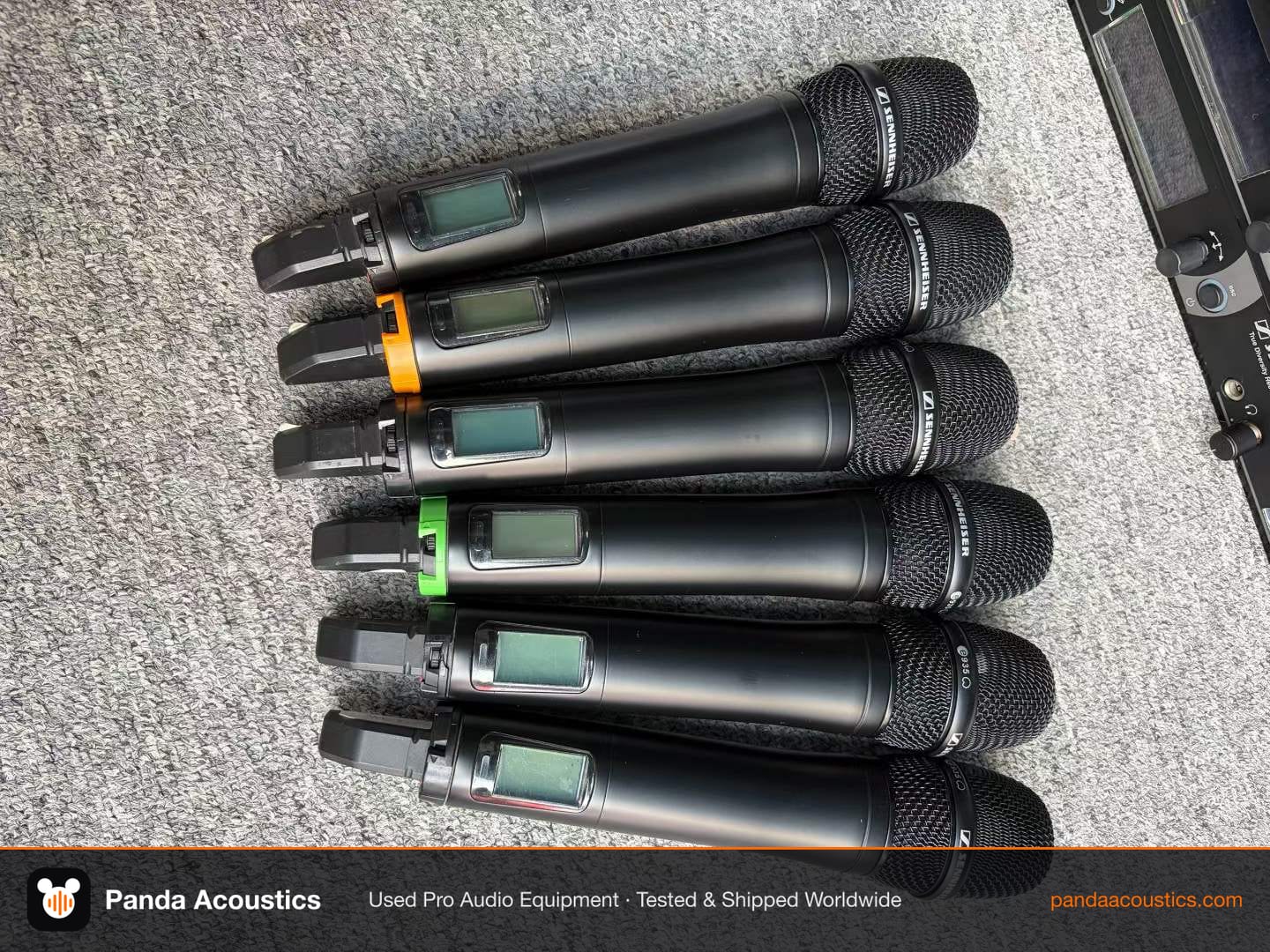
A used Sennheiser e935 is worth considering only as a small, capsule-identified lot: the listing shows Grade A condition, an MMD 935 capsule, German origin and 6 units in stock, with price not disclosed. Before paying, confirm the capsule model, the condition grade in writing, and the total landed cost, because unit price and warranty are not published.
Key takeaways
- The e935 listing is a wireless handheld microphone with an MMD 935 capsule, Made in Germany, condition Grade A, in stock.
- Stock is 6 units — this is a top-up or trial quantity, not a fleet order.
- Price per unit is not published; the site-wide microphone range is USD 80–600 per unit, so the e935 sits somewhere inside that band, not at a stated figure.
- Condition grading and inspection are documented on separate policy pages, so ask for the specific grade and inspection record tied to your lot.
- Warranty, lead time, MOQ and certification are not disclosed in the materials — treat them as open questions, not assumptions.
The decision
You run a KTV room block, a rental house, a touring company or a bar/club in Russia, the Middle East, South America or Africa. You already buy in volume from China and you are weighing whether to add a used Sennheiser e935 lot to an existing order or a mixed container. The question is not whether the e935 is a good microphone in the abstract — it is whether this specific lot, at this specific grade, at a price you have to request, is worth the landed cost and the risk of buying used wireless handhelds sight-unseen.
That decision has two halves. The first is technical: capsule identity, condition grade and whether the units are complete and functional. The second is commercial: unit price, quantity available, shipping terms and what happens if a unit fails. The materials answer the first half partly and the second half barely at all.
What the data says
The listing facts are narrow and specific. The product is the Sennheiser e935 Wireless Handheld Microphone, brand Sennheiser, model e935, condition A, stock status in-stock, price not published, priced per unit in USD. Its recorded specs are: capsule MMD 935, origin Made in Germany, quantity 6 units.
The only price signal in the materials is the category range for microphones: USD 80 to USD 600 per unit. That is a range across the microphone category, not a quote for the e935. Any per-unit figure you plan around must come from a written quotation, not from this article.
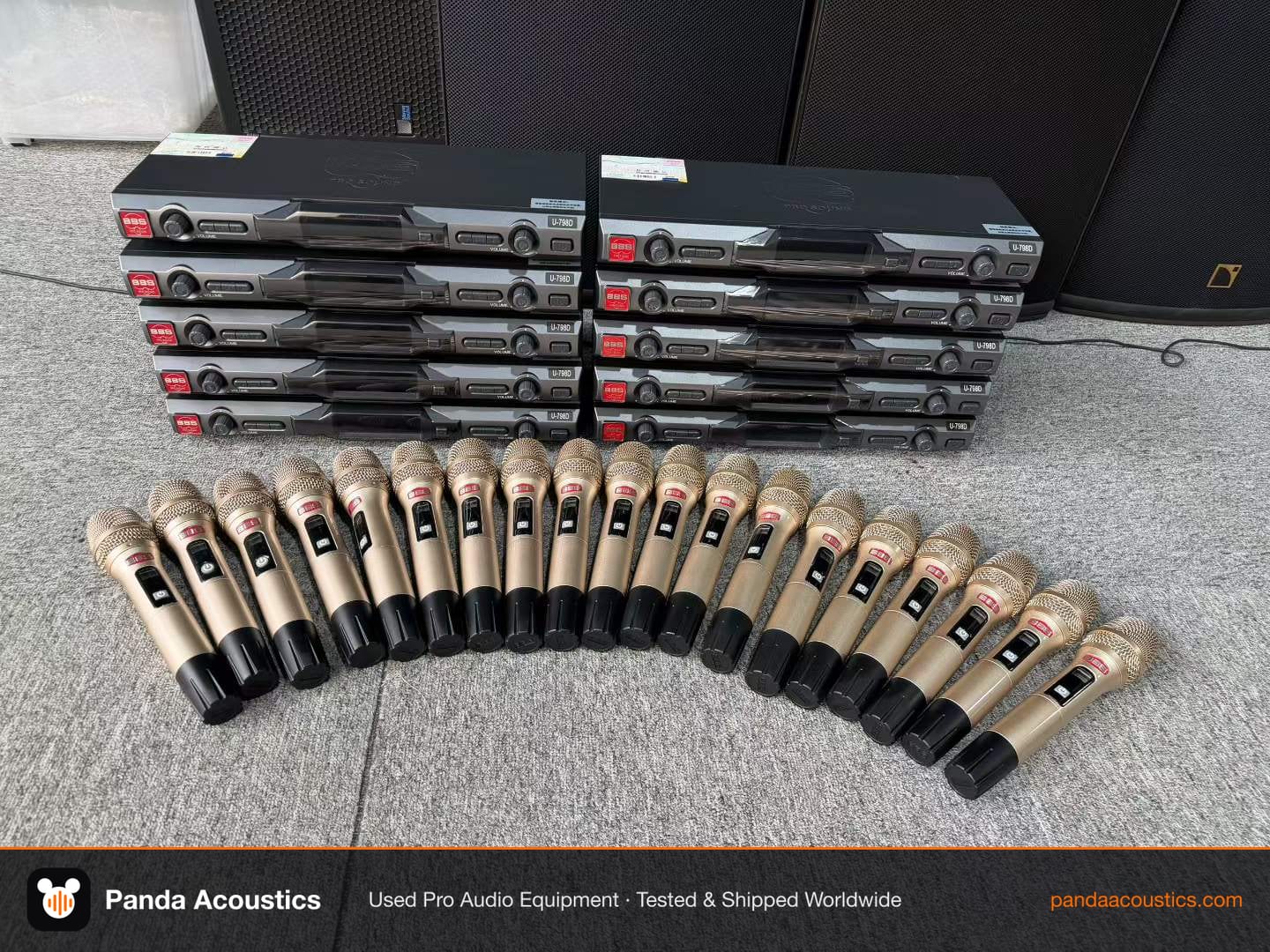
For comparison inside the same catalogue, the BBS U-798D is a dual-channel wireless microphone system, condition A, in stock, price not published. Its recorded specs are two channels per receiver, receiver model U-798D, receiver controls of volume knob, Set/Up/Down buttons and power button, and a handheld transmitter with gold grille and LCD display. Those are the only two microphone products described in the materials, and neither carries a published price.
What is documented as process, rather than as a result for this lot: the site publishes a condition grading standard and an inspection standard. Those pages define how grade and inspection are described. They do not, in the materials provided, state the outcome for these 6 units.
What the datasheet/docs don't tell you
Unit price: Not disclosed. You cannot compute landed cost, margin per room, or rent-to-own payback without a quotation. The USD 80–600 category range is too wide to plan against.
Warranty: Not disclosed. For used wireless handhelds, the practical question is what happens to a unit that drops out or fails after arrival. If there is no stated warranty, price the risk into your offer.
Lead time and shipping terms: Not disclosed. Shipping and logistics are described on a separate policy page, but the materials do not give a lead time for this lot.
MOQ: Not disclosed. With 6 units in stock, the realistic ceiling for a single order is 6 units, but whether the supplier will split the lot is unknown.
Certification: Not disclosed. No CE, RoHS, UL, FCC or ISO claim appears in the materials for this product, so do not assume any for customs or tender paperwork.
Accessories and completeness: Not disclosed. Whether each unit ships with a receiver, power supply, batteries, clips or a case is not stated. For a wireless handheld, the receiver pairing matters as much as the capsule.
Frequency band and regional compliance: Not disclosed. This matters most for Russia, the Middle East, South America and Africa, where permitted bands differ. Ask before you ship.
Cosmetic and functional detail behind Grade A: The grading standard exists, but the specific findings for these 6 units — grille condition, capsule mesh, switch feel, RF output — are not in the materials. Why it matters: Grade A is a label; the inspection record is the evidence.
Who should not choose this
Do not choose this lot if you need a matched fleet in one shipment. Six units will not equip a multi-room KTV build or a rental pool that expects dozens of handhelds on the same frequency plan. Buying 6 now and chasing the rest later creates mismatched vintages and inconsistent spares.
Do not choose it if your purchasing process requires a published price, a stated warranty period or a named certification before you can raise a purchase order. None of those are disclosed here, and a tender or bank-financed purchase will stall on that gap.
Do not choose it if you cannot inspect or have inspected on arrival. Used wireless handhelds fail in ways that are invisible in photos — intermittent switches, capsule contamination, worn connectors. If your operation has no bench test routine, buy new or buy a system you can service locally.
Comparison and trade-offs
Within the materials, the only direct comparison is the e935 against the BBS U-798D. Both are condition A and in stock, and both have price not published. The differences that are actually documented are structural: the e935 is a single handheld with an MMD 935 capsule made in Germany, while the U-798D is a dual-channel system with two channels per receiver and a handheld transmitter with a gold grille and LCD display.
That shapes the trade-off. If you need channel density per rack space and a receiver with visible channel controls, the U-798D is the documented option. If you specifically want the MMD 935 capsule and German origin, the e935 is the documented option — but only 6 units exist in this listing. The materials do not allow a sound-quality or reliability comparison between the two, and no price comparison is possible because neither price is published.
The third trade-off is quantity versus certainty. A single 6-unit lot gives you a small, defined exposure: if the units arrive and test clean, you have a proven batch to reorder against. If they do not, you have lost a small amount rather than a container. That is the argument for treating this as a trial lot.
Implementation / next step
Before paying, request a written quotation for the 6-unit e935 lot that states, line by line: unit price in USD, total for the lot, condition grade with reference to the grading standard, the inspection record for these specific units, what accessories are included per unit, the frequency band, warranty position, lead time and shipping terms to your destination.
Then check that quotation against the condition grading standard and the inspection standard so the grade on paper matches the grade you are paying for. Review shipping and logistics and payment terms before you commit, and if 6 units is too few, browse the microphone category page for alternatives in the same condition grade.
Concrete next step: open the Sennheiser e935 listing, send the eight-point quotation request above, and do not release payment until the unit price and warranty position are confirmed in writing.