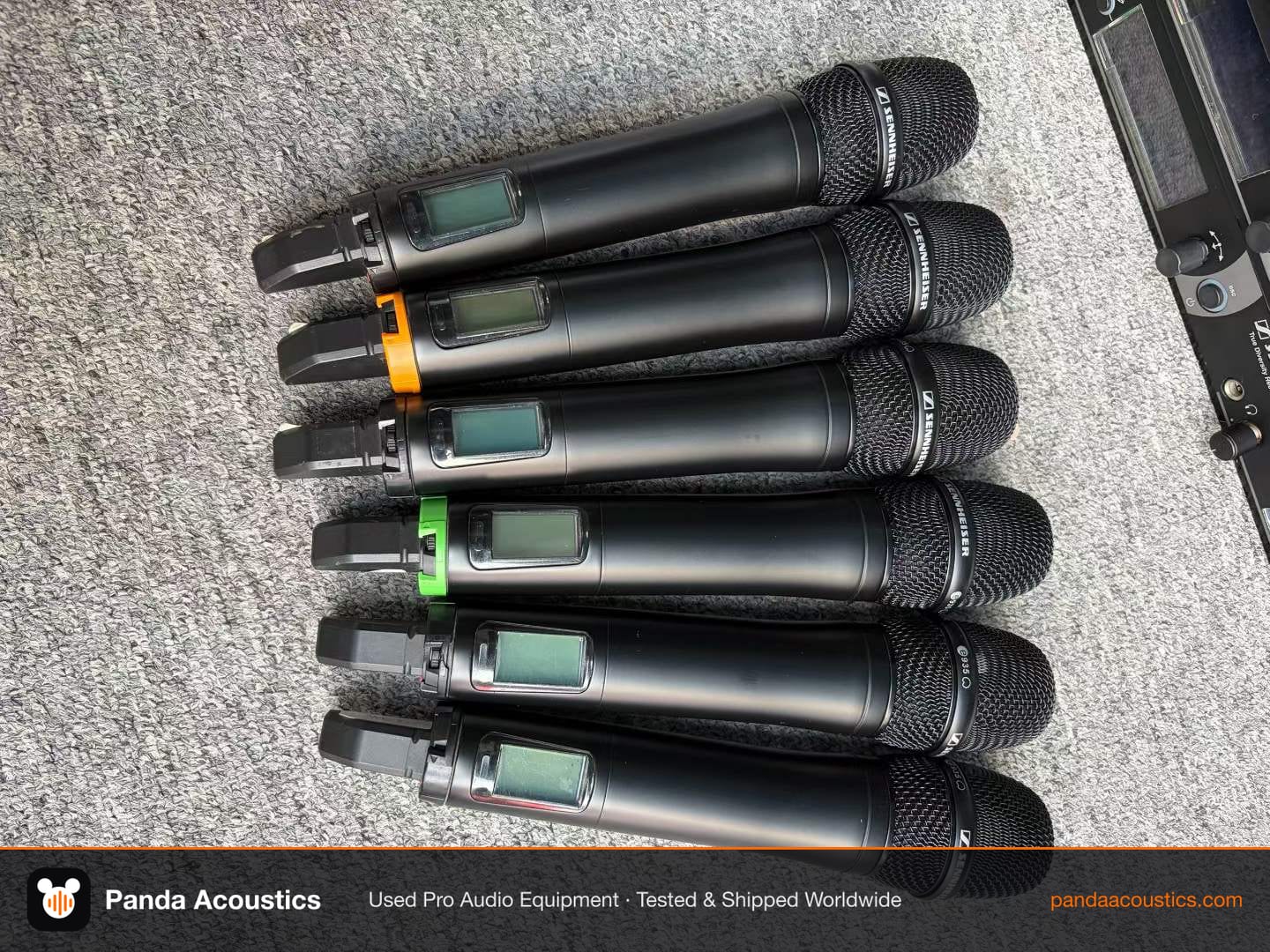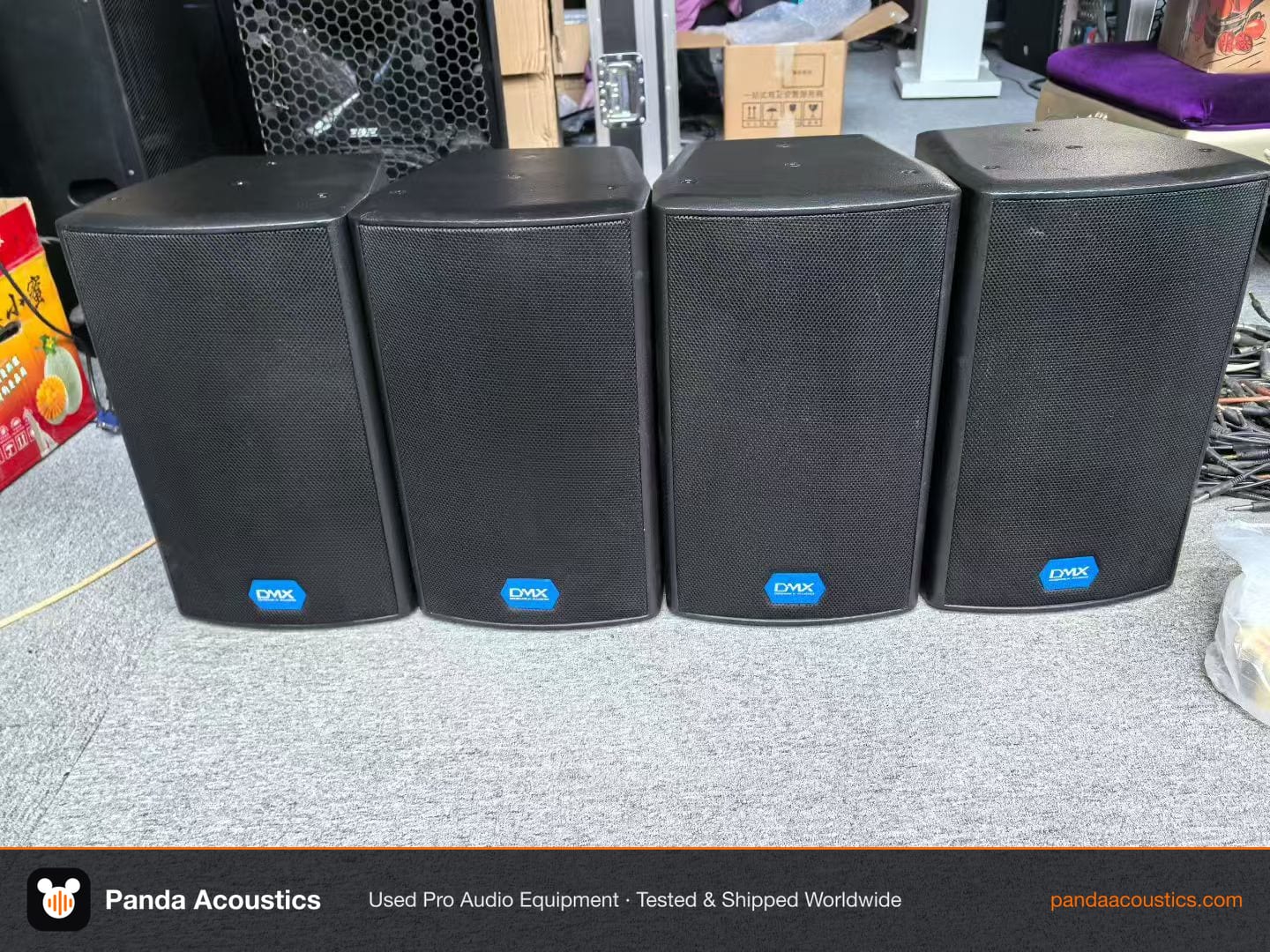
A wholesale KTV microphone set from China is worth buying used only when the seller can show you a documented condition grade, a stated inspection scope and a working per-channel count on every receiver — and when you have confirmed in writing the items the listings leave blank, such as price, warranty and lead time. In the tested used category, the published facts are narrow, so your decision should rest on verification, not on the headline model name.
Quick answer
For volume buyers in Russia, the Middle East, South America and Africa, a used KTV wireless microphone set falls in a USD 80–600 per unit band. That band is wide because a "set" can mean a dual-channel receiver with two handhelds or something smaller. Before paying, treat the model number as a starting point and the inspection record as the deciding document. If the seller cannot name the grading standard and the inspection steps, the price is not comparable to anything.
Key takeaways
- Published price band for this category is USD 80–600 per unit; individual product prices are not published, so per-unit quotes must be requested.
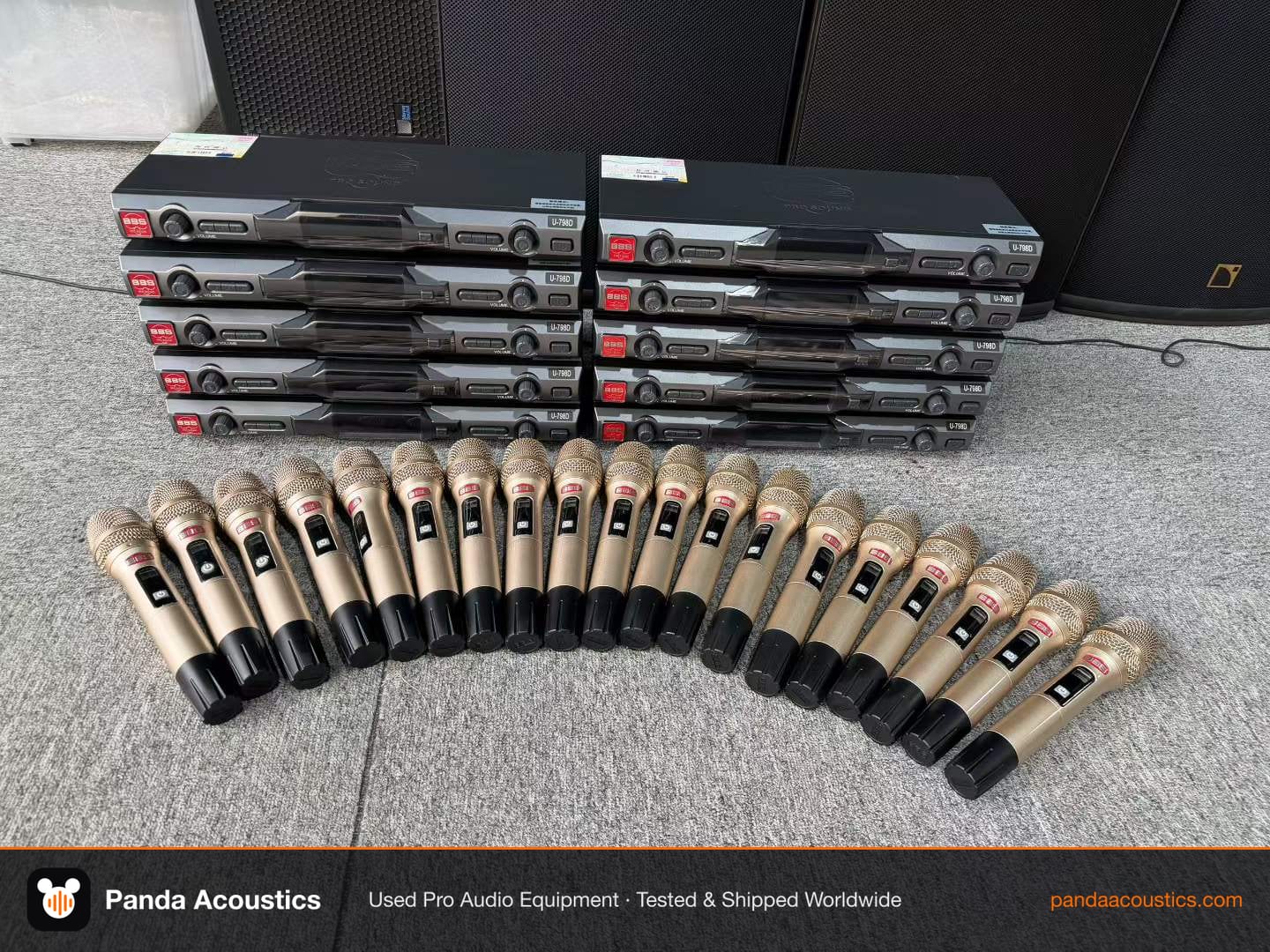
- The BBS U-798D is documented as a dual-channel system: 2 channels per receiver, receiver model U-798D, handheld transmitters with gold grille and LCD display.
- Condition is graded — the U-798D is listed as condition A and in stock — but the grading scale itself must be read on the condition grading standard page, not assumed.
- Inspection scope is defined on a separate inspection standard page; ask for the result per unit, not a general statement.
- Warranty period, lead time, MOQ and certification are not disclosed in the materials, so they must be settled before any deposit.
The decision
You run KTV rooms, a rental house or a bar with several rooms, and you need microphone sets in quantity rather than one at a time. The purchase is repetitive: rooms get refitted, handhelds get dropped, receivers get swapped. You are not buying a showpiece; you are buying a consumable that must survive nightly use and be replaceable in batches.
That changes what matters. A single unit's sound quality matters less than whether the tenth unit in the box behaves like the first. Channel count per receiver drives how many rooms one box covers. Condition grade drives how much of the batch you will have to retire early. And the total landed cost — unit price plus freight plus whatever you spend replacing failures — is the number that decides whether the order was good. The unit price alone tells you very little.
So the real question is not "is this model good?" but "can this supplier show me, per unit, what was checked and what condition it is in, and can they put the commercial terms in writing?" That is the decision in front of you.
What the data says
The category is microphone, and the published price range per unit is USD 80 to USD 600. That is the only price figure available; the BBS U-798D listing does not publish a price, and no MOQ, warranty period or lead time appears in the materials.
The one fully documented product in this category is the BBS U-798D Dual-Channel Wireless Microphone System. Its documented facts are: 2 channels per receiver; receiver model U-798D; receiver controls consisting of a volume knob, Set/Up/Down buttons and a power button; and handheld transmitters with a gold grille and LCD display. Condition is A, and stock status is in-stock.
Those four specs are more useful than they look. Two channels per receiver means one unit serves two microphones, which is the normal KTV room configuration — so unit count and room count map directly. The Set/Up/Down button layout tells you the receiver is menu-driven rather than a single-knob design, which matters for whoever has to re-tune rooms after a frequency change. The LCD on the handheld tells the performer the transmitter state without a walk to the rack. None of this is marketing; it is what the listing states.
Everything else about the category — how many units a pallet holds, what freight costs to your port, how long an order takes — is not in the materials. Treat those as open items, not as assumptions.
What the datasheet/docs don't tell you
Price per unit: Not disclosed for the U-798D. Only the USD 80–600 category band is published. Why it matters: you cannot compare two suppliers without a quoted per-unit price at a stated condition grade.
Warranty: Not disclosed. Why it matters: on used wireless gear, the failure that hurts is the one in month three, after the batch is deployed across rooms. If there is no stated warranty, your replacement cost is unbudgeted.
MOQ and lead time: Not disclosed. Why it matters: a rental house refitting twelve rooms needs a delivery date, not a shipping estimate.
Certification: No CE, RoHS, UL, FCC or ISO certification appears in the materials. Why it matters: if your market or your client requires import documentation, you must confirm this yourself before ordering — do not assume it exists.
RF and audio performance figures: Not disclosed. Frequency range, stability, THD and range are not stated. Why it matters: KTV rooms are dense RF environments; two channels per receiver is documented, but how those channels behave side by side across many rooms is not.
What "condition A" actually permits: the grade label is published, but the definition lives on the grading page. Why it matters: a grade means nothing if you have not read the scale it sits on.
Battery life and transmitter runtime: Not disclosed. Why it matters: in a KTV room, a handheld that dies mid-song is the complaint you hear about, not the spec sheet.
Who should not choose this
Do not buy this if you need published warranty terms, certification documents or a fixed lead time as a condition of purchase. None of those are disclosed in the materials, and a supplier who cannot state them before you pay is unlikely to produce them after.
Do not buy if you are outfitting a single room and want one perfect set. The economics of a wholesale used purchase — batch grading, freight, inspection — only pay back at volume. A one-off buyer carries the same fixed costs over one unit.
Do not buy if your client contract requires brand-new equipment with manufacturer warranty. Condition A used equipment is not that, and no amount of inspection changes the category.
Do not buy if you cannot inspect or have inspected on arrival. If your only quality gate is the seller's word, the condition grade is a label, not a control.
Comparison and trade-offs
Within the materials, the only meaningful comparison is between buying this documented product and buying the category blind. The U-798D gives you four specs, a condition grade and a stock status. A generic "KTV microphone set" listing gives you a price band of USD 80–600 and nothing else. The trade-off is straightforward: the documented unit costs you the effort of reading the grading and inspection pages, while the undocumented unit costs you the risk of discovering the difference after delivery.
The second trade-off is channel count against unit count. Two channels per receiver is documented for the U-798D. If your rooms are single-microphone, you are paying for a channel you will not use per room — but you gain a spare channel per unit, which has real value in a rental fleet where one dead channel does not retire the whole receiver.
The third trade-off is price band against condition. The USD 80–600 range spans a factor of more than seven. A unit at the bottom of that band and a unit at the top are not the same purchase, and without a published per-unit price at a stated grade, you cannot tell which end you are being quoted. Ask for the grade alongside the number, every time.
What you cannot compare here is brand against brand. The materials document one model. Any claim that one brand outperforms another would be invented, so leave it out of your decision and compare on documentation instead.
Implementation / next step
Before you pay, request three things in one message: a per-unit quote for the BBS U-798D at condition A with the grade definition attached, the inspection result for the specific units in your order, and written confirmation of warranty, MOQ and lead time. Read the inspection standard and the condition grading standard first so you know what you are asking for, then check the payment terms before any deposit leaves your account. If any of the three answers comes back vague, that is your answer.
Your concrete next step: open the BBS U-798D listing and the microphone category page, write down the four documented specs, and send a quote request that asks for the missing items by name.