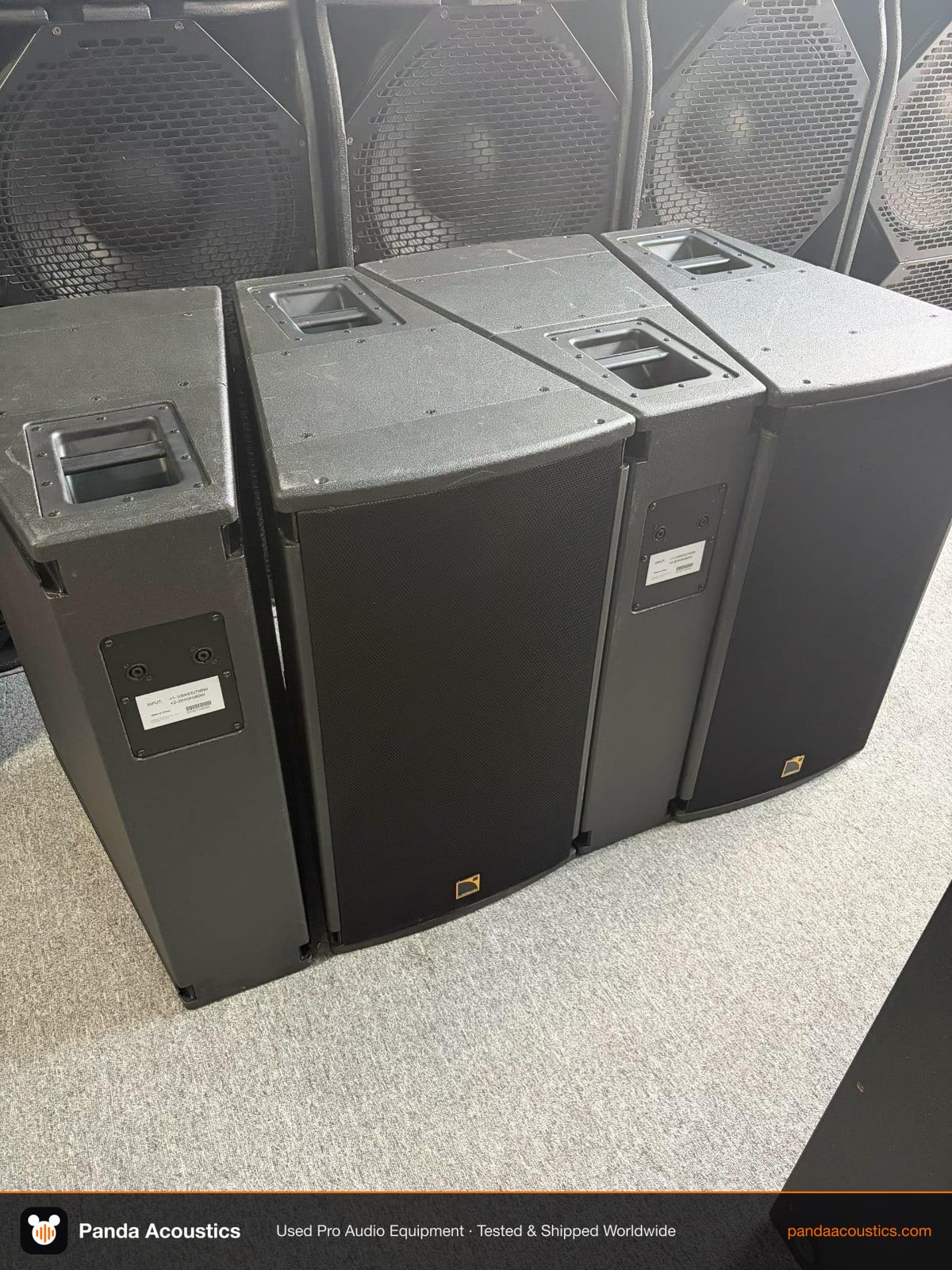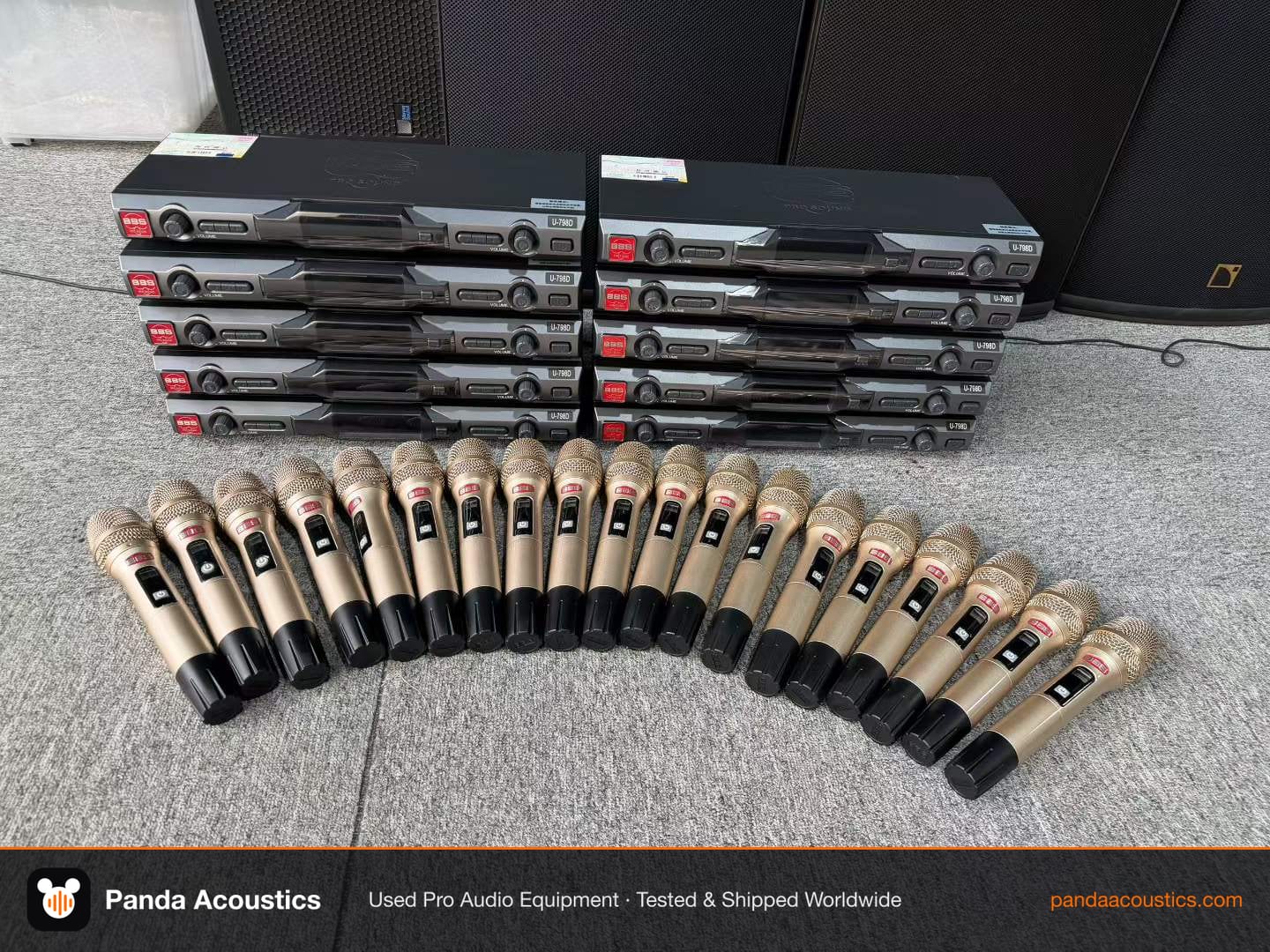
A used BBS U-798D is a dual-channel wireless microphone system — one receiver, two handheld transmitters — that is worth buying in bulk only when each unit is confirmed to include both transmitters and the receiver passes an RF and audio check. Treat it as a volume KTV and small-rental item, not as a touring-grade RF platform.
Quick answer
The BBS U-798D is a two-channel receiver paired with handheld transmitters that have a gold grille and an LCD display, and it is listed in Condition A with stock in hand. Whether it is worth buying used comes down to three things you must confirm per unit: both transmitters present, receiver controls functioning, and total landed cost inside the USD 80–600 per-unit band.
Key takeaways
- The U-798D receiver carries two channels, so one unit covers two microphones — relevant when you are outfitting multiple KTV rooms.
- Receiver controls are a volume knob, Set/Up/Down buttons and a power button; these are the parts that wear and the parts you should confirm work.
- Transmitters are handheld with a gold grille and LCD display, which means the display and grille condition are visible checkpoints, not hidden ones.
- Condition A is the listed grade, but the grading standard page is where the definition lives — read it before you assume what A covers.
- The used range for this category is USD 80–600 per unit; the U-798D price itself is not published.
The decision
You are a KTV operator, rental house, bar or club buying wireless microphones in volume from China, and you have found the BBS U-798D at a price that looks workable. The real decision is not "is this a good microphone" but "can I buy a batch of these, land them, and put them into service without a per-unit failure rate that eats the margin." That reframes the purchase around inspection evidence and logistics cost rather than brand reputation.
For a KTV operator, the U-798D's two channels per receiver map neatly onto room-by-room deployment. For a rental house or bar, the same unit is a spare-capacity item — you buy more than you need so a dead transmitter does not kill a show. Both cases reward buyers who verify units individually and penalise buyers who assume a pallet is uniform.
What the data says
The published facts are narrow and worth reading literally. The receiver model is U-798D and it provides two channels per receiver. Receiver controls are a volume knob, Set/Up/Down buttons and a power button. The transmitter type is handheld with a gold grille and an LCD display. Condition is listed as A, stock status is in-stock, and the price is not published.
The category price band for used microphones of this type is USD 80–600 per unit. That band is wide because it covers everything from a basic two-channel set to higher-tier systems; the U-798D sits somewhere inside it, and the actual figure has to come from a quote rather than from the listing. Anything outside that band — a suspiciously low number, or a number at the very top — deserves a direct question about what is included and what condition grade was applied.
What the materials do not contain is equally important: no frequency band, no RF output power, no range figure, no battery life, no channel count beyond two, and no certification list. Those absences shape the questions you ask.
What the datasheet/docs don't tell you
Frequency band and coordination: Unknown. The materials do not state which band the U-798D operates in. For a KTV room that matters less; for a venue running several systems at once it matters a great deal, because uncoordinated systems in the same band interfere. Ask before you buy a batch for a multi-room site.
RF output power and range: Not disclosed. There is no coverage distance in the materials. If your rooms are large or your stage is deep, do not assume the U-798D will cover them — confirm the practical working distance with the supplier or plan a test on arrival.
Battery type and runtime: Not disclosed. Handheld transmitters with an LCD display draw power for the display, and runtime is a consumable cost in KTV use. Budget for batteries as an operating line item until you have measured it yourself.
Warranty period: Not disclosed. Nothing in the materials states a warranty term. Do not plan around one; plan around your own spares ratio instead.
Certification: Not stated. No CE, RoHS, UL, FCC or ISO claim appears in the materials, so none should be assumed. If your market requires import documentation, that is a question for the supplier and your customs broker, not something to infer from the listing.
What Condition A covers: defined on the grading page, not in the listing. The listing says A; the meaning of A is a separate document. Read the condition grading standard so you know what is and is not included in that grade before you commit to a volume order.
Who should not choose this
Touring sound companies should not buy the U-798D as their primary wireless platform. Two channels per receiver, no disclosed frequency coordination data and no stated certification make it a poor fit for multi-act festival work where you need many channels planned together and documented compliance for cross-border freight.
Buyers who cannot accept per-unit variance should also walk away. Used equipment in volume means individual units differ; if your operation has no capacity to test incoming stock, log failures and hold spares, the savings evaporate the first time a transmitter dies mid-set. Likewise, anyone who needs a published warranty term or a stated certification before ordering should treat this as unsuitable rather than negotiate around a gap that the materials do not close.
Comparison and trade-offs
Within the materials, the only honest comparison is between the U-798D and the rest of the used microphone category on price and configuration. The category band runs USD 80–600 per unit; the U-798D's own price is not published, so you cannot position it on the band until you have a quote. What you can compare is configuration: two channels per receiver with a volume knob and Set/Up/Down buttons is a simple, manually adjusted design, which is easier to check and cheaper to own than a networked or digitally coordinated system — and correspondingly less capable when you need many channels managed together.
The second trade-off is condition versus certainty. A Condition A unit from a graded batch gives you a defined starting point, but the grading standard is the document that defines it, and the inspection standard is what tells you which checks were applied. Buying on grade alone, without reading those two pages, is buying a label rather than a verified unit. The third trade-off is unit price versus landed cost: a lower unit price that ships badly is not a saving, so read the shipping and logistics page and price freight, duty and inland delivery into the per-unit figure before you compare suppliers.
Implementation / next step
Before paying, request a per-unit confirmation for the exact batch you are buying: that each unit includes the U-798D receiver plus two handheld transmitters, that the volume knob, Set/Up/Down buttons and power button are confirmed functional, and that the grade applied is A under the published standard. Ask directly for the frequency band, the battery type, the warranty position and any certification documents — and accept "not available" as an answer rather than filling the gap yourself. Then calculate landed cost per unit against the USD 80–600 band.
Your concrete next step: open the BBS U-798D listing, read the grading and inspection pages alongside it, and send the supplier a written request for the batch confirmation and a landed-cost quote to your port before any deposit.