On a used line array, "driver condition" is rarely stated per driver. What a listing usually shows is cabinet grade, grille type, rigging hardware and whether an amplifier module is present — so your job is to confirm driver-level condition separately, in writing, before you pay. If a seller cannot document it, treat the driver condition as Unknown.
Key takeaways
- Line array modules in this category are priced between USD 1,200 and USD 6,000 per unit — a range wide enough that condition differences, not model names, drive the real cost.
- "Grade A" describes used equipment condition; it does not by itself state cone, diaphragm or voice-coil condition per driver.
- Self-powered modules such as the Meyer Sound MINA carry a 600-HP amplifier module; its service history is separate from driver condition and is Not disclosed in the listing.
- Rigging hardware and cabling appear in listings, but load-test records and per-unit test plots are Not disclosed.
- Read the condition grading standard and the inspection standard before you compare any two listings.
The decision
You are a KTV operator, rental house or touring company in Russia, the Middle East, South America or Africa buying line array in volume. You are not choosing between new and used — you have already decided used fits the budget. The decision is narrower: which batch of used modules has driver condition you can verify, and which batch is a cosmetic listing with the driver condition left Unknown.
That matters because line array modules are bought as a system. One weak driver in a module affects coverage in the array, and replacing drivers after import adds freight and labor you did not budget. The landed cost of a cheap batch with Unknown driver condition can exceed the landed cost of a documented batch.
What the data says
Only these facts are stated in the materials for this category:
- Price range per unit: USD 1,200 to USD 6,000.
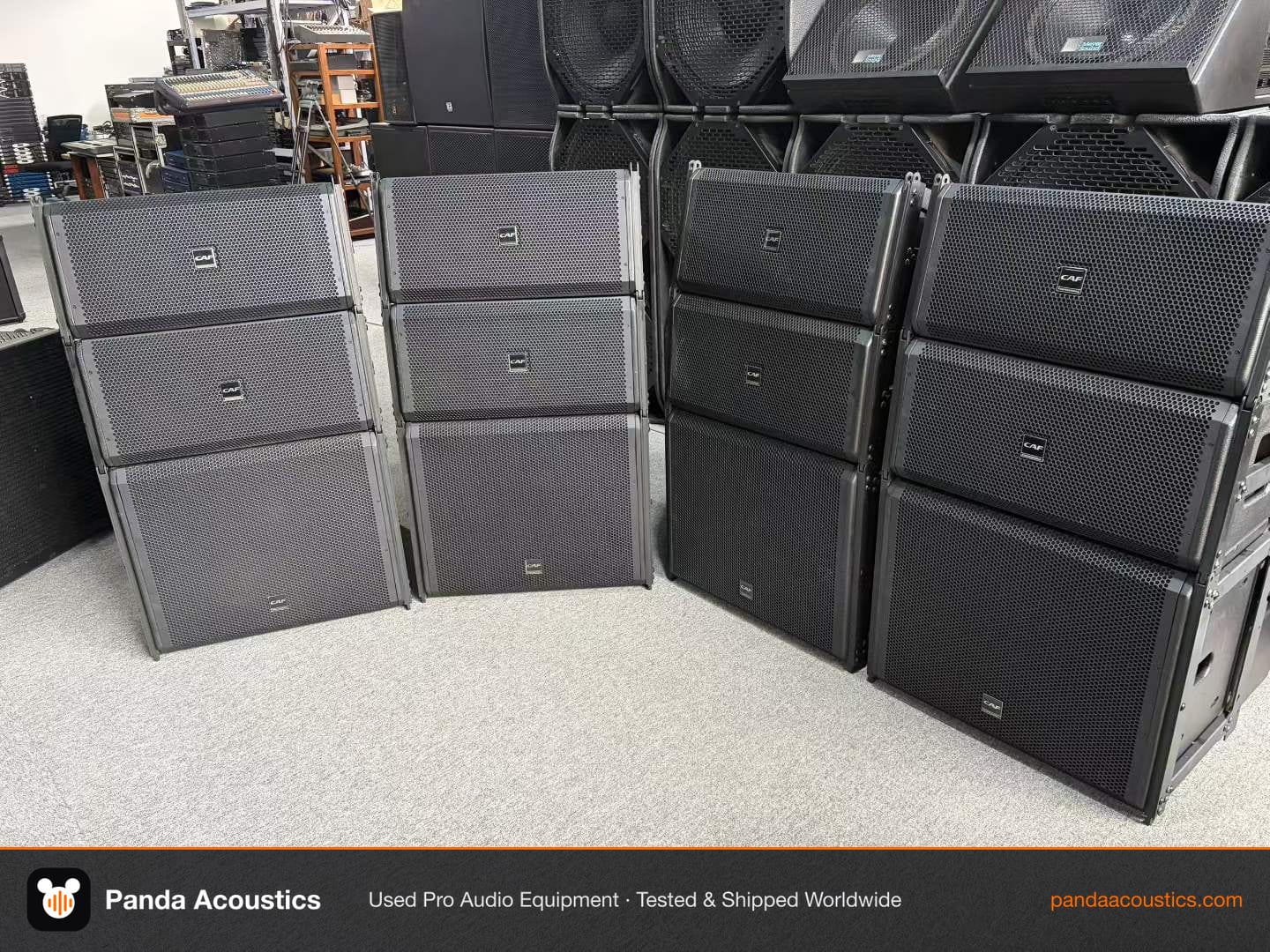
- CAF line array speaker modules: used, Grade A, black, metal front grille, rigging hardware included, connection panel with model labels, stacked in groups.
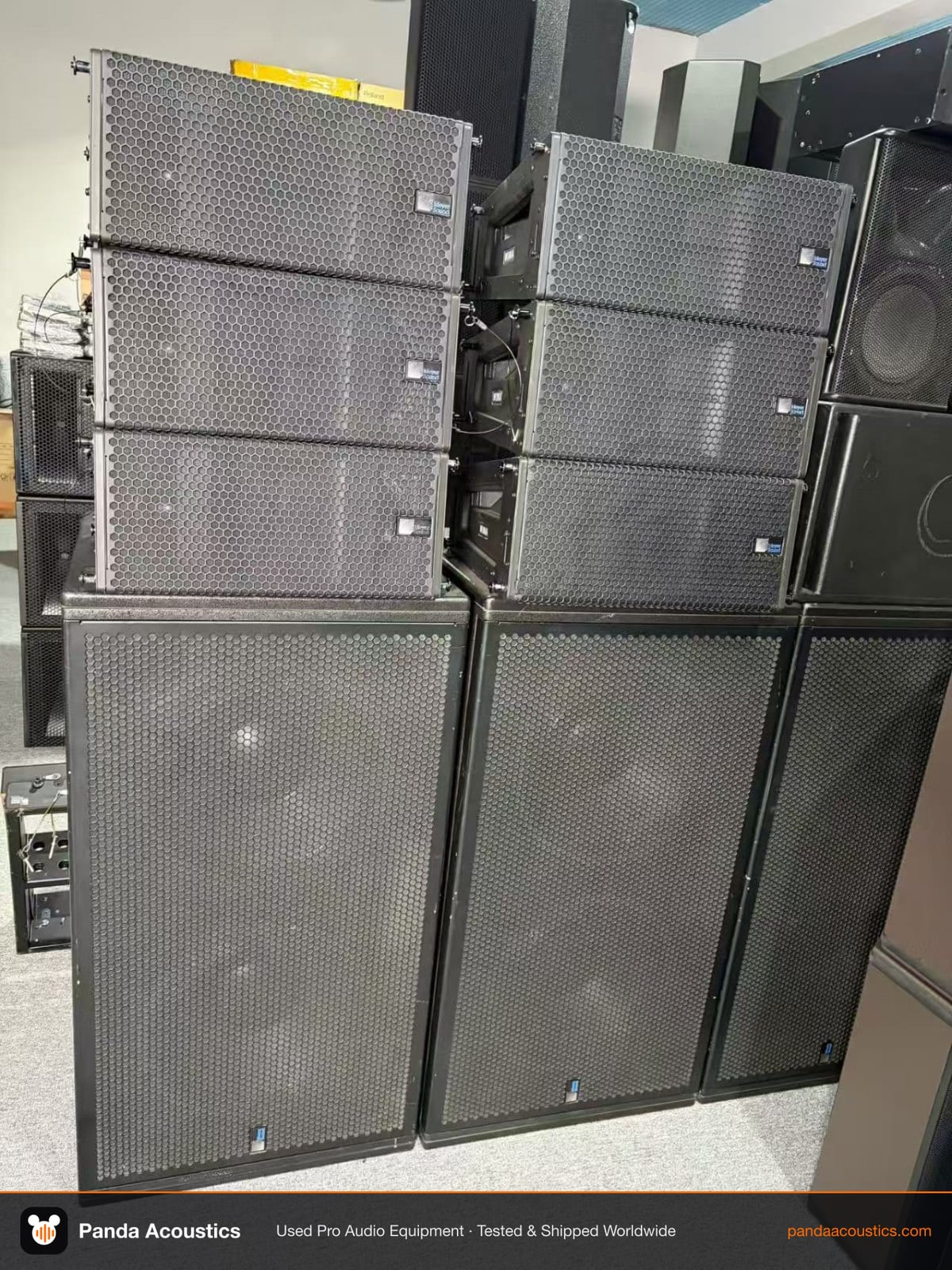
- Meyer Sound MINA: compact line array loudspeaker, condition A (used), 600-HP amplifier module, hex-punched steel grille, black finish, rigging frames and cabling as shown.
- Meyer Sound MINA (self-powered module listing): NL4 connectors, honeycomb metal grille, condition A with scuffs and scratches on cabinet and rigging hardware, rigging hardware and connection cables included.
- Stock status for these listings: in stock. Price per product: not published.
Notice what is absent from that list: no driver count, no impedance or Re figure, no test-plot reference, no hours of use. Those are the numbers that actually describe driver condition, and they are Unknown in the materials.
What the datasheet and listing don't tell you
- Per-driver condition: Not disclosed. Grade A is a cabinet-and-hardware grade. Why it matters: a module can be Grade A outside and still have a tired driver.
- Amplifier module service history: Not disclosed for the MINA's 600-HP module. Why it matters: on self-powered modules, amp faults and driver faults produce similar symptoms, and you need to know which was serviced.
- Test evidence: Not disclosed per unit. Why it matters: without a sweep or impedance record tied to the serial number, you cannot compare two batches.
- Rigging load records: Not disclosed. Why it matters: rigging hardware is included, but inclusion is not the same as a load history.
- Warranty and lead time: Not disclosed in the materials. Why it matters: both change your total landed cost and your cash-flow plan.
- Certification: Not stated in the materials. Why it matters: do not assume any compliance mark; ask, and treat silence as no.
Who should not choose this
Do not buy this category if you need a published warranty period, per-driver test data attached to each serial number, or certification documents before shipment. Those are not disclosed in the materials, so a supplier who promises them in conversation is promising something the listing does not support.
Also skip it if your venue cannot absorb a driver replacement after import — for example a single-room KTV with no spare module and no local recone capability. In that case a smaller, fully documented batch, or new equipment at a lower tier, is the safer commercial choice.
Comparison and trade-offs
Within the materials, the honest comparison is between listed configurations, not between brands on sound quality.
- CAF modules vs Meyer Sound MINA: the CAF listing states rigging hardware included and a connection panel with model labels; the MINA listings state a 600-HP amplifier module and rigging frames with cabling. Only the MINA listings name an amplifier module, so only there does amplifier condition become a separate question.
- MINA listing vs MINA listing: one states condition A with scuffs and scratches on cabinet and rigging hardware and NL4 connectors; another states rigging frames and safety steel cables fitted. Read both before choosing, because the included accessories differ.
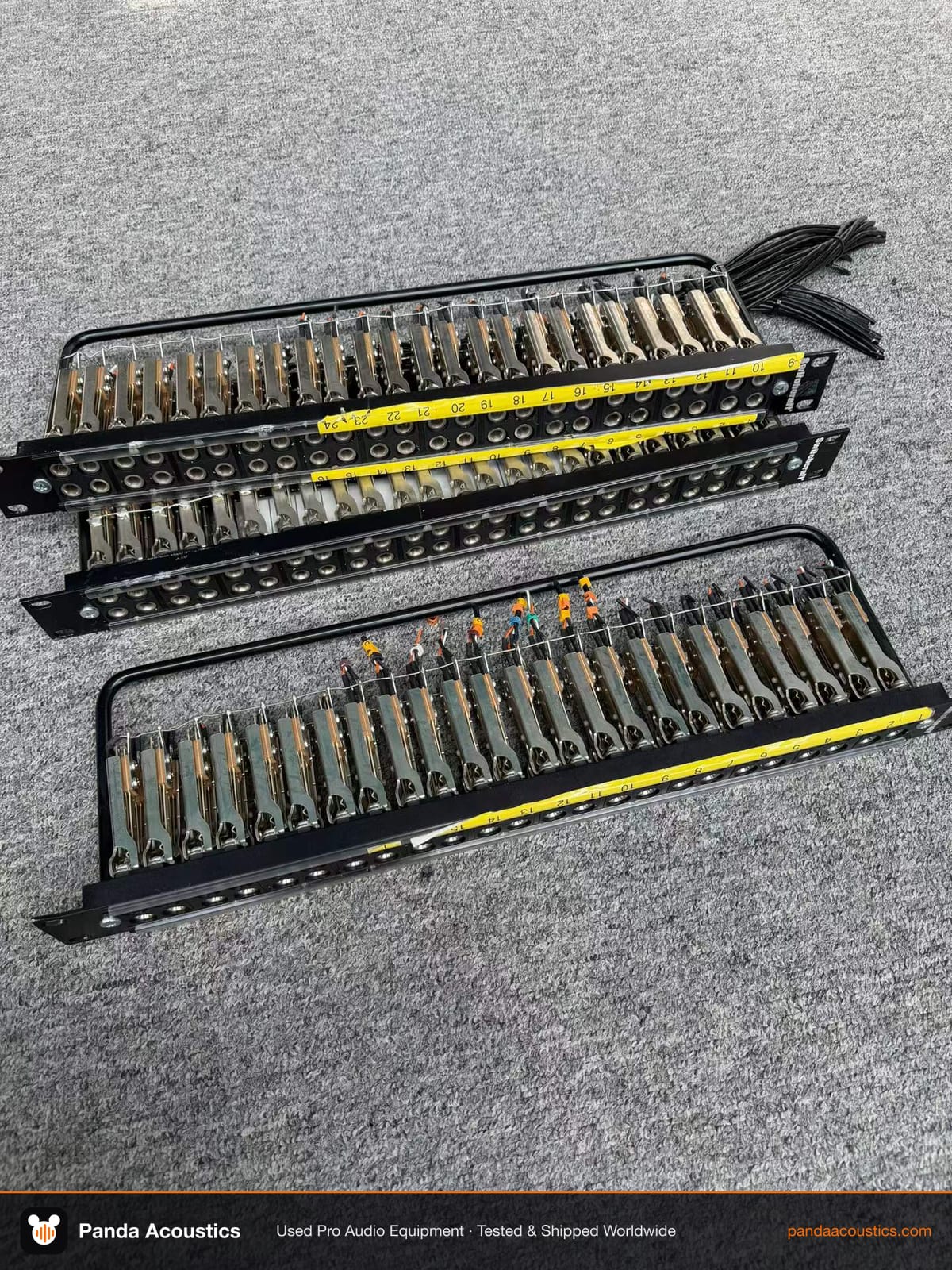
- Line array vs patch panel: the Switchcraft 24-channel panel is a passive item with 1/4-inch jack sockets and bundled bare wire ends — condition risk is mechanical, not driver-level. It is not a substitute for line array modules.
The trade-off is consistent: the more a listing documents, the less you gamble on driver condition, and the more you should expect to pay within the USD 1,200–6,000 band. A low price inside that band with no driver documentation is not a bargain; it is an unpriced risk.
Implementation: the next step before paying
Ask for one document per batch: a driver-level condition statement tied to serial numbers, covering cone and diaphragm condition, any recone history, and the amplifier module status where applicable. Ask for it alongside the grading reference so the two can be read together. Then compare that document against the line-array category page and the specific listing — for example the Meyer Sound MINA listing — and confirm shipping and payment terms on the shipping page and payment terms page before any deposit.
If the driver-level statement comes back blank or generic, walk away from that batch. That single request is your next action.