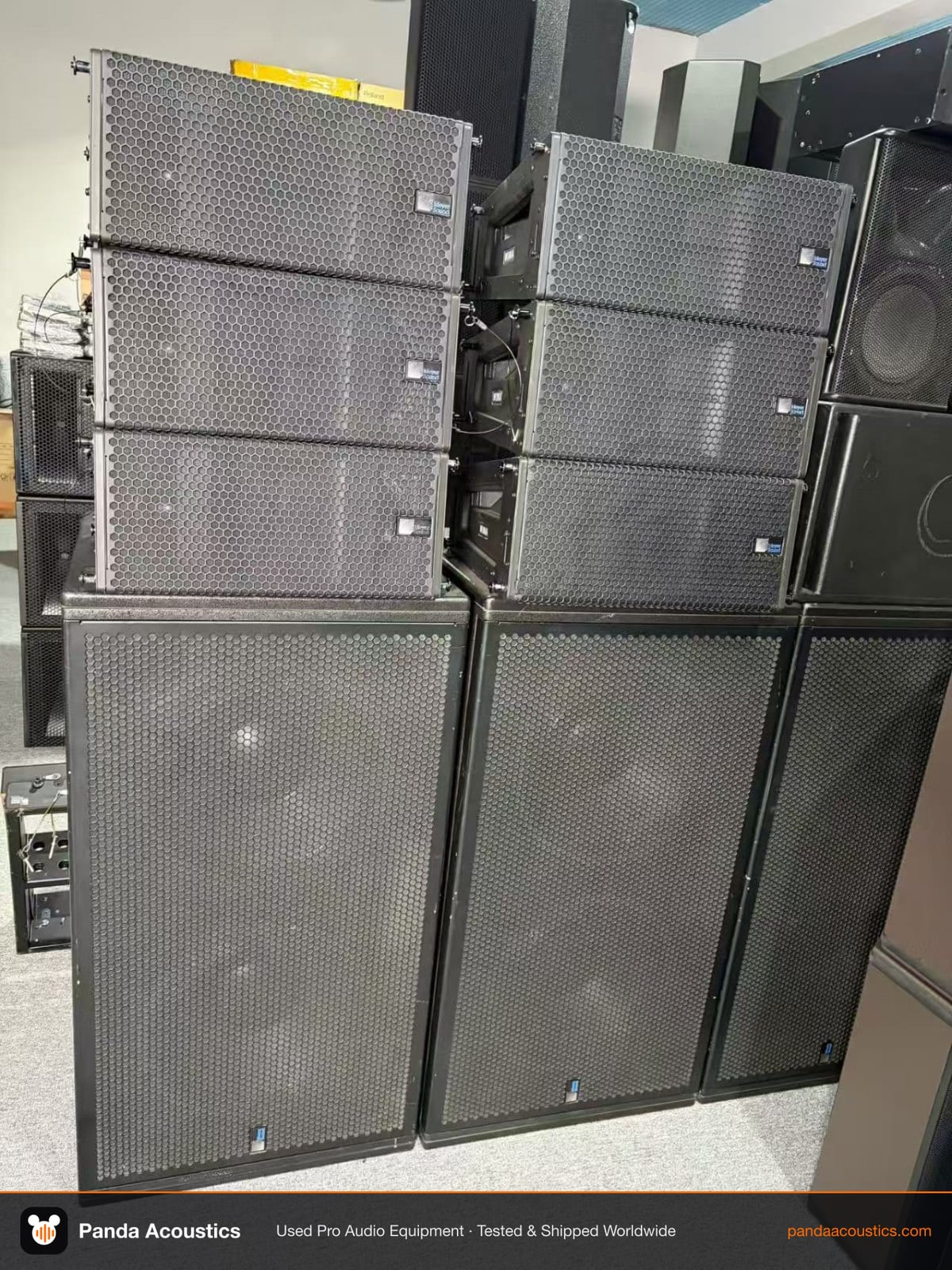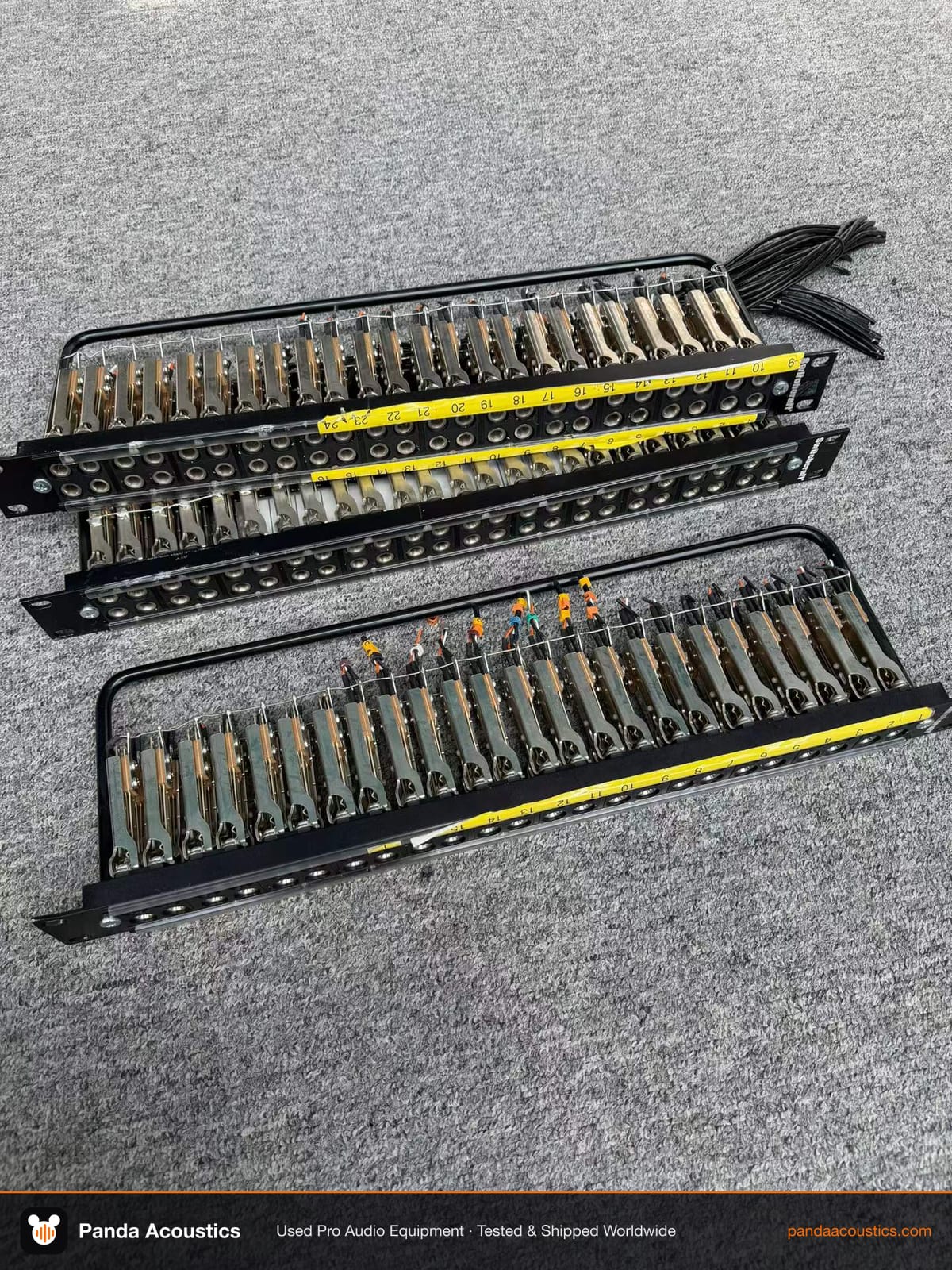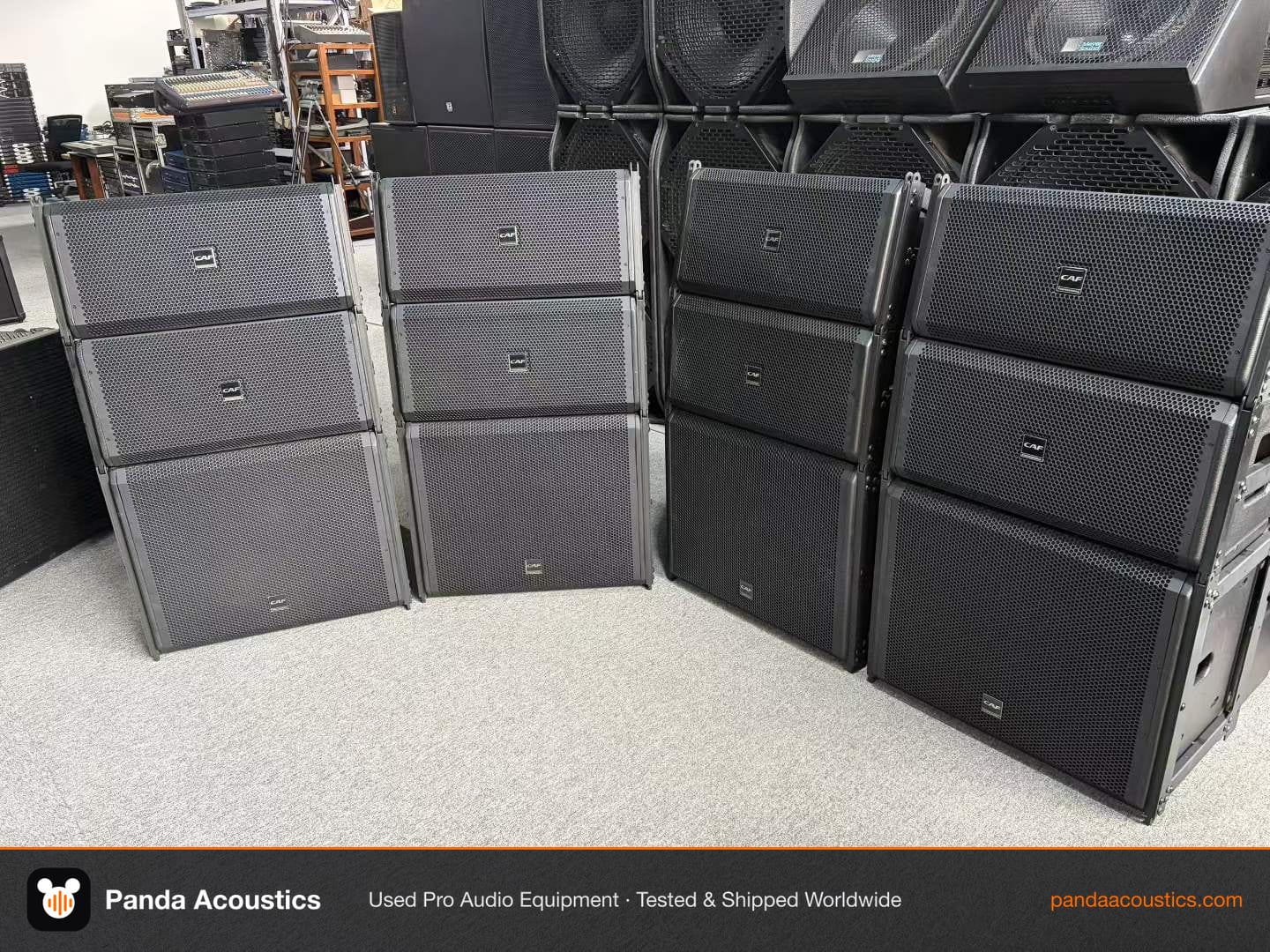
A gebruikte line array is worth buying in bulk from a China-based supplier only when the seller publishes a condition grade and an inspection scope you can audit before payment. If either is missing, treat the listing as unverified and do not pay a deposit.
Quick answer
Used line arrays move in volume because rental houses and touring companies replace cabinets in blocks, not one at a time. That makes bulk supply real. But the search term "gebruikte line array" mostly returns marketplace listings that show a photo and a price and say nothing about driver history, rigging hardware condition, or amplifier matching. Your job as a bulk buyer is to convert that listing into a documented condition claim you can check against a published grading standard and inspection standard.
Key takeaways
- A used line array is a system, not a speaker: cabinets, rigging frames, fly bars and amplifier presets must arrive as a matched set or the array will not behave as designed.
- Condition grade and inspection scope are the two documents that decide whether a bulk lot is worth the freight. Both are published by Panda Acoustics and can be read before you contact anyone.
- Landed cost, not unit price, is the number that matters for Russia, the Middle East, South America and Africa — freight, duty and inland delivery sit on top of the equipment cost.
- Warranty period, MOQ, lead time and certification are Not disclosed in the materials available here. Do not assume them.
The decision
You run KTV rooms, a rental fleet, a touring company, a bar or a club. You need 8, 16 or 24 line array cabinets plus the frames and amps to drive them, and you are comparing a China-based bulk supplier against local second-hand stock. The local stock is visible but thin and expensive per unit. The China lot is cheaper per unit but you cannot walk into the warehouse.
So the real decision is not "used or new". It is "can I verify this lot well enough to wire a deposit". A line array is the least forgiving category to buy blind: a cabinet with a tired compression driver, a bent fly bar or the wrong processor preset will not just sound wrong, it will fail a load-in. That is why the verification step carries more weight here than in, say, a used mixer purchase.
What the data says
Panda Acoustics is Beijing Panda Acoustics Technology Co., Ltd., a supplier of tested used professional audio equipment sold in bulk to overseas B2B buyers. That is the full extent of the company-level facts available in these materials.
Everything else that would normally anchor a buying guide is Not disclosed here: there is no price range per unit, no product-level pricing, no MOQ, no warranty period, no lead time and no certification listed. Any figure you see quoted elsewhere for a used line array should be treated as unverified until the supplier puts it in writing.
What is documented is process. Panda Acoustics publishes a condition grading standard and an inspection standard. Those two pages are the only legitimate basis for a condition claim on a bulk lot, and they are the first thing to read before you ask for a quote.
What the datasheet/docs don't tell you
Driver history is Unknown. A line array cabinet's compression drivers and woofers may have been reconed, replaced with non-original parts, or never touched. The listing will not say. This matters because a mixed set of drivers changes the array's coupling behaviour and its preset matching.
Rigging hardware condition is Not disclosed. Fly bars, pick points and quick-release pins are safety-critical. Without a documented inspection of that hardware, a used array is a load-in risk, not just a sound risk.
Amplifier and preset matching is Not disclosed. Line arrays depend on manufacturer presets. If the amps shipped with the lot are not the matched models, you inherit a tuning problem you cannot solve with EQ.
Warranty, MOQ, lead time and certification are Not disclosed. Do not plan a project timeline or a compliance file around assumptions. If a tender in your market requires certification documents, confirm in writing that they exist before you commit.
Freight and duty are Not disclosed per lot. The shipping and logistics page is where the movement of goods is described; landed cost must be calculated per destination, not assumed from the unit price.
Who should not choose this
Do not buy a used line array in bulk from China if you cannot accept a documented grading standard as the basis of the deal. If your project requires a named certification, a fixed warranty period or a guaranteed lead time, and those are Not disclosed, walk away — a cheaper lot is not worth an unverifiable compliance file.
Also skip this route if you have no way to receive and store a full array system, frames included, or if you are buying a single cabinet for a small fixed install. A line array is a system purchase; buying one cabinet used is usually the wrong tool for a bar or a small KTV room.
Comparison and trade-offs
Compare on documented condition, not on brand folklore. A lot that arrives with a published condition grade and a defined inspection scope is a different product from an identical-looking lot with neither, even at the same unit price.
The trade-off is straightforward: a verified bulk lot costs more effort up front — you read the grading standard, you read the inspection standard, you request the lot-specific report — but it converts an unknown into a known. An unverified lot is cheaper to start and more expensive to finish, because the first failed driver or bent frame lands on your account.
On payment structure, the payment terms page is the reference. Do not negotiate terms verbally; get them written into the order.
Implementation / next step
Before paying anything, do this: pull the product catalogue, identify the line array lot you are considering, and request the lot-specific condition grade and inspection report that maps to the published standards. Then ask, in writing, for the four items that are Not disclosed: warranty period, MOQ, lead time and any certification documents. If any answer is missing, treat the lot as unverified and do not send a deposit.
The single next action: open the condition grading standard and the inspection standard, and use them as the checklist you send to the supplier.