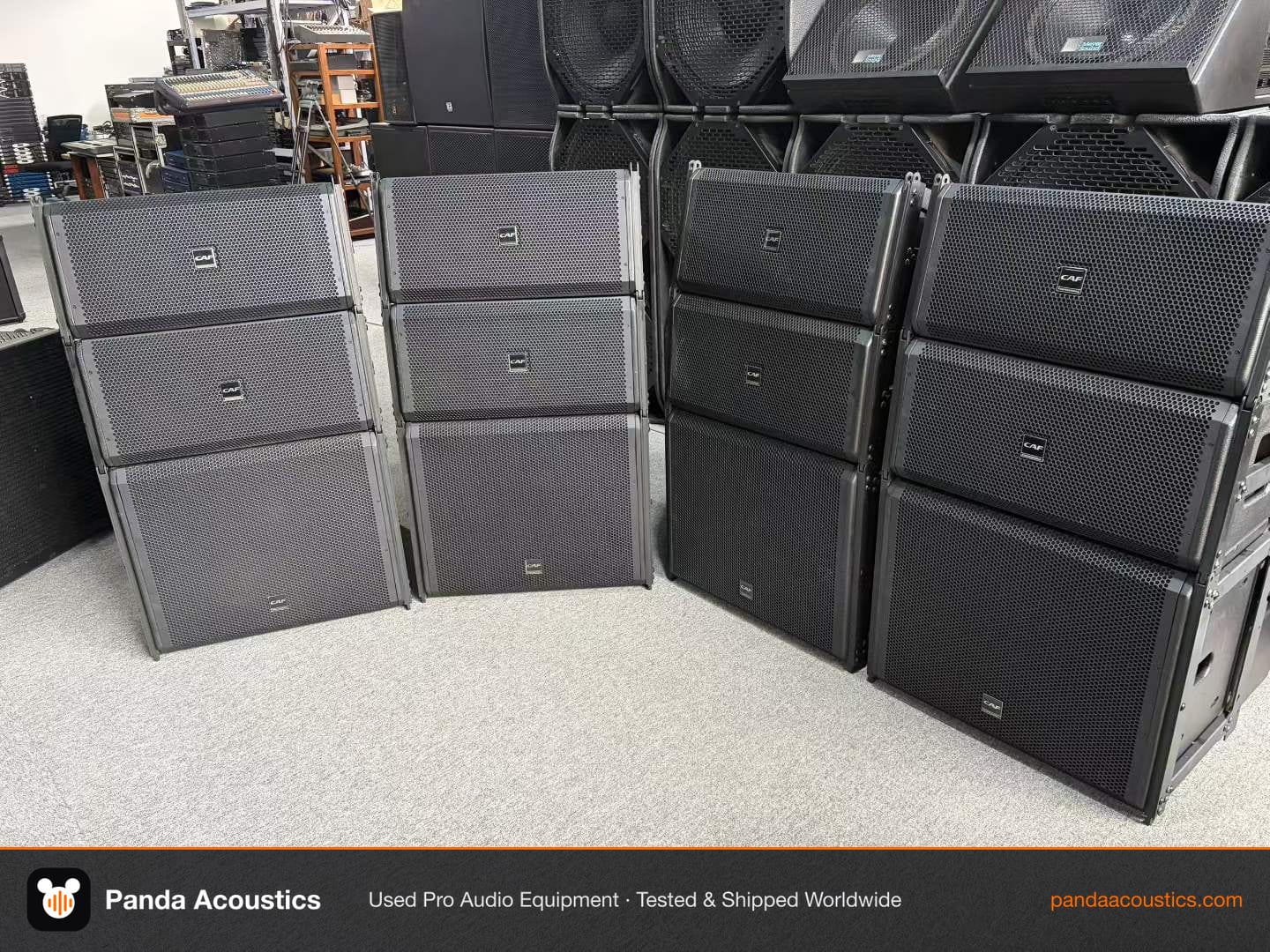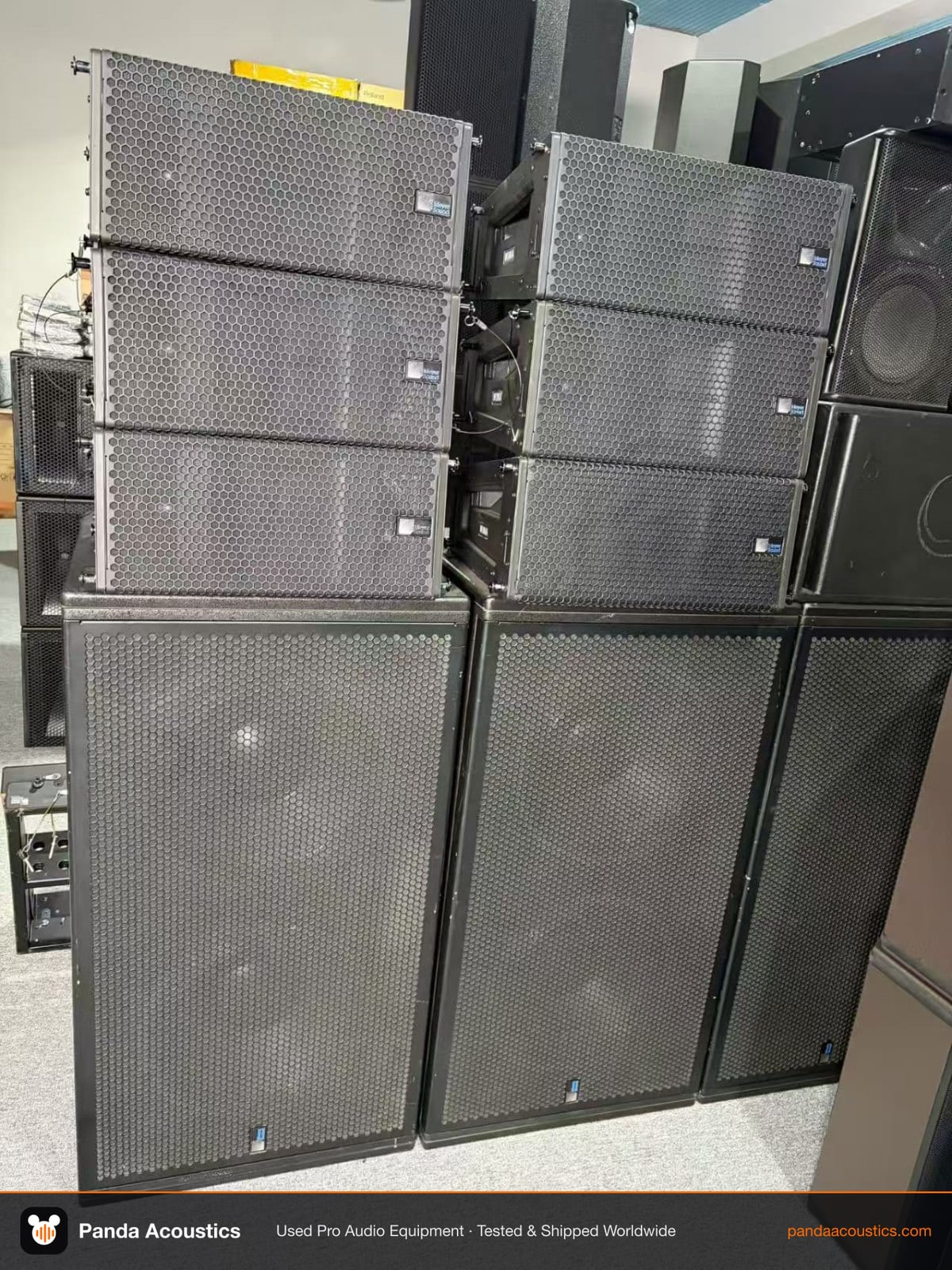
Used JBL line array speakers for sale from China are worth considering in bulk only if the seller gives you a written condition grade, an inspection record per cabinet, and packing and freight terms before you pay a deposit. Without those three documents, the model name tells you almost nothing about what will arrive.
Quick answer
Treat used JBL line array as a category you buy on documentation, not on brand reputation. Ask for the grading standard the seller applies, the inspection items covered, and the shipping terms in writing; if any of the three is missing or verbal, the deal is not ready for a deposit.
Key takeaways
- Brand name is not a condition report. A JBL badge on a cabinet says nothing about driver condition, rigging wear or enclosure damage.
- Ask which condition grading standard the seller uses and get the grade of each lot in writing, per the condition grading standard.
- Ask which inspection items are covered and whether results are recorded per unit, per the inspection standard.
- Get packing method and freight terms fixed before payment, per shipping and logistics.
- Price per unit for used JBL line array: Not disclosed in the available materials. Do not accept a verbal figure as final.
The decision
You run KTV rooms, a rental fleet, a touring company or a club, and you need line array cabinets in volume rather than one pair. New units at full distributor pricing do not fit the budget for the number of boxes you need, so you are looking at the used market, and China is one of the supply routes you are evaluating.
The real decision is not "JBL or another brand." It is whether this particular supplier can show you, in writing, what condition the cabinets are in and what happens between payment and delivery. That is the decision this article addresses.
Bulk changes the maths. One cabinet with a failed driver is an inconvenience; twenty cabinets with inconsistent driver condition is a repair bill and a schedule problem. At volume, consistency of condition matters more than the best single unit in the lot.
What the data says
Panda Acoustics is a Beijing-based company (Beijing Panda Acoustics Technology Co., Ltd.) that sells tested used professional audio equipment in bulk to overseas B2B buyers. The stated buyer base is KTV operators, touring sound companies, rental houses, bars and clubs in Russia, the Middle East, South America and Africa.
The company publishes a condition grading standard, an inspection standard, payment terms and shipping and logistics pages. These are the documents that carry the facts in a transaction. The published materials do not include a price range per unit for used JBL line array, a minimum order quantity, a warranty period, a lead time, or any certification claim. Those figures are Not disclosed. Any number a seller quotes for these should be treated as a quote to be confirmed in the contract, not as a published fact.
The full product list sits in the product catalogue, which is the correct place to check whether a specific JBL line array model is actually in stock rather than assumed available.
What the datasheet/docs don't tell you
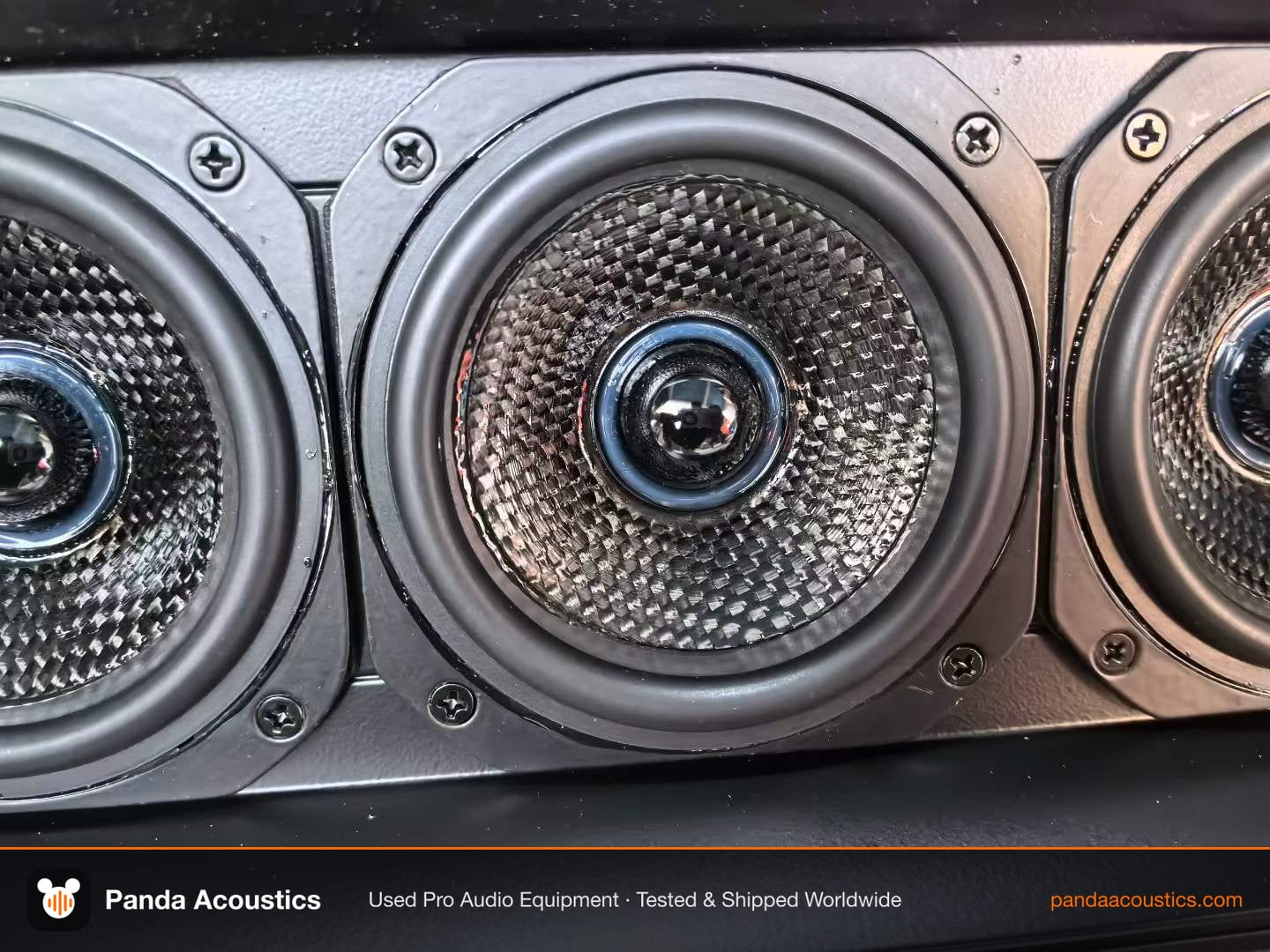
Unknown: the acoustic output, frequency response and impedance of any specific used cabinet in a lot. A factory datasheet describes a new unit, not the unit you are buying. Used drivers can be original, reconed or replaced, and the published materials do not state how that is recorded per cabinet.
Not disclosed: how many units of a given JBL line array model are available at any time, and whether a lot is matched by production batch. Batch matching matters for rental fleets because mixed-batch cabinets can behave differently under the same preset.
Not verified by the buyer: rigging hardware history. Bumper, pins and flyware wear is the item most often skipped in remote purchases and the one with the clearest safety consequence. Ask explicitly whether rigging hardware is included in the inspection scope and get the answer in writing.
Not disclosed: warranty period and what it covers. If a driver fails on arrival, the recourse depends entirely on the payment terms and the inspection record. Read the payment terms page before agreeing to any deposit schedule.
Who should not choose this
Do not buy used JBL line array in bulk from China if you have no one on your side who can inspect rigging hardware and drivers on arrival. The savings only hold if you can absorb and verify condition; without that capability, a failed lot becomes a cost you cannot recover.
Do not buy if you need one or two cabinets. Bulk sourcing is built around volume, and the freight and packing overhead on a small order usually erases the price advantage. Buy locally instead.
Do not buy if the seller will not put the condition grade and inspection scope in writing before payment. A verbal assurance about condition is not a document, and it will not help you when the container is opened.
Do not buy if your project requires a certification claim you have not seen documented. The available materials make no certification claim, so do not assume one exists.
Comparison and trade-offs
Used JBL line array versus new: new gives you a factory datasheet, a manufacturer warranty and known batch consistency. Used gives you a lower entry cost and immediate availability in volume, in exchange for condition risk that must be managed through grading and inspection. The published materials do not state a price range for either, so the cost gap is Not disclosed.
Used JBL line array versus another used line array brand: the materials list other used line array categories but do not publish comparative specifications, prices or condition data between brands. Any brand-versus-brand acoustic comparison would be invented, so this article does not make one. The practical difference you can actually verify is documentation quality per supplier, not brand name.
Buying a matched lot versus mixed units: a matched lot costs more per box in most markets but reduces preset and repair inconsistency across a rental fleet. The materials do not publish lot composition data, so ask per order.
Implementation / next step
Before paying anything, request a written pack from the supplier containing: the condition grade of each lot against the published grading standard, the inspection record showing which items were checked per cabinet, the packing method, and the freight terms to your port. Compare that pack against the grading and inspection pages so you know the documents match the published standard.
Then confirm the model and quantity against the product catalogue, and only after that discuss payment schedule. If any document is missing, do not send a deposit.
FAQ
Are used JBL line array speakers from China worth buying in bulk? They can be, if the seller provides a written condition grade and per-unit inspection record before payment. Without those documents, the brand name does not protect you.
What price should I expect per unit? Not disclosed in the available materials. Ask for a written quotation and treat any figure as a quote to be confirmed in the contract.
Is there a minimum order quantity? Not disclosed. Confirm it in writing with the supplier before planning freight.
What should I check first? The condition grading standard and the inspection scope, then the shipping and payment terms. Documentation first, price second.
Is there a warranty? Not disclosed in the available materials. Warranty and recourse depend on the payment terms you agree, so read them before any deposit.