The Meyer Sound MINA is a compact, self-powered line array loudspeaker, and used units are offered in bulk by Chinese B2B suppliers. Before paying, a volume buyer should confirm three things: the amplifier module is present and described, the rigging frames and cabling are included as listed, and the unit is graded under a published condition standard rather than a photo alone.
Key takeaways
- The MINA listings in scope are Condition A (used) and in stock, with prices not published per unit.
- Listed inclusions vary by listing: one shows a 600-HP amplifier module, hex-punched steel grille, and rigging frames and cabling as shown; another shows rigging frames and safety steel cables fitted; a third shows NL4 connectors and honeycomb metal grille.
- One listing explicitly notes scuffs and scratches on cabinet and rigging hardware, which is consistent with used condition but should be separated from functional unknowns.
- No price, MOQ, warranty period, lead time, or certification appears in the materials, so none should be assumed.
- Verification should reference the supplier's condition grading and inspection standard pages before payment.
The decision
You are a KTV operator, touring sound company, rental house, bar, or club buying in volume, likely across borders into Russia, the Middle East, South America, or Africa. You are weighing whether a used Meyer Sound MINA module is a sensible inventory addition versus other used line array options. The decision is not only whether the MINA is a good loudspeaker; it is whether a specific lot of used MINA modules from a Chinese supplier can be verified well enough to justify the landed cost and the risk of buying without a manufacturer warranty.
That framing matters because the MINA is self-powered. A used self-powered module carries amplifier electronics inside the cabinet, and the listing materials describe the amplifier module and rear-panel connections but do not state test results, hours of use, or repair history. The buyer's job is to close that gap before paying.
What the data says
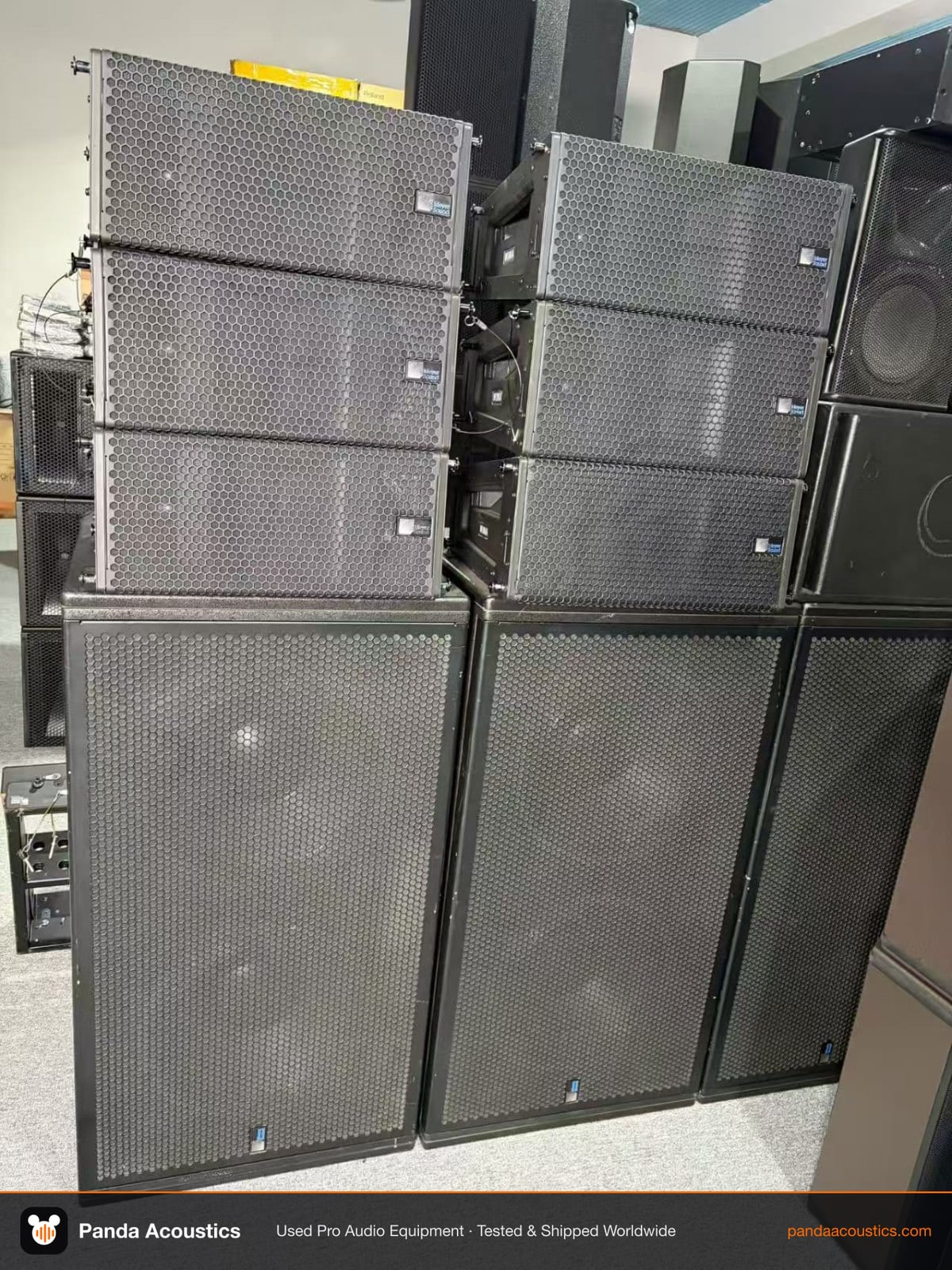
The materials describe three MINA listings, all Condition A (used) and in stock. The first lists a 600-HP amplifier module, a hex-punched steel grille, black finish, and includes rigging frames and cabling as shown. The second lists black color, hex-punched steel grille, rigging frames and safety steel cables fitted, and a rear panel with amplifier module and cable connections. The third describes a self-powered line array module with NL4 connectors, honeycomb metal grille, Condition A used with scuffs and scratches on cabinet and rigging hardware, and includes rigging hardware and connection cables.
What is not in the data is equally important: price per unit is not published, currency is listed as USD but no figure is given, and there is no MOQ, warranty, lead time, or certification stated. The product is a compact line array loudspeaker, and the amplifier module reference is 600-HP on one listing. The grille is described as hex-punched steel on two listings and honeycomb metal on the third. Connectors are NL4 on the third listing. These are the only figures and facts available.
What the datasheet/docs don't tell you
The listings do not disclose amplifier module test results, driver condition, or whether the 600-HP module has been serviced. They do not state hours of use, storage history, or whether the unit has been re-coned or repaired. They do not give a measured frequency response, SPL, or impedance curve for the specific used unit. They do not state a warranty period, return policy, or spare-parts availability. They do not state certification such as CE, RoHS, UL, FCC, or ISO. They do not state MOQ or lead time.
Why this matters: a used self-powered line array module can look clean and still have a tired amplifier or a damaged driver. Cosmetic scuffs on cabinet and rigging hardware are disclosed on one listing, but cosmetic condition is not the same as functional condition. Without test data or a stated inspection result, the buyer is relying on the supplier's grading and inspection process. That is why the condition grading standard and inspection standard pages are the relevant references before payment, not the product photo.
Who should not choose this
Do not choose this route if you need a manufacturer warranty, a published certification for a tender or venue compliance requirement, or a fixed published price before you commit. The materials do not provide any of those. Also do not choose it if you cannot inspect or arrange third-party inspection of the amplifier module and rigging hardware before shipment, or if you are buying a single unit for a small fixed install where the landed cost of a used self-powered module cannot be justified against the unknowns.
Buyers who are comfortable with used Condition A equipment, who buy in volume, and who will verify against a published grading and inspection standard are the appropriate audience. Buyers who treat a listing photo as proof of function are not.
Comparison and trade-offs
Within the materials, the only comparison available is between the three MINA listings. One listing emphasizes the 600-HP amplifier module and rigging frames and cabling as shown. Another emphasizes rigging frames and safety steel cables fitted and a rear panel with amplifier module and cable connections. The third emphasizes NL4 connectors, honeycomb metal grille, and discloses scuffs and scratches on cabinet and rigging hardware. All are Condition A used and in stock, and none has a published price.
The trade-off is completeness versus disclosure. A listing that names the amplifier module and includes rigging and cabling gives you more to verify against. A listing that discloses cosmetic wear gives you a more honest picture of condition but may still leave functional questions open. No competitor specifications are present in the materials, so no cross-brand comparison is made here. The practical comparison is between what each listing states and what it leaves unknown.
Implementation / next step
Before paying, request the supplier's condition grading standard and inspection standard for the specific lot, and ask for the amplifier module status, rigging hardware condition, and a complete list of included cabling and connectors for each unit. Confirm whether the 600-HP module is present on every unit or only on some, and whether NL4 connectors and safety steel cables are included per unit. Ask for the price per unit, MOQ, lead time, and warranty terms in writing, since none are published. Then compare the lot against the grading and inspection pages and decide whether the disclosed condition and inclusions are enough for your inventory.
Next step: open the Meyer Sound MINA listing, note the stated inclusions, and send the supplier a written verification request covering amplifier module, rigging, cabling, price, MOQ, lead time, and warranty before any payment.
Related pages
- Used line array equipment
- Full used equipment catalogue
- Meyer Sound MINA listing