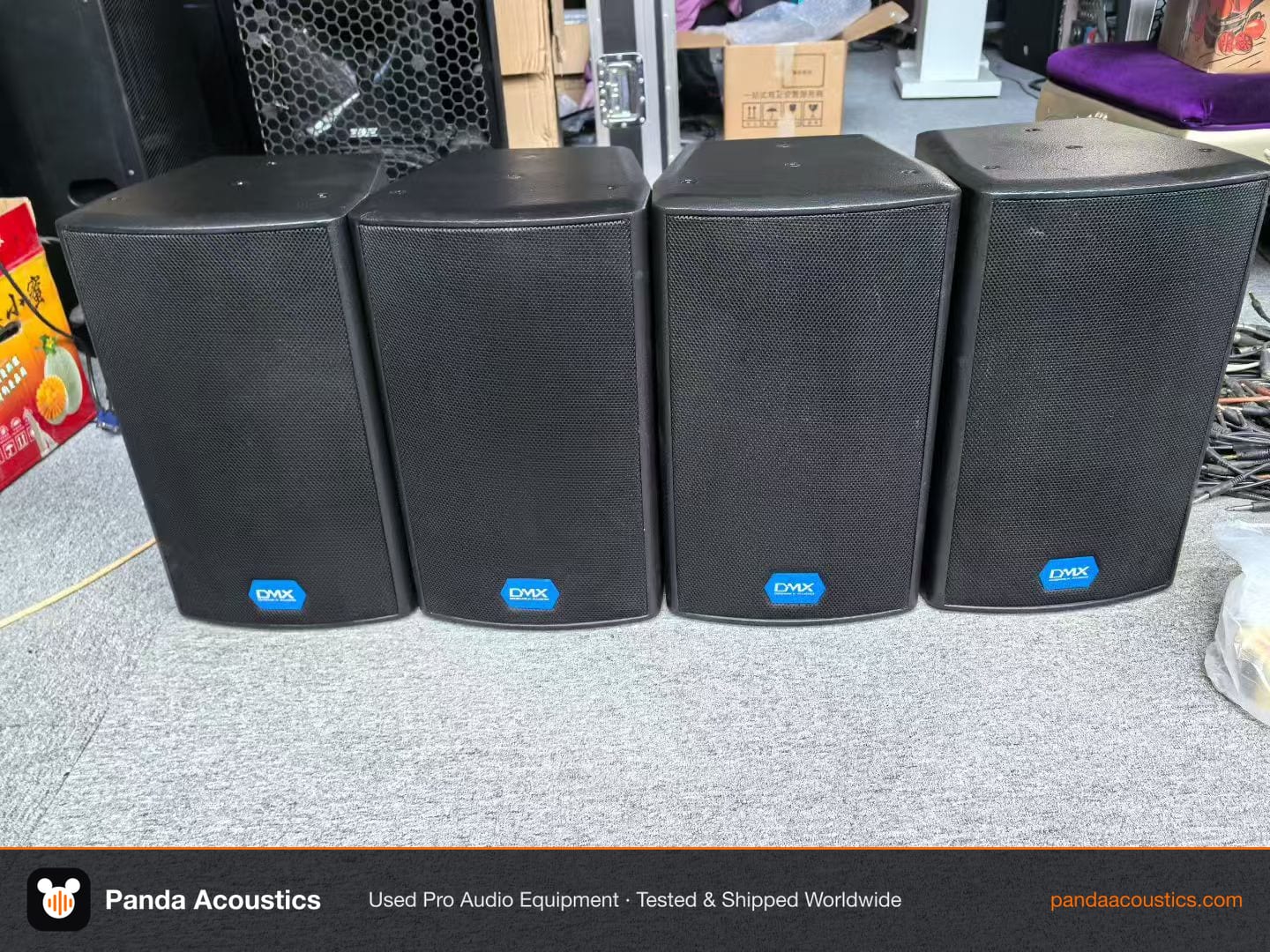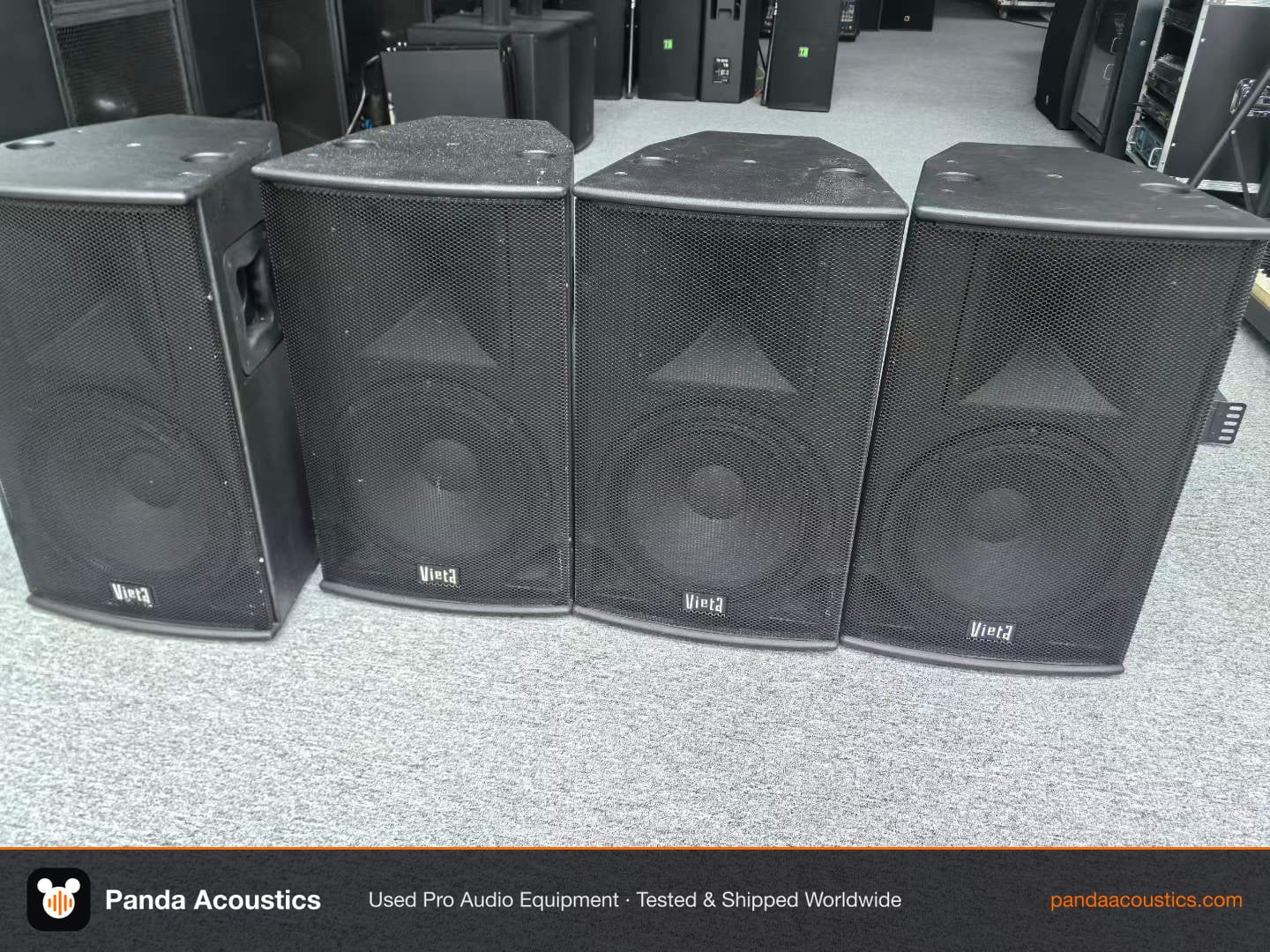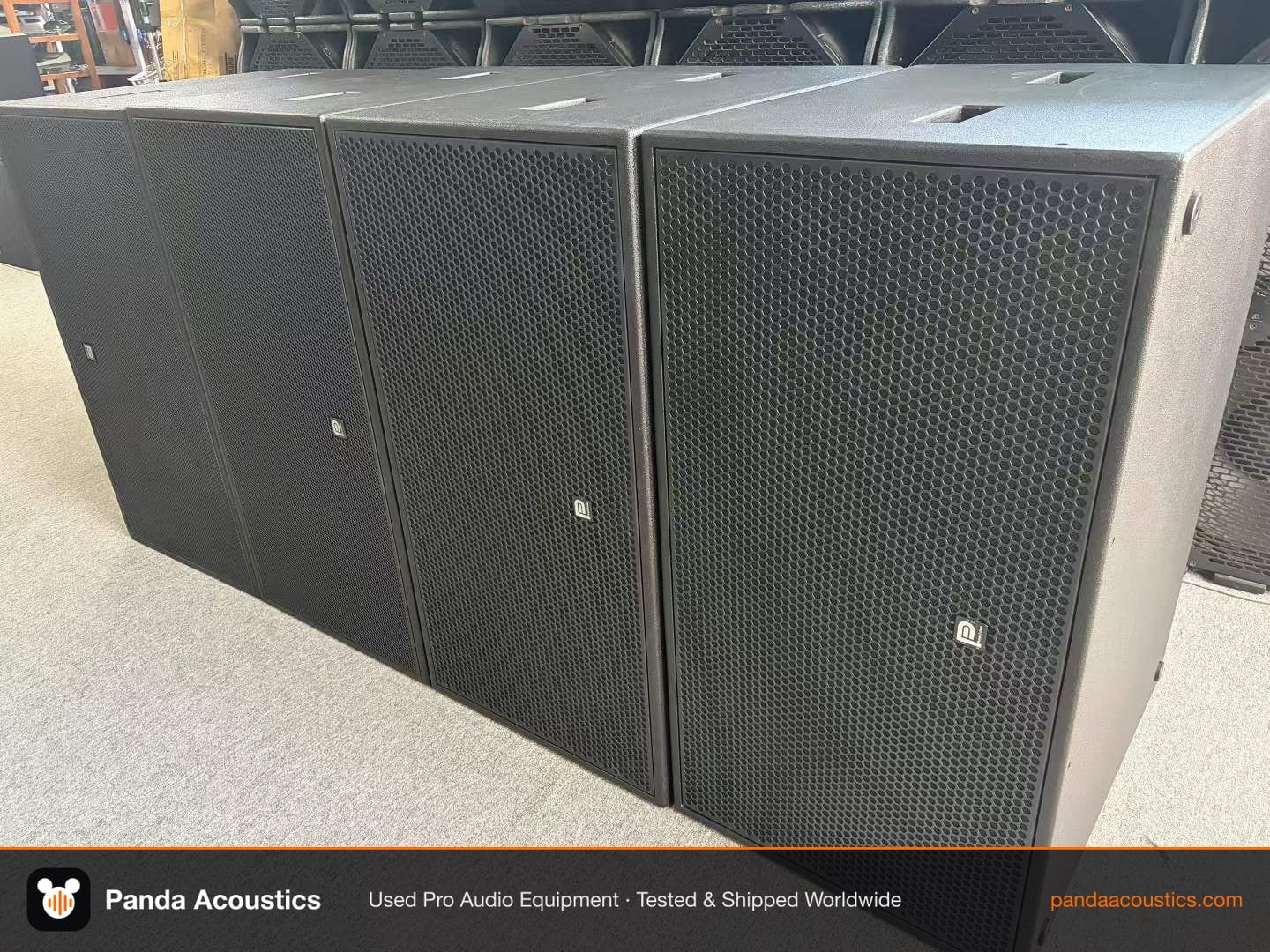
Match the amplifier to the speaker's continuous (RMS) power rating, not its peak figure, and size the amplifier so its per-channel output at your actual load sits at or modestly above that continuous rating — then confirm the exact model's rating in writing before you pay. If the rating cannot be documented, treat the unit as unmatched and do not commit volume orders to it.
Quick answer
The working rule for most installed and rental systems is: read the speaker's continuous power rating at its nominal impedance, then choose an amplifier whose rated output per channel at that same impedance meets or slightly exceeds it. Peak or "music program" numbers printed on a used cabinet are not a safe basis for sizing, because they describe short bursts, not sustained thermal load. For bulk used purchases, the calculation is the easy part — the hard part is getting a reliable rating for a specific serial-numbered unit.
Key takeaways
- Size against continuous (RMS) power at nominal impedance, not peak or program figures.
- An amplifier rated at or modestly above the speaker's continuous rating at the same load is the standard target; a large mismatch in either direction is a red flag.
- Impedance must match the amplifier's rated load range — a wattage figure alone tells you nothing about whether the amp can drive that load safely.
- On used gear, the model rating is the only defensible number; a seller's verbal claim is not a specification.
- Document the model, impedance and power rating per unit in writing before paying for a bulk lot.
The decision
You are sourcing used speakers and amplifiers in volume for KTV rooms, bars, clubs, rental fleets or touring racks, and you need the pairs to survive real duty cycles — not a demo. The decision in front of you is not only "which wattage" but "is this specific used amplifier and this specific used speaker a documented, defensible pair I can deploy across dozens of rooms or cases?" A wrong match at volume multiplies: under-powered amps get driven into clipping across a whole fleet, and over-sized amps on unknown-condition drivers turn a bulk order into a repair queue.
That is why the matching exercise has to be tied to what the supplier can actually prove about each unit, not to a generic calculator.
What the data says
Panda Acoustics sells tested used professional audio equipment in bulk to overseas B2B buyers, including KTV operators, touring sound companies, rental houses, bars and clubs in Russia, the Middle East, South America and Africa. Beyond that scope, the materials do not publish per-model power ratings, impedance figures, price ranges, minimum order quantities, warranty periods, lead times or certification marks. Those values are Unknown for any specific listing until the supplier provides them for that model.
What the materials do define is process. The inspection standard describes how equipment is checked before sale, and the condition grading standard describes how condition is classified. Both matter to wattage matching: a driver's usable power handling depends on its condition, and a grading label is only meaningful if you know what was checked. The product catalogue is where model-level specifications should be confirmed per listing.
Price is Not disclosed in the materials at category level, so no landed-cost comparison can be made from published figures. Any budget model you build has to come from a quotation tied to specific models and quantities.
What the datasheet/docs don't tell you
Unknown: the continuous and peak power rating, nominal impedance and sensitivity of any specific used model in the catalogue, until that model's documentation is supplied. This matters because the entire matching calculation depends on those three numbers — without them you are sizing on assumption.
Not disclosed: whether a given used driver has been re-coned, whether the original driver is still fitted, and how that affects real power handling. A cabinet rated at one figure with a non-original driver is a different speaker electrically. The grading standard tells you the condition class, but you should confirm whether driver originality is part of what was verified for your lot.
Not verified: amplifier output at your specific load. Amplifier output ratings are load-dependent, and a headline wattage figure without a stated impedance and test condition is not usable for matching. Ask for the rating at the impedance you will actually run.
Not applicable: certification claims. The materials do not state CE, RoHS, UL, FCC or ISO certification for this equipment, so do not treat any such mark as confirmed unless it is documented for your order.
The practical consequence: a used lot can look perfectly matched on paper and still be unmatched in reality if the paper came from a generic model page rather than the actual units.
Who should not choose this
Do not take this route if you intend to run one amplifier channel into mixed-impedance loads across a venue — for example paralleling cabinets of different models on the same channel to save amplifier cost. Wattage matching assumes a known, consistent load per channel; mixed loads make the calculation meaningless and put both amp and speakers at risk.
Also do not proceed if your procurement process cannot obtain written model specifications before payment. If the only wattage information available is a verbal claim or a photo of a rear panel label, you do not have enough to size amplifiers across a bulk order, and you should not buy the lot on the assumption that it will "probably be fine." Buyers who need guaranteed new-unit specifications with full manufacturer documentation should source new instead.
Comparison and trade-offs
Within the used route, the trade-off is documentation depth against speed and cost. A lot with confirmed model-level ratings and a clear condition grade takes longer to assemble but gives you a defensible amplifier match. A fast lot with only photos and verbal wattage claims is quicker to close but pushes the matching risk onto your install team.
- Higher condition grade: more confidence that drivers are serviceable at their rated power; typically narrower availability in bulk. Exact grade definitions are in the grading standard.
- Lower condition grade: wider bulk availability, but you must assume reduced usable power handling until the inspection record says otherwise.
- Amplifier headroom: more headroom reduces clipping risk but costs more per channel and demands correct gain structure; too little headroom means the amp clips before the speaker reaches its rating.
- Payment and shipping terms: these affect total landed cost and are set out on the payment terms and shipping pages; they do not change the electrical match, but they change whether a mismatched lot is recoverable.
No competitor specifications are compared here because the materials contain none.
Implementation / next step
Before paying, build a one-line match record for every model in the lot: model number, nominal impedance, continuous power rating, amplifier rated output at that impedance, and the source document for each figure. Then request that record in writing from the supplier against your specific lot, cross-check it with the inspection and grading documentation, and reject any line where the rating is missing or given only as a peak figure.
Your concrete next action: send your target model list and quantities to Panda Acoustics and ask for the documented impedance and continuous power rating per model, plus the inspection and grading record for the units offered, before you agree to any payment.