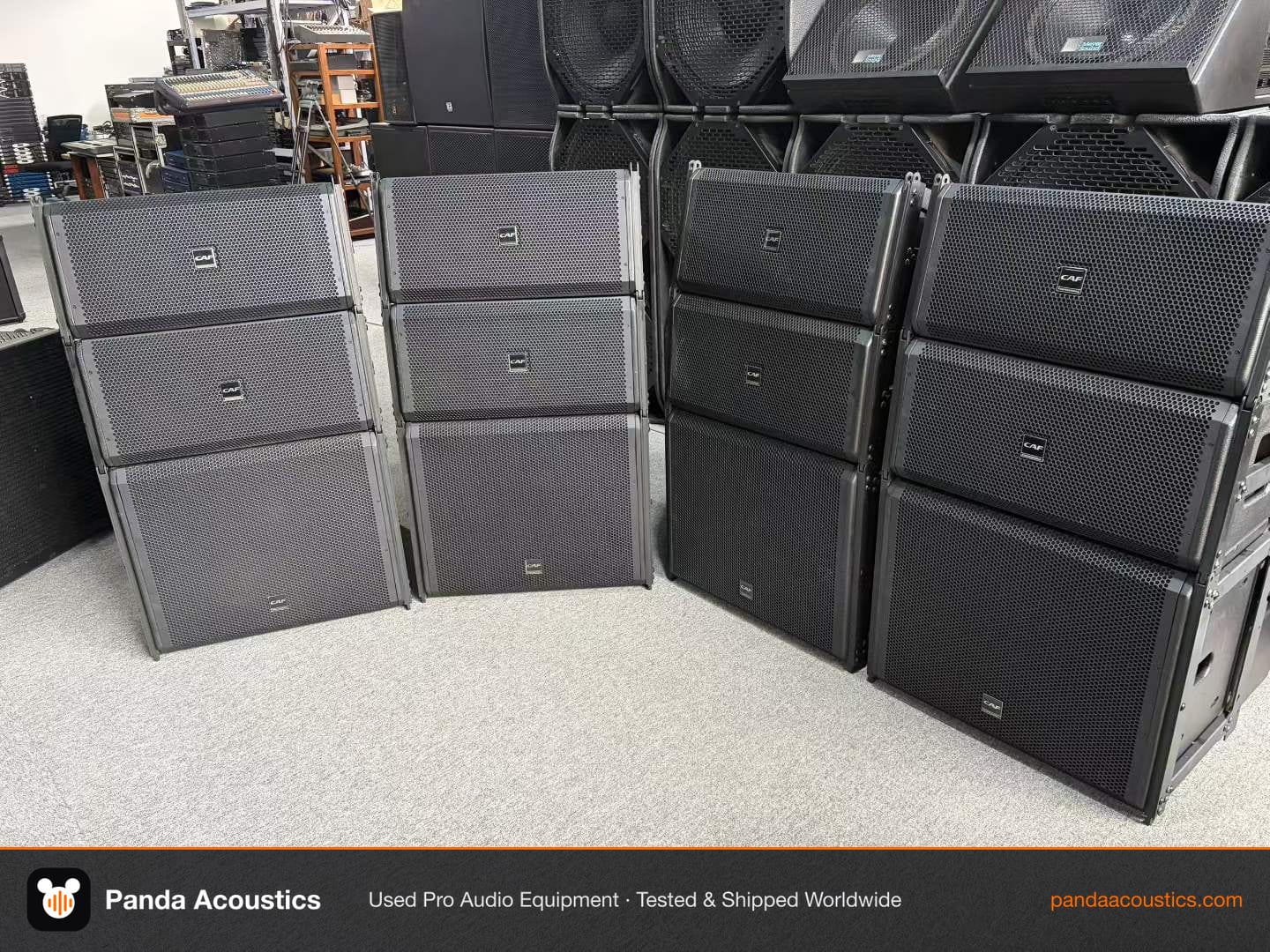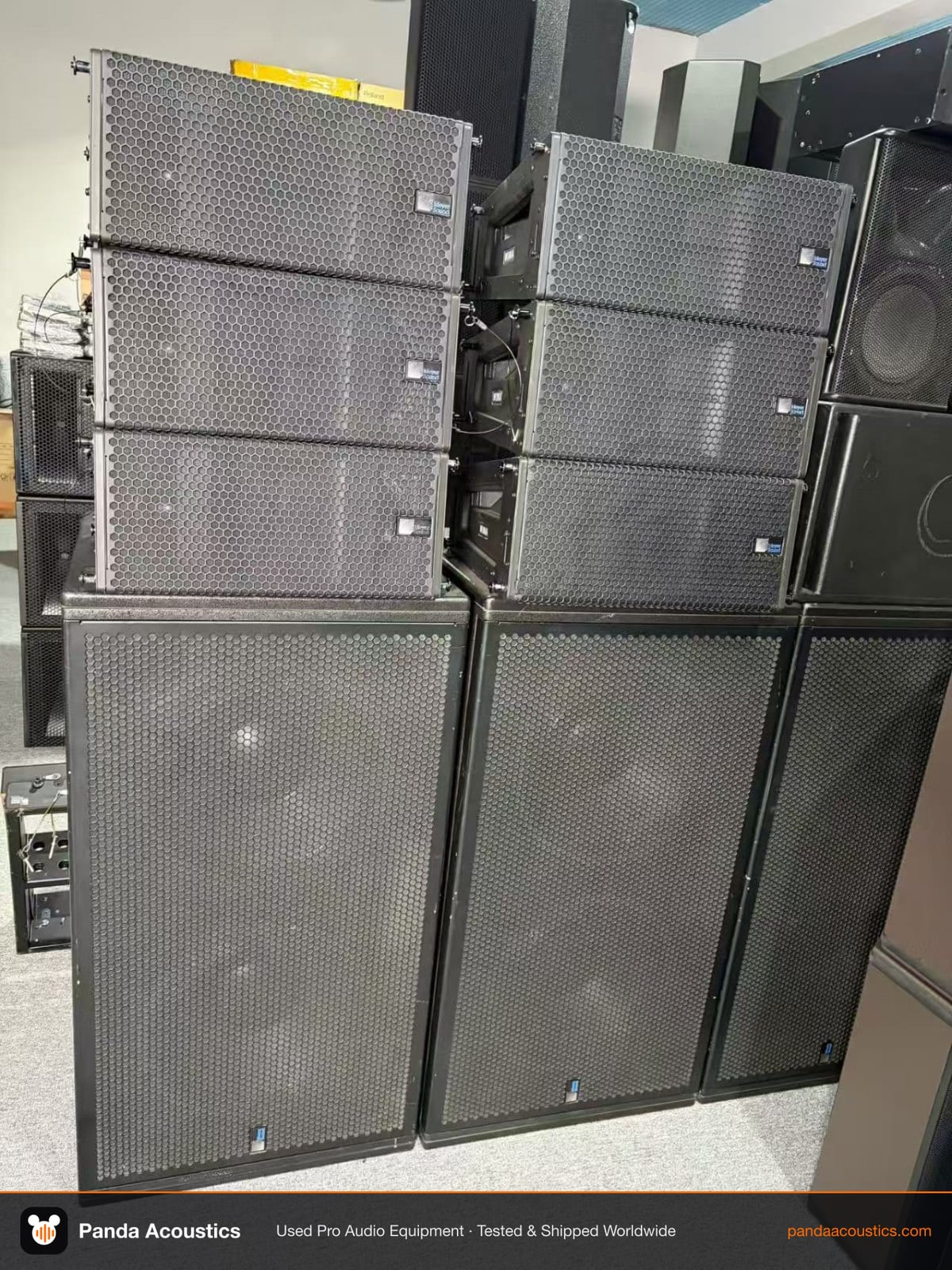
"Line array usado" means a used line array system, and for a B2B buyer sourcing in volume from China the practical answer is this: it is worth buying only when the seller can show a written condition grade and an inspection record for each unit, and when the total landed cost still beats new after freight and duty. If either of those is missing, the price is not a discount, it is a risk transfer.
Quick answer
A used line array can be a sound purchase for a rental house, touring company or large KTV venue that needs cabinet count more than it needs a manufacturer warranty. The condition of the boxes, not the badge on the grille, decides whether the deal works. Ask for the grading standard and the inspection standard in writing before any deposit.
Key takeaways
- Condition grading and inspection are two separate documents. A cosmetic grade without an electrical and acoustic inspection record tells you almost nothing.
- Panda Acoustics sells tested used professional audio equipment in bulk to overseas B2B buyers; the grading and inspection pages are the two documents that define what "tested" means here.
- Price per unit for line array usado is not disclosed in the materials available, so any figure you are quoted must be checked against freight and duty before you compare it to new.
- Warranty period, lead time and certification are not disclosed and should be treated as unknown until the seller states them in the contract.
- Payment terms are a verification step, not an afterthought: they determine whether you can hold money back until inspection documents arrive.
The decision
You are a KTV operator, touring sound company, rental house, bar or club in Russia, the Middle East, South America or Africa. You need a line array system, you are buying more than one unit, and the quote you have is well below new-equivalent pricing. The decision in front of you is not "is this cheap" but "is this specific batch of used line array cabinets documented well enough that I can put them in front of a paying client."
That decision splits into three parts: whether the model suits your venues, whether the condition grade matches the use you have in mind, and whether the landed cost still works after shipping. Only the first two can be answered from the seller's documents. The third depends on your own freight quote.
What the data says
The materials available describe Panda Acoustics as a Beijing-based supplier of tested used professional audio equipment, sold in bulk to overseas B2B buyers. That is the full extent of the commercial description: no price range per unit, no minimum order quantity, no warranty period, no lead time and no certification list are stated.
The supplier publishes a condition grading standard and an inspection standard as separate pages. It also publishes payment terms and a shipping and logistics page. These four pages are the entire documentary basis a buyer can rely on before requesting a quote. Everything else, including model-specific test results, must be requested per batch.
There is no published figure for how many units are in stock, how old the average used line array cabinet is, or what proportion of a batch typically passes inspection. Those numbers are not disclosed.
What the datasheet/docs don't tell you
Warranty: not disclosed. For used line array cabinets this matters because rigging hardware and driver surrounds are the parts most likely to fail after the first year of service. If there is no stated warranty, your maintenance budget has to absorb that risk.
Certification: not disclosed. No CE, RoHS, UL, FCC or ISO claim appears in the materials. If your market or your client requires compliance paperwork, do not assume it exists; ask, and expect a written answer or a refusal.
Model history: not disclosed. A used line array cabinet may have been in touring service, in a fixed install, or in storage. The grading standard tells you what condition the unit is in now, not where it has been.
Price and MOQ: not disclosed. Without a published price range per unit or a minimum order quantity, you cannot benchmark the quote against the market. You can only benchmark it against your own new-equipment quote and your freight estimate.
Lead time: not disclosed. For a rental house with a confirmed event date, this is the single most expensive unknown.
Who should not choose this
Do not buy used line array equipment in bulk from China if you need a manufacturer warranty as a condition of the sale. Do not buy if your client contract requires certification documents that the seller cannot produce in writing. Do not buy if you are purchasing a single cabinet for a small bar and have no way to test it on arrival; the freight cost per unit on a one-off shipment usually erases the saving.
Also walk away if the seller will only discuss condition verbally. A grading standard that exists as a web page is only useful if the specific batch you are buying is graded against it and the grade is written into the order.
Comparison and trade-offs
Used versus new is the only comparison the materials support, and it is a comparison of documentation, not of specifications. New equipment typically comes with a manufacturer warranty and a known model history; the materials here disclose neither for used stock. What the used route offers instead is bulk availability of tested equipment, with condition defined by a published grading standard and inspection standard.
The trade-off is straightforward: you exchange warranty certainty and model history for unit price and volume. Whether that exchange is favourable depends on your venue type. A fixed KTV install with stable temperature and humidity tolerates used cabinets well. A touring company that rigs and de-rigs weekly puts far more load on hardware and should weight the inspection record much more heavily than the cosmetic grade.
No competitor specifications, brand comparisons or model benchmarks are available in the materials, so none are offered here.
Implementation / next step
Before paying anything, request three documents for the exact batch you are quoted: the condition grade assigned under the condition grading standard, the inspection record produced under the inspection standard, and the proposed payment terms in writing. Then get a freight quote against the shipping and logistics page and add it to the unit price before you compare anything.
If the seller cannot supply the first two documents for the specific units, stop. If they can, the next step is to confirm the model and quantity against the product catalogue and only then discuss a deposit.