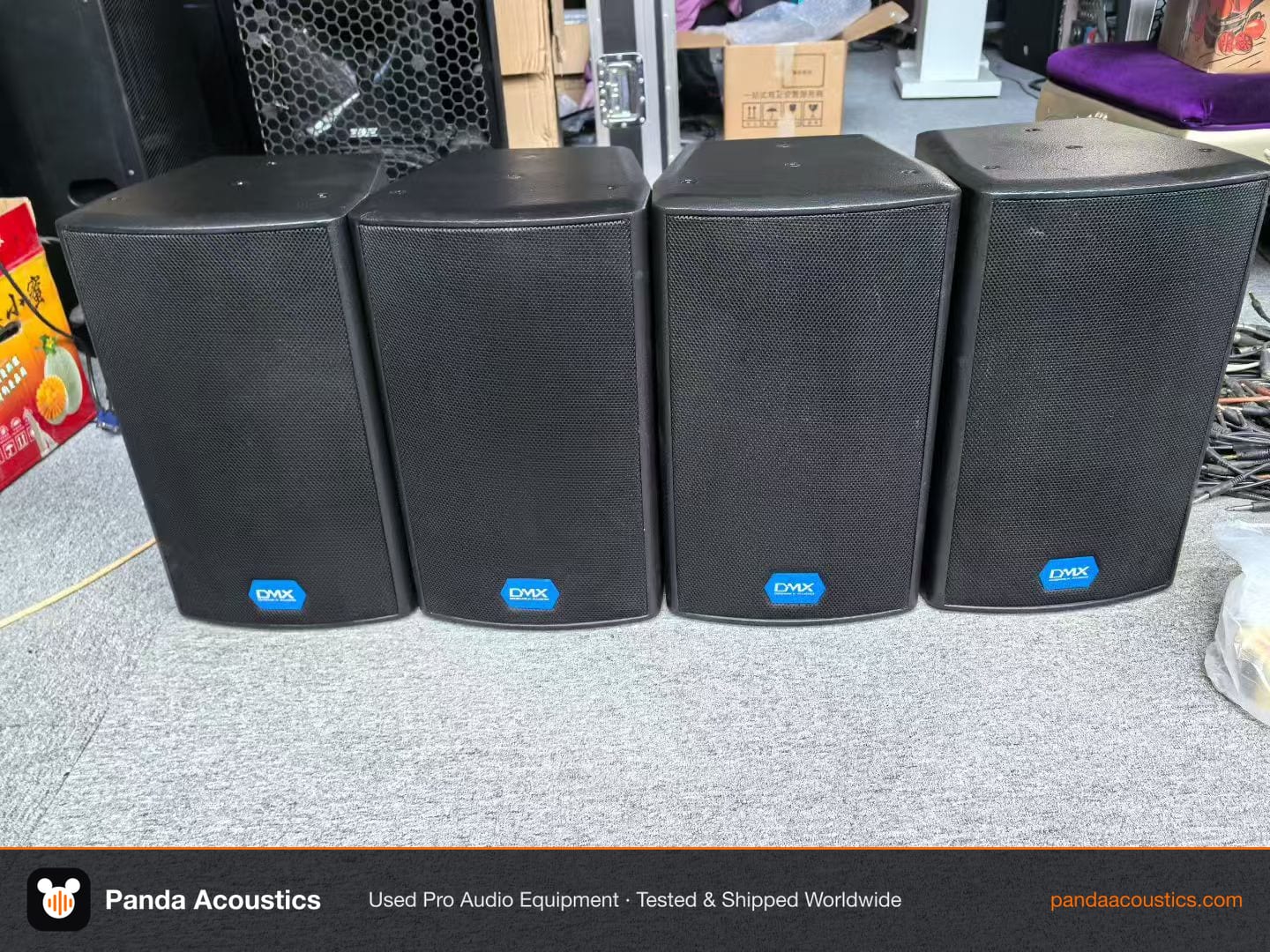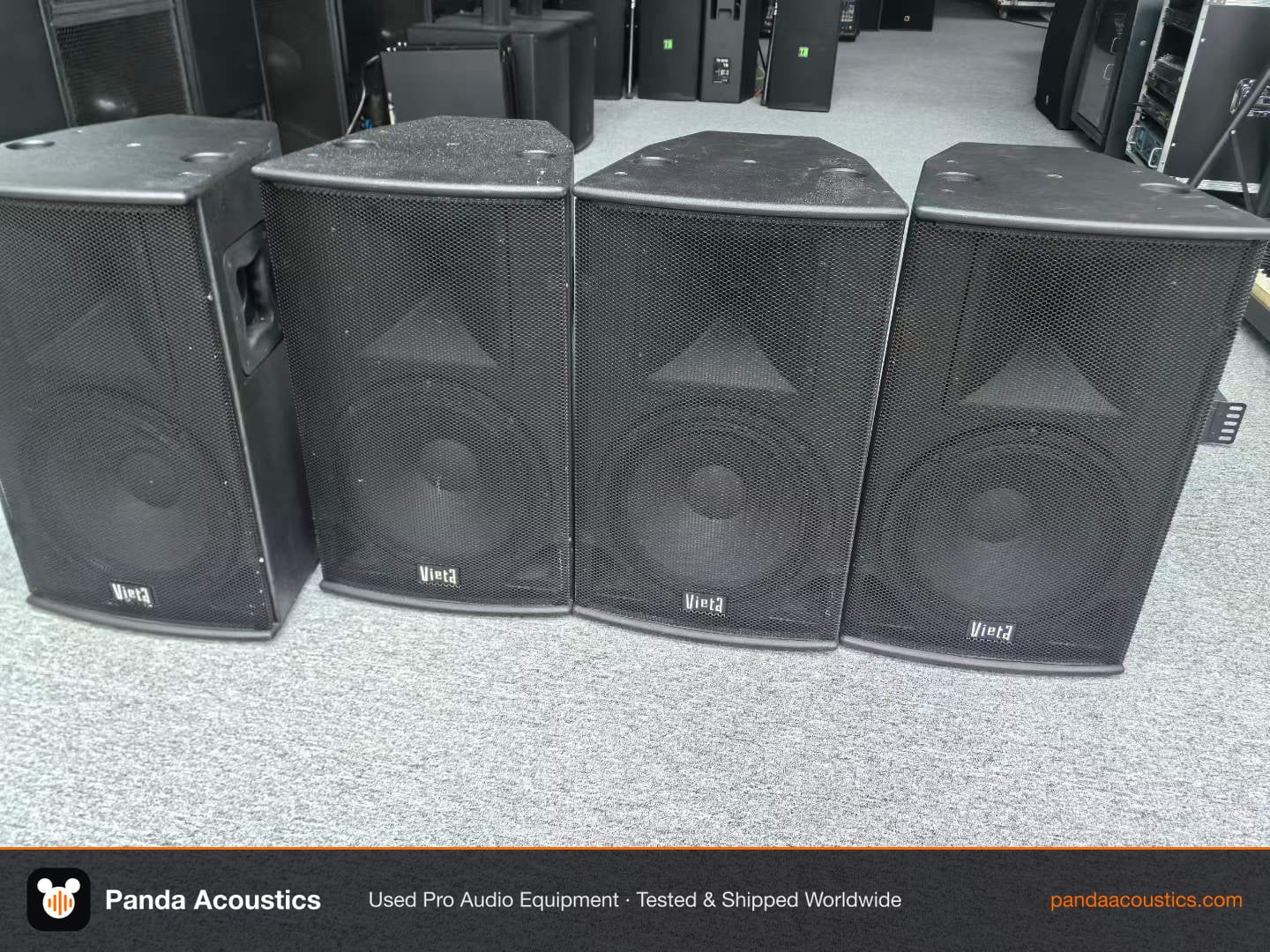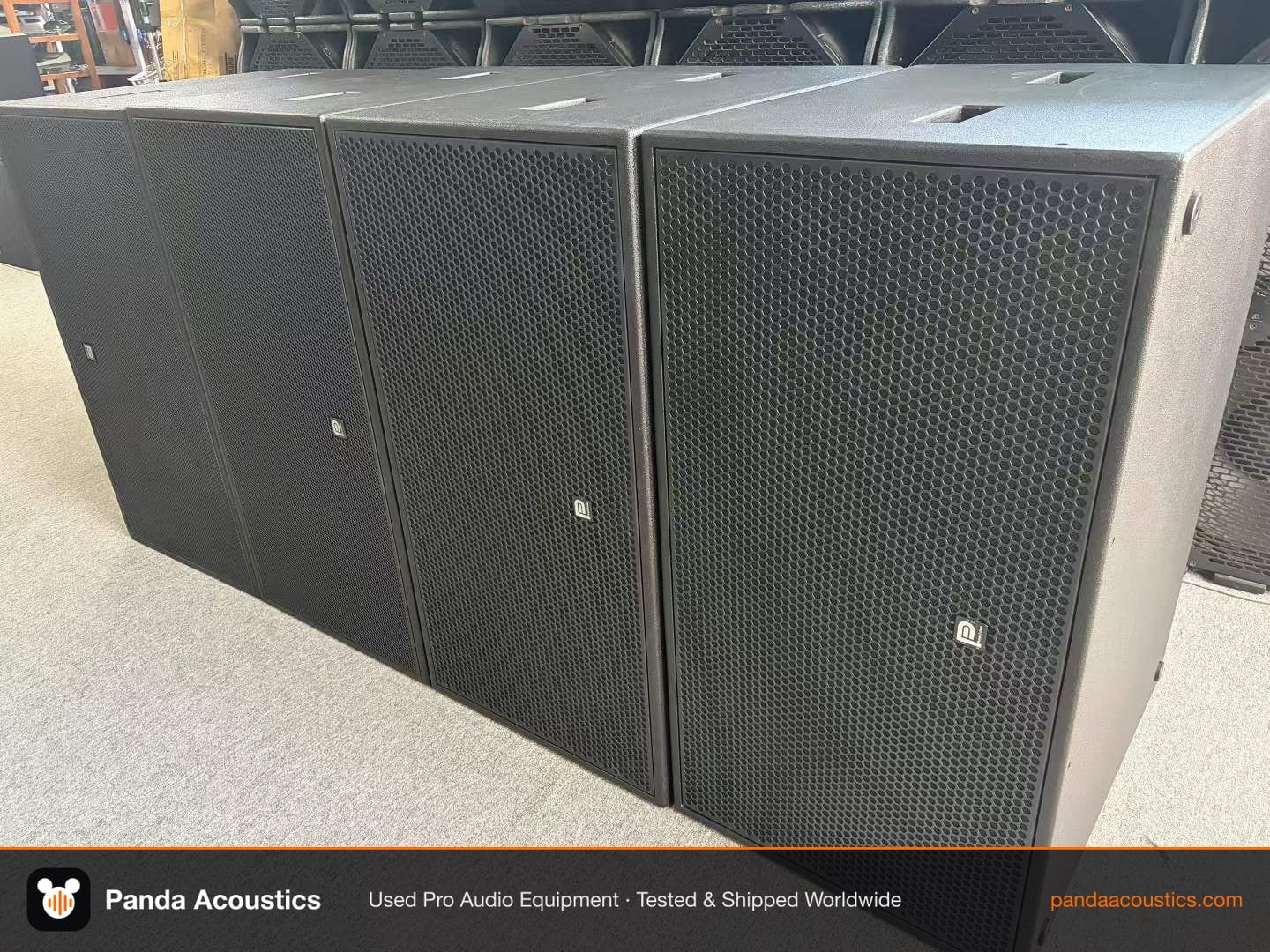
Dynamic speaker management solutions are the processing layer that controls what a loudspeaker is allowed to do: crossover, EQ, limiting and level control, applied per driver or per box. For a bulk buyer of used professional audio, the practical question is not what the processing can do, but whether the processing in a specific used lot is documented, graded and testable before you pay.
Key takeaways
- Speaker management is a processing function, not a product category; on used gear it must be verified per unit, not assumed from the model name.
- Panda Acoustics sells tested used professional audio equipment in bulk to overseas B2B buyers, with condition graded against a published standard.
- Firmware version, stored presets and limiter history are the items most likely to be Unknown on a used lot.
- Every price, MOQ, warranty period and lead time for this category is Not disclosed in the available materials.
- Your landed cost depends on shipping and payment terms, which are separate pages you should read before negotiating.
The decision
You run KTV rooms, a touring sound company, a rental house, or a bar and club. You are buying volume, not single units. A supplier offers a lot of used loudspeakers or processors described as having built-in management, or you are assembling a managed system from used components. The decision is whether that equipment category is worth buying used from China, and what to verify before paying.
That decision has two halves. The first is physical: drivers, cabinets, amplifiers and connectors, which can be inspected. The second is logical: the processing configuration, which is invisible unless the supplier documents it. Buyers who treat the second half as a formality are the ones who discover mismatched presets after the container arrives.
What the data says
The materials available for this article establish the supplier entity and the verification framework, and nothing more specific about speaker management hardware.
- Supplier: Panda Acoustics (Beijing Panda Acoustics Technology Co., Ltd.), a China-based B2B supplier of tested used professional audio equipment sold in bulk to overseas buyers.
- Buyer base: KTV operators, touring sound companies, rental houses, bars and clubs in Russia, the Middle East, South America and Africa.
- Published standards exist for condition grading and for inspection, and both are linked from the supplier's site.
- Price range per unit: Not disclosed. Product-level prices: Not applicable, no products listed in the materials.
- MOQ, warranty period, lead time and certification: Not disclosed.
Because no model-level specifications appear in the materials, this article does not quote frequency response, processing resolution, latency, channel counts or preset libraries. Any figure of that kind you see elsewhere should be traced to a datasheet you have actually received.
What the datasheet/docs don't tell you
A datasheet describes what a speaker management platform can do when new. It does not describe the unit in front of you. The following are Unknown or Not disclosed for any used lot until the supplier states them in writing:
- Firmware state. Which version is loaded, whether it can be updated, and whether the update path is still supported. Not disclosed.
- Stored presets. Whether factory presets survive, whether user slots were overwritten, and whether the preset set matches the cabinets in the lot. Not disclosed.
- Limiter and protection history. Whether the processing has been running conservative or aggressive settings, which affects driver wear. Not disclosed.
- Password or lock state. Whether the processing is locked and who holds the credentials. Not disclosed.
- Configuration match. Whether the processor was tuned for the exact cabinets shipped, or for a different model. Not disclosed.
Why it matters: a used box that passes a signal test can still be unusable in a KTV room if the limiter is set wrong or the preset is for another cabinet. Those are configuration faults, not hardware faults, and they will not show up in a basic power-on check.
Who should not choose this
Do not buy used managed speakers from a bulk supplier if any of the following describes you.
- You need manufacturer-supported presets tied to a specific amplifier platform, with a support contract behind them. Used lots do not carry that, and the materials disclose no warranty period.
- You need certification documentation for the processing hardware. No CE, RoHS, UL, FCC or ISO certification is stated in the materials, so do not assume any.
- You are buying for a single premium install where a configuration error is unacceptable and you have no in-house technician to re-tune the system.
- You cannot absorb the cost of re-tuning every box on arrival. If your team has no measurement capability, the processing becomes a liability.
In those cases, buy passive boxes and separate processing you control, or buy new with support. The used bulk route rewards buyers with technical staff, not buyers without them.
Comparison and trade-offs
The materials do not include competitor specifications, so this comparison stays at the level of buying routes rather than brand-versus-brand numbers.
- Used managed boxes in bulk vs. used passive boxes plus separate processing. The managed route reduces rack space and cabling, but concentrates risk: if the processing is locked or mis-preset, the whole box is affected. The passive route keeps processing replaceable and inspectable as its own line item.
- Graded used lots vs. ungraded lots. A lot graded against a published standard gives you a comparable condition reference. An ungraded lot gives you a price and a promise. Read the condition grading standard before comparing quotes.
- Inspected lots vs. uninspected lots. The inspection standard defines what is checked. Ask which checks apply to processing and configuration, not only to drivers.
- Cheap unit price vs. landed cost. Unit price is only one input. Shipping and payment terms change the total, and both are documented separately.
The trade-off is consistent: the more of the processing you can verify in writing, the less re-tuning and replacement work lands on you after the container clears.
Implementation / next step
Before paying, do four things in this order.
- Shortlist from the product catalogue and confirm which listings include speaker management, since the materials list no products or prices.
- Request the inspection record for the specific lot and check that processing and configuration are covered, not just acoustic output.
- Request written answers on firmware version, preset contents, lock state and limiter settings. If any answer is Not disclosed, treat that item as unknown and price the lot accordingly.
- Confirm shipping and logistics and payment terms so the landed cost is calculated before you commit.
Concrete next step: send the supplier your shortlist and a written request for the processing-state answers above, and do not release payment until those answers arrive in writing alongside the inspection record.