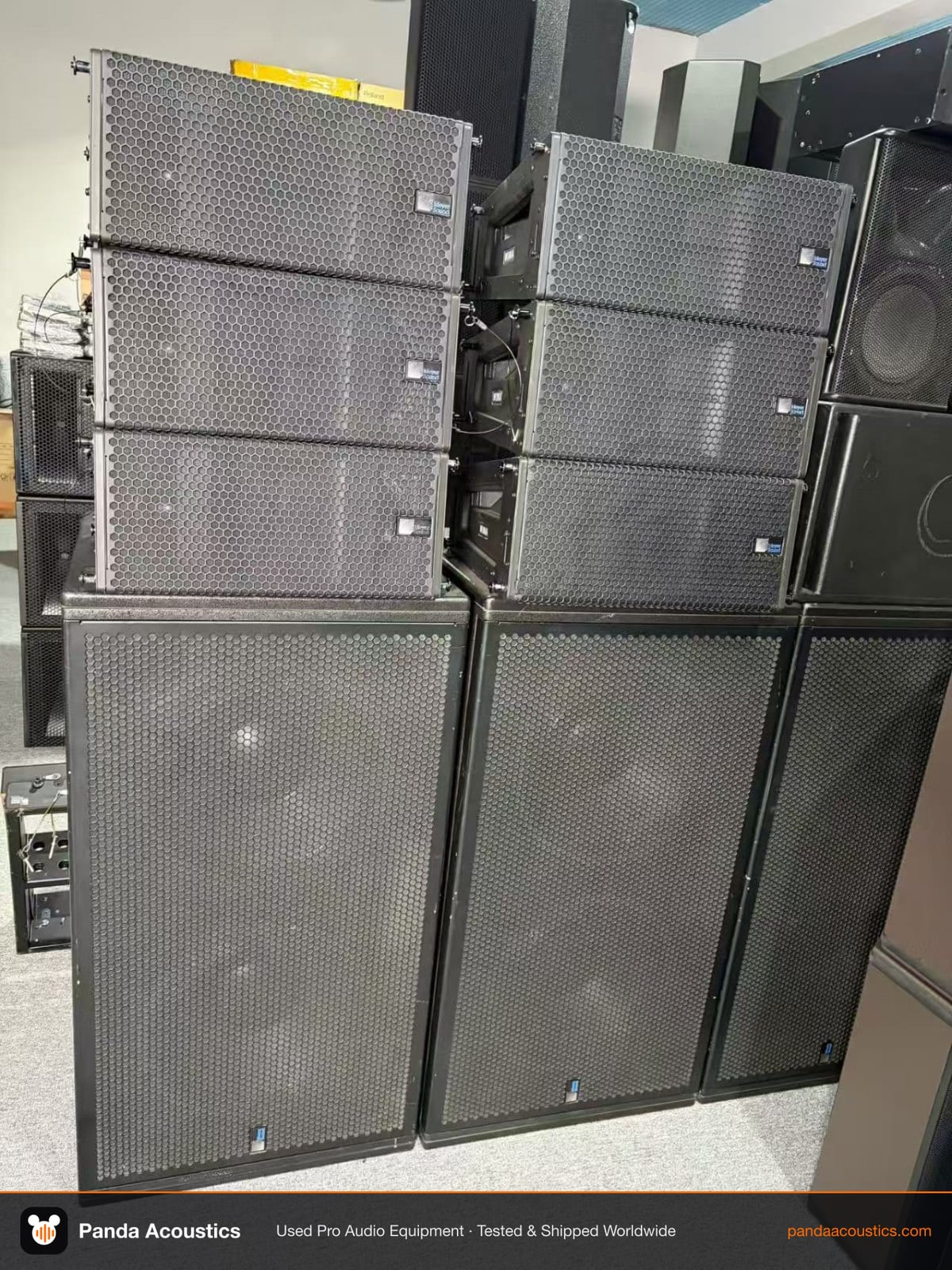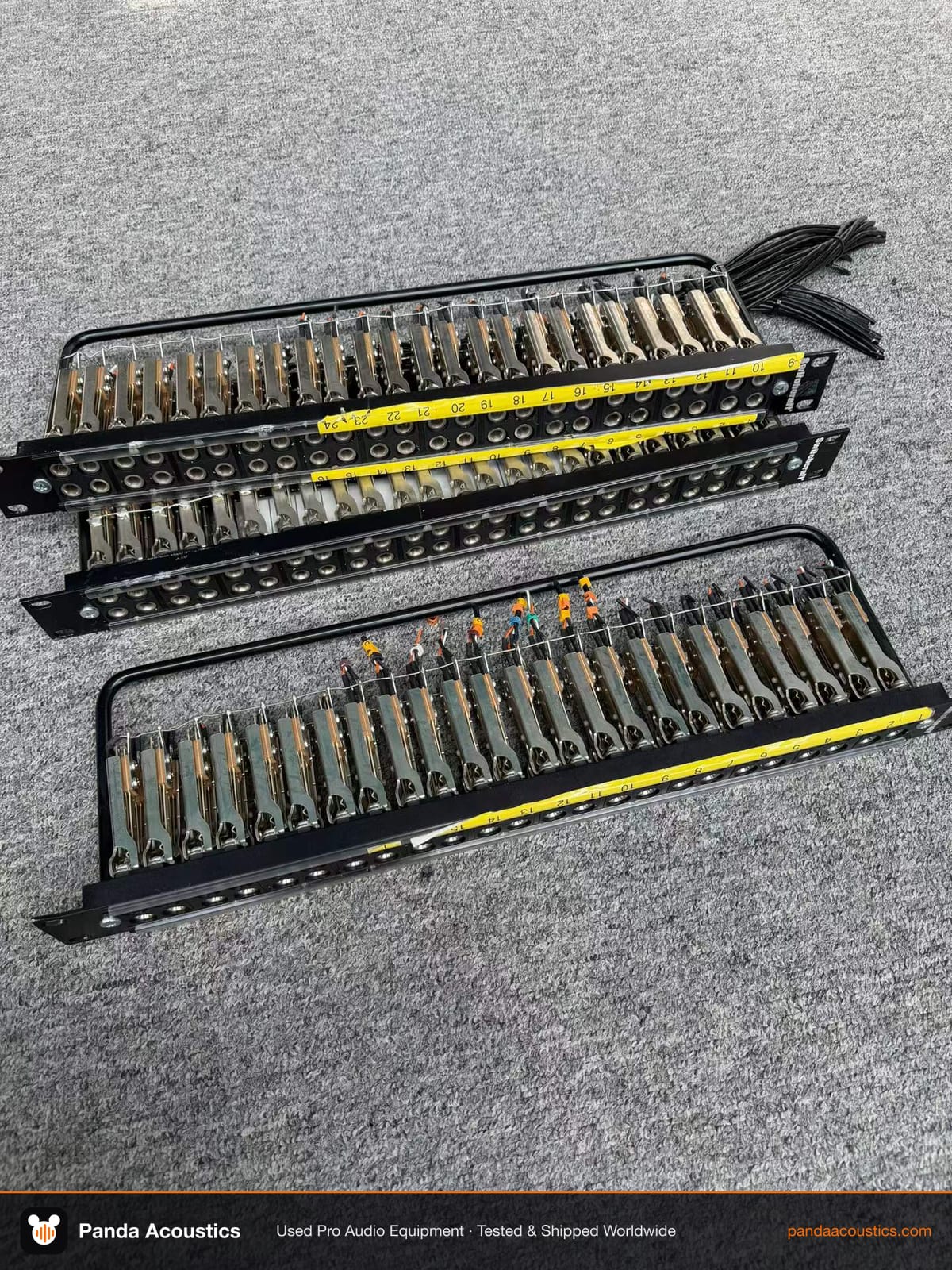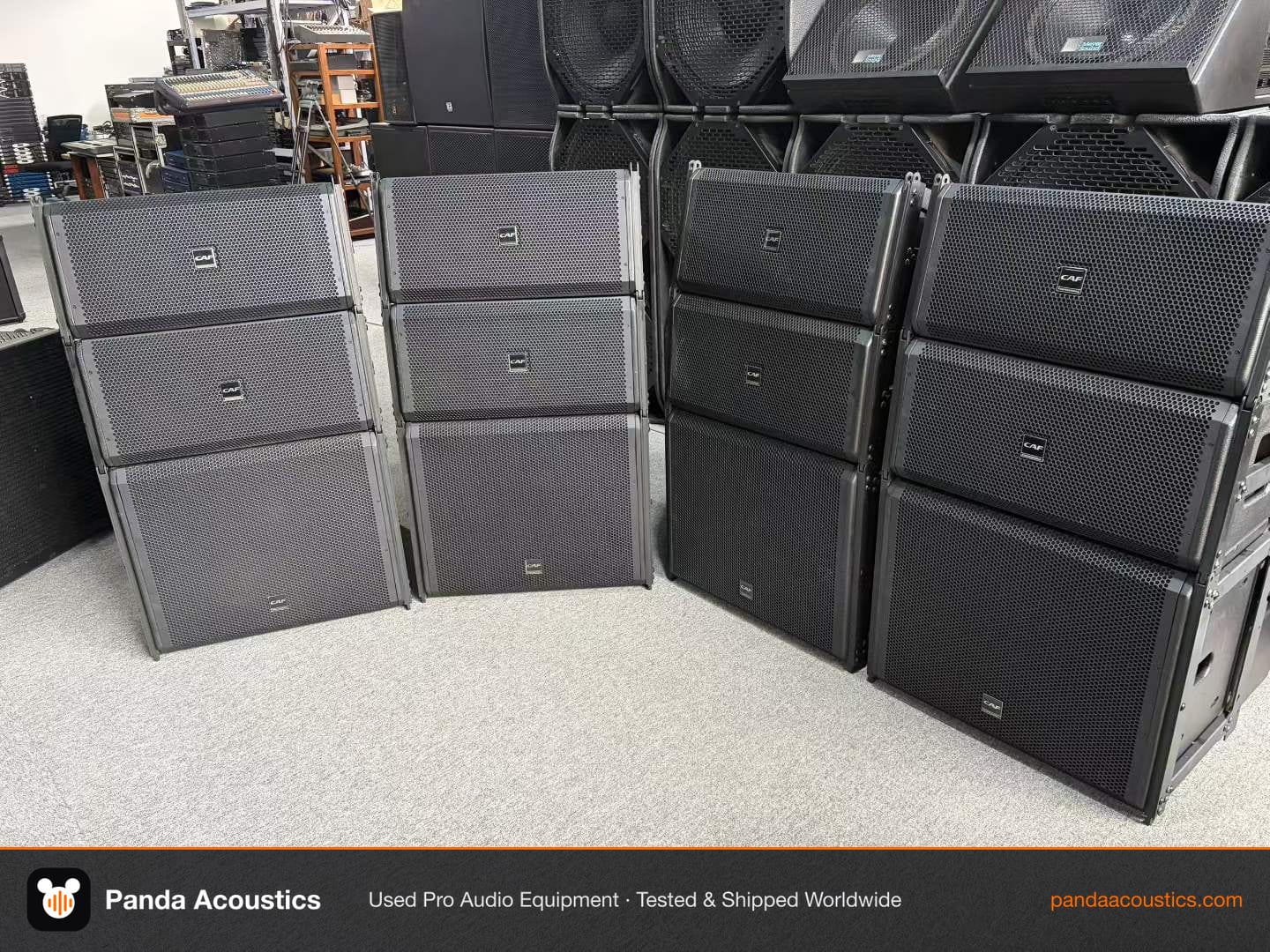
CAF used line array modules are sold as Grade A used stock, per unit, with rigging hardware included and prices in the USD 1,200–6,000 per-unit range. For a bulk buyer, the real question is not whether one cabinet looks acceptable but whether a full group of modules, rigging and connection panels arrives complete and usable. Verify box count, rigging completeness and rear-panel condition before paying.
Key takeaways
- CAF modules are listed as used Grade A line array speaker modules, black, with metal front grilles and rigging hardware included.
- The published per-unit price band for this category is USD 1,200 to 6,000; the CAF listing itself shows no published price.
- Modules are configured stacked in groups, so the purchase is a rig decision, not a single-cabinet decision.
- Rear panels carry connection panels with model labels, which is the part most likely to be mixed or mismatched in bulk lots.
- No warranty period, MOQ, lead time or certification appears in the available material.
The decision in front of you
You run KTV rooms, a rental house, a bar or club, or a touring company in Russia, the Middle East, South America or Africa. You are buying volume, and you are weighing CAF used modules against other used line array options from China. The decision is whether this equipment category is worth buying used at all, and what has to be verified before money moves.
CAF is not a brand with a public specification sheet in the material available here. That changes the shape of the decision. You are not comparing published datasheets; you are comparing a physical lot against your own deployment plan, and you need the seller to confirm what is in the lot. If you cannot get that confirmation, the price advantage is not real.
What the data says
The CAF listing describes used Grade A line array speaker modules in black with a metal front grille. Rigging hardware is included, the rear panel is a connection panel with model labels, and the configuration is stacked in groups. Stock status is in-stock. The price is not published on the listing.
The category price band is USD 1,200 to 6,000 per unit. That is the only price figure available, and it is a band, not a quote. Any landed-cost calculation has to start from the band and then be adjusted by freight, which is handled under the shipping and logistics terms rather than the product page.
Condition is defined by the grading standard, and inspection follows the inspection standard. Those two pages are the only basis on which a Grade A claim can be checked. Nothing in the material states a warranty period, a minimum order quantity, a lead time, or any certification for CAF modules.
For comparison inside the same catalogue, Meyer Sound MINA is listed as a compact line array loudspeaker in used A condition, with a 600-HP amplifier module, hex-punched steel grille, black finish, and rigging frames and cabling as shown. Other MINA entries in the catalogue describe NL4 connectors, honeycomb metal grilles, and scuffs and scratches on cabinet and rigging hardware. Those are different products from CAF and are not substitutes, but they show how much more detail a listing can carry when the brand is documented.
What the datasheet and documents don't tell you
Unknown: power handling, sensitivity, maximum SPL, dispersion angle, impedance and weight for the CAF module. These are not in the material. Why it matters: without them you cannot model coverage for a room or a stage, and you cannot confirm that a group of modules will behave as a coherent array. You can still deploy by ear and by trial, but you cannot promise a client a predicted result.
Not disclosed: the exact number of modules in a group, the age of the units, and whether the rigging hardware is original or replaced. Why it matters: rigging is a safety item, and a lot with mixed or incomplete hardware changes your installation cost and your liability.
Not verified: whether the connection panels and model labels are consistent across the whole lot, and whether any amplifier or processing is included. The listing describes a connection panel, not amplification. Why it matters: if you assume self-powered operation and receive passive cabinets, the quote is wrong by the cost of amplification.
Not applicable or not stated: certification, warranty, MOQ and lead time. Why it matters: in a tender or a rider-driven job, the absence of documentation is itself a disqualifier, regardless of how good the cabinets are.
Who should not choose this
Do not buy CAF used modules if your client base requires rider acceptance against a named brand with published specifications. You will not be able to supply the documentation from this material, and the savings will not cover a cancelled show.
Do not buy if you need a guaranteed, documented warranty period or a certified product. Neither appears in the material, so any promise you make downstream is yours alone.
Do not buy a single group as a test if your plan is a large fixed install. The listing describes modules stacked in groups, and mixing a small trial lot with a later lot risks mismatched panels and hardware across the rig.
Comparison and trade-offs
Against Meyer Sound MINA in the same catalogue, the trade-off is documentation versus price clarity. MINA listings name the amplifier module, connector type, grille construction and included rigging and cabling, and one entry openly notes scuffs and scratches on cabinet and rigging hardware. CAF gives you brand, type, condition, colour, grille material, rigging inclusion, rear-panel description and configuration, but no electrical or acoustic figures.
Against a passive accessory purchase such as the Switchcraft 24-channel rack-mount patch panel, the trade-off is risk profile. A patch panel is a wiring item with visible channel numbering and mounting ears; a line array module is a structural and acoustic item where rigging and panel consistency decide whether the lot is usable.
The honest trade-off for CAF is this: you get a Grade A used line array module with rigging hardware included, inside a USD 1,200–6,000 per-unit band, and you give up published specifications and brand documentation. For install work where you control the design, that can be acceptable. For rider-driven touring, it usually is not.
Implementation: the next step before paying
Ask for a per-unit inventory before you discuss price. Specifically: the number of modules in the lot, a photo of each rear connection panel showing the model label, a photo of the rigging hardware on each module, and confirmation of whether any amplification or processing is included. Map each item against the grading standard and the inspection standard, and ask which inspection points were actually recorded for this lot.
Then request the shipping and logistics terms for your destination and build a landed cost from the USD 1,200–6,000 per-unit band plus freight. If the seller cannot supply the panel and rigging photos, treat the lot as unverified and do not pay. The concrete next step is to open the CAF listing and send that four-item request in writing before any deposit.
Related pages
- Used line array equipment
- Full used equipment catalogue
- CAF listing