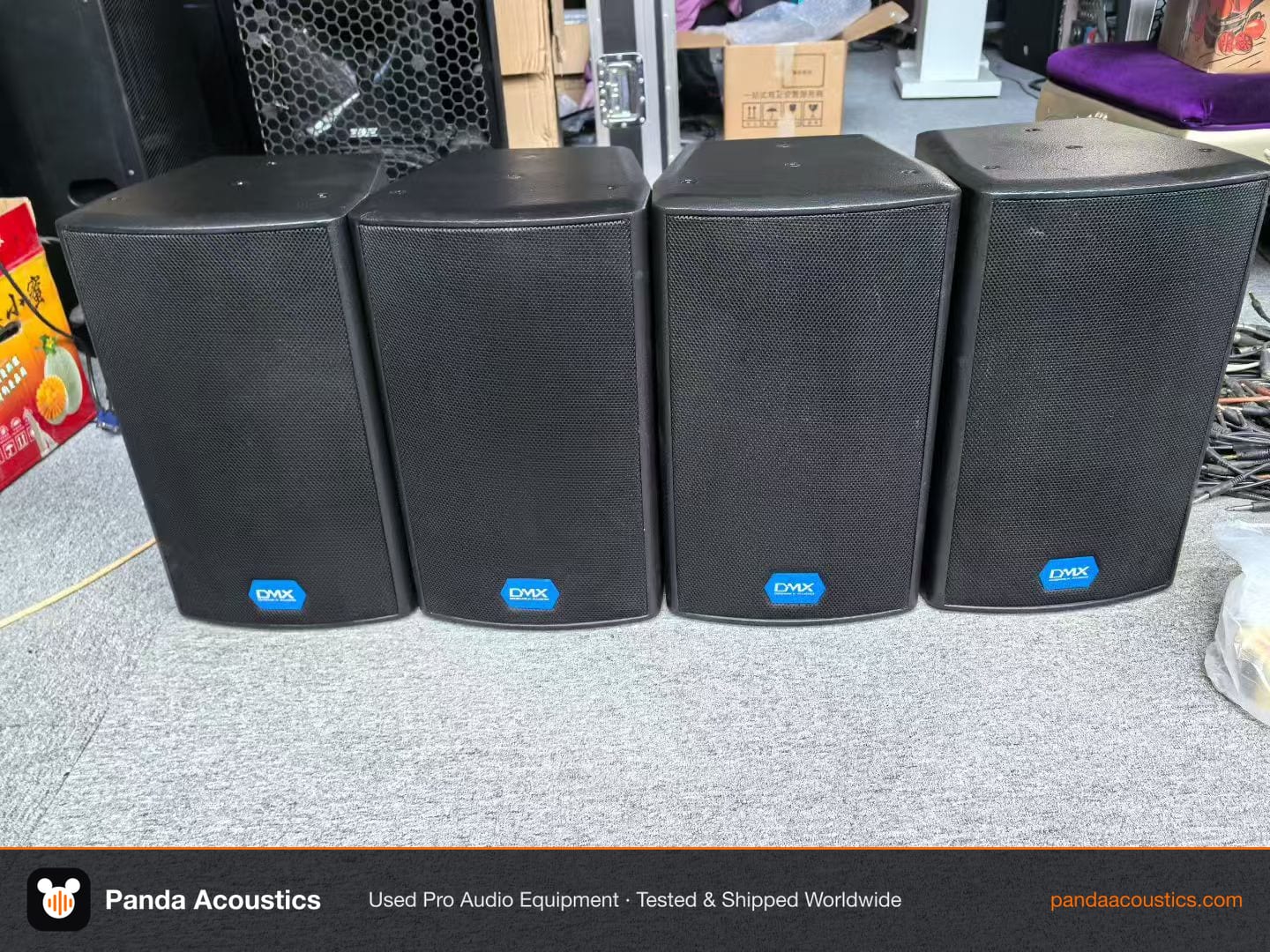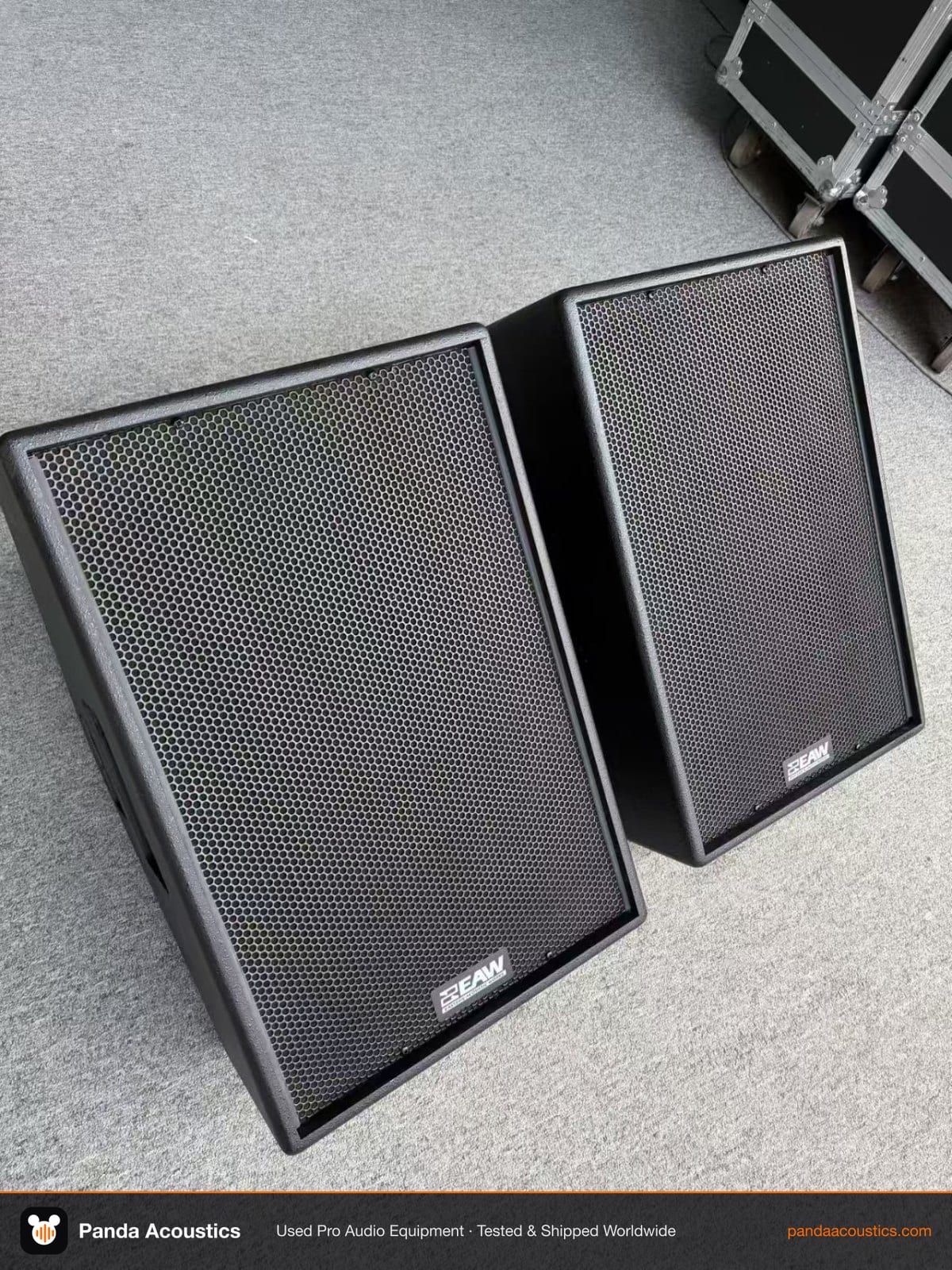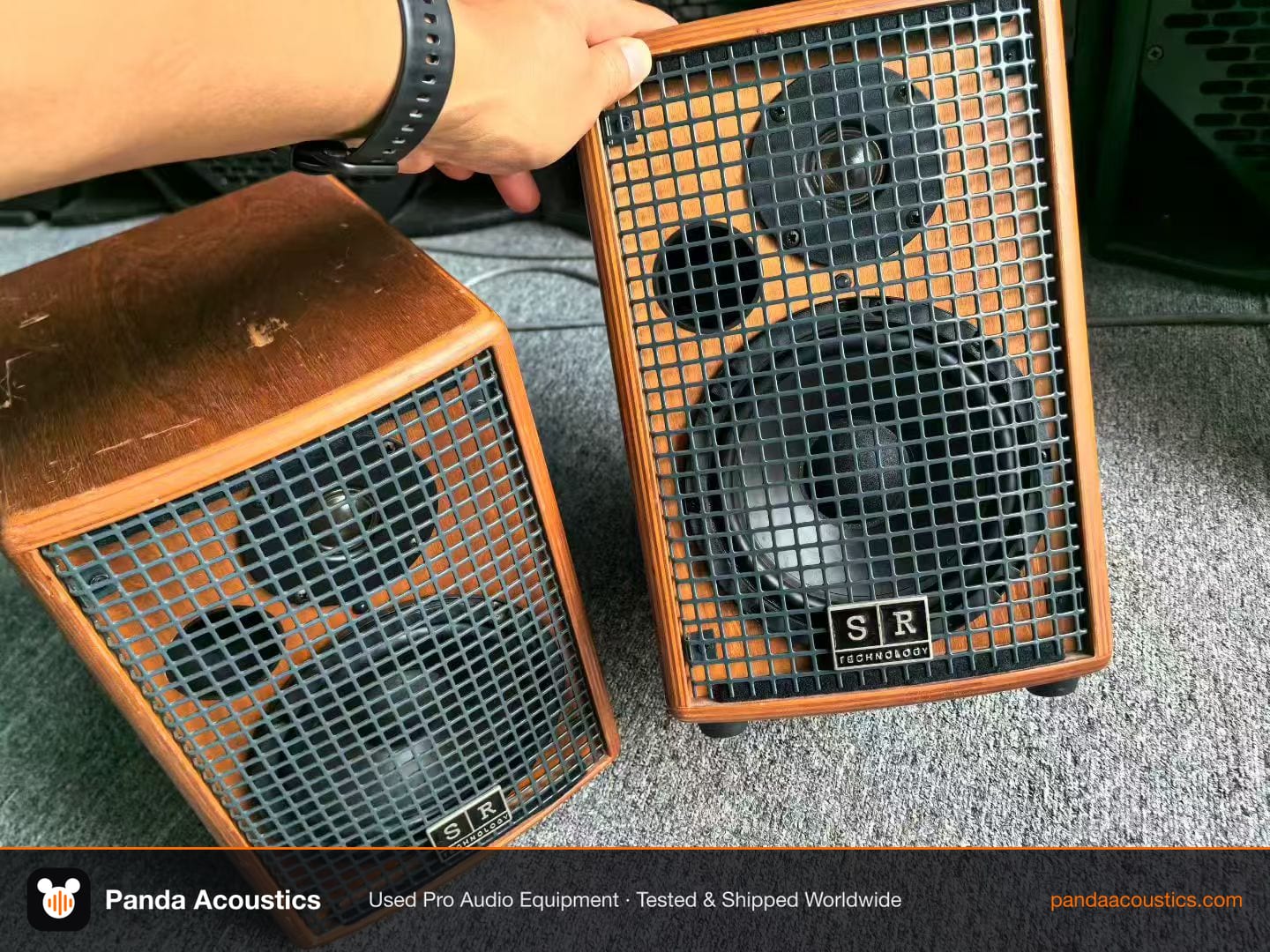
Used loudspeakers sold in bulk from China can be a sound purchase for KTV operators, rental houses and touring companies, but only if condition grade, inspection scope and payment terms are documented in writing before you pay. A listing — in Arabic or any other language — confirms that a speaker exists and is offered for sale; it does not confirm its working condition. Treat the listing as a starting point and the documentation as the decision.
Key takeaways
- "Used" is not a condition. Ask for the seller's published condition grading standard and the specific grade assigned to the units you are buying.
- Ask what the inspection covers and what it does not. An inspection standard that is published can be checked against the units you receive; a verbal assurance cannot.
- Payment terms are part of the product. If the terms do not protect the balance until inspection evidence is shared, the condition claim is unenforceable.
- Landed cost, not unit price, is the number that decides whether a bulk used purchase works for your market. Freight, duty and inland transport belong in the calculation from day one.
- No price, minimum order quantity, warranty period or lead time is stated in the material behind this article. Those figures are Not disclosed and must be requested in writing.
The decision in front of you
You run KTV rooms, a rental fleet, a touring rig or a venue bar. You need a volume of loudspeakers, not one collector's item, and your budget per box is constrained by what the room or the client will pay. New stock at your volume is often out of reach, so you are looking at used professional audio equipment sourced from China and shipped to Russia, the Middle East, South America or Africa.
The real question is not "are these speakers good?" It is "what exactly am I buying, and what happens if the units that arrive are not what the listing showed?" That is a documentation question. It is answered before the deposit, not after the container arrives.
What the data says
The material available for this article describes Panda Acoustics as a Beijing-based supplier of tested used professional audio equipment sold in bulk to overseas B2B buyers. That is the whole of the factual record here. Beyond that, the following are Not disclosed in the material and must not be assumed:
- Price range per unit: Not disclosed.
- Minimum order quantity: Not disclosed.
- Warranty period: Not disclosed.
- Lead time: Not disclosed.
- Certification status: Not disclosed. Do not assume CE, RoHS, UL, FCC or ISO unless a document states it.
- Specific models, brands or stock quantities in the catalogue: Not disclosed in this material; the product catalogue is the place to check current listings.
What the material does establish is that three policy documents exist and are published: a condition grading standard, an inspection standard, and payment terms. Their existence is the useful fact. Their content is what you read before you commit, and it is what you hold the seller to afterwards.
What the documents don't tell you
A grading standard tells you how the seller defines condition. It does not tell you the condition of the specific pallet you are buying until that grade is written against your order. Ask for the grade per line item, not a general statement that stock is "good used."
An inspection standard tells you what is checked. It does not tell you what is excluded. The exclusions matter more for loudspeakers than for almost any other category: cone and surround condition, voice coil rub, magnet shift after transport, cabinet water damage, corroded terminals, and whether drivers are original or reconed. If the published inspection standard does not name a check, assume it was not performed and ask whether it can be added.
Payment terms tell you the sequence of money and evidence. They do not tell you who pays return freight if a unit fails on arrival. That is a separate written term and it is the one most bulk buyers forget until they need it.
Shipping documentation tells you how goods move. It does not tell you the landed cost in your country, because duty and inland transport are set by your jurisdiction, not the seller. Use the shipping and logistics page to establish what the seller handles and where your responsibility begins.
Who should not choose this
Do not buy used loudspeakers in bulk from China if any of the following is true.
- You need one or two units. Bulk B2B supply is built around volume; the inspection and freight effort does not pay back on a single box.
- You need certified equipment for a tender or a regulated install. Certification status is Not disclosed in this material. If your contract requires CE, UL or equivalent, verify it in writing or buy new from a source that certifies.
- You cannot inspect before the balance is released. If your only option is to pay in full and hope, the condition claim has no teeth. Walk away or restructure the terms.
- You need a written warranty period longer than the seller offers. Warranty period is Not disclosed here. If your business model depends on multi-year cover, this channel is the wrong fit.
- You are buying on brand reputation alone. A recognizable badge on a used cabinet says nothing about the drivers inside it. If you will not verify driver originality, do not buy used.
Comparison and trade-offs
Within the material, the meaningful comparison is not brand against brand — no model-level specifications are given — but channel against channel, judged on what is documented.
- Used bulk from a supplier with published grading and inspection standards versus used from an undocumented listing: the first gives you a written grade and a named inspection scope to hold against delivery; the second gives you photographs. The trade-off is time — reading standards and requesting per-unit grades slows the order.
- Used bulk versus new: used stretches budget across more boxes, which matters for KTV room counts and rental fleet depth. New gives you a manufacturer's certification and warranty, neither of which is disclosed here for used stock. If certification is a contract requirement, the trade-off resolves against used.
- Documented payment terms versus fast informal payment: documented terms cost you days and protect the balance; informal payment is faster and leaves you with no leverage if the grade does not match.
- Seller-arranged logistics versus your own forwarder: the seller's scope is defined on the shipping page; your own forwarder may give you more control over inland cost but takes on more coordination.
The position this article takes: for a volume buyer in an emerging market, documented used stock is the better trade. Undocumented used stock is not a discount, it is an unpriced risk.
Next step before paying
Before any deposit, request three documents in writing against your specific order: the condition grade per line item under the published grading standard, the inspection scope that will be applied with its exclusions listed, and the payment schedule showing what evidence releases the balance. Compare each against the grading, inspection and payment terms pages. If any of the three comes back verbal rather than written, do not send the deposit.