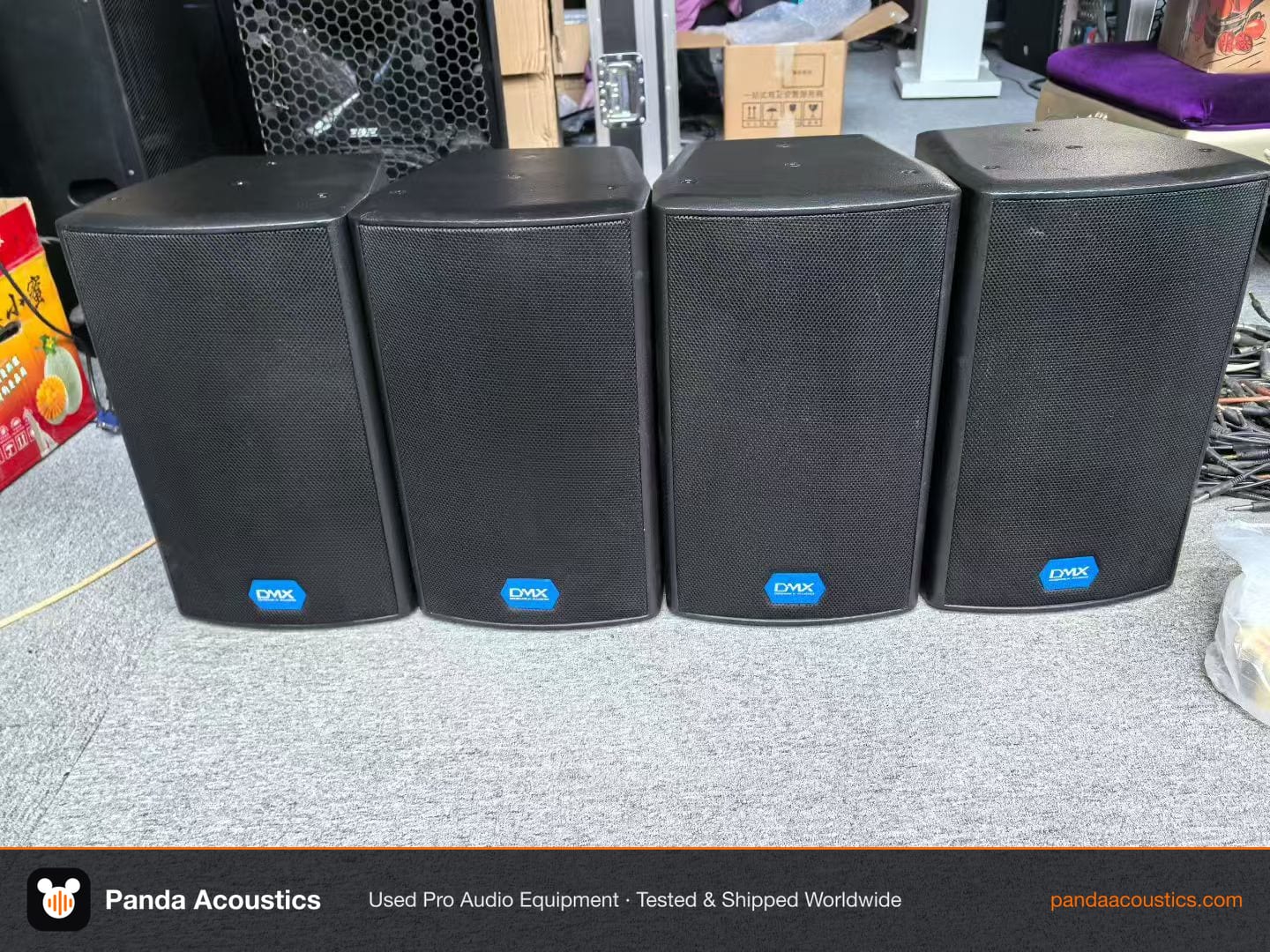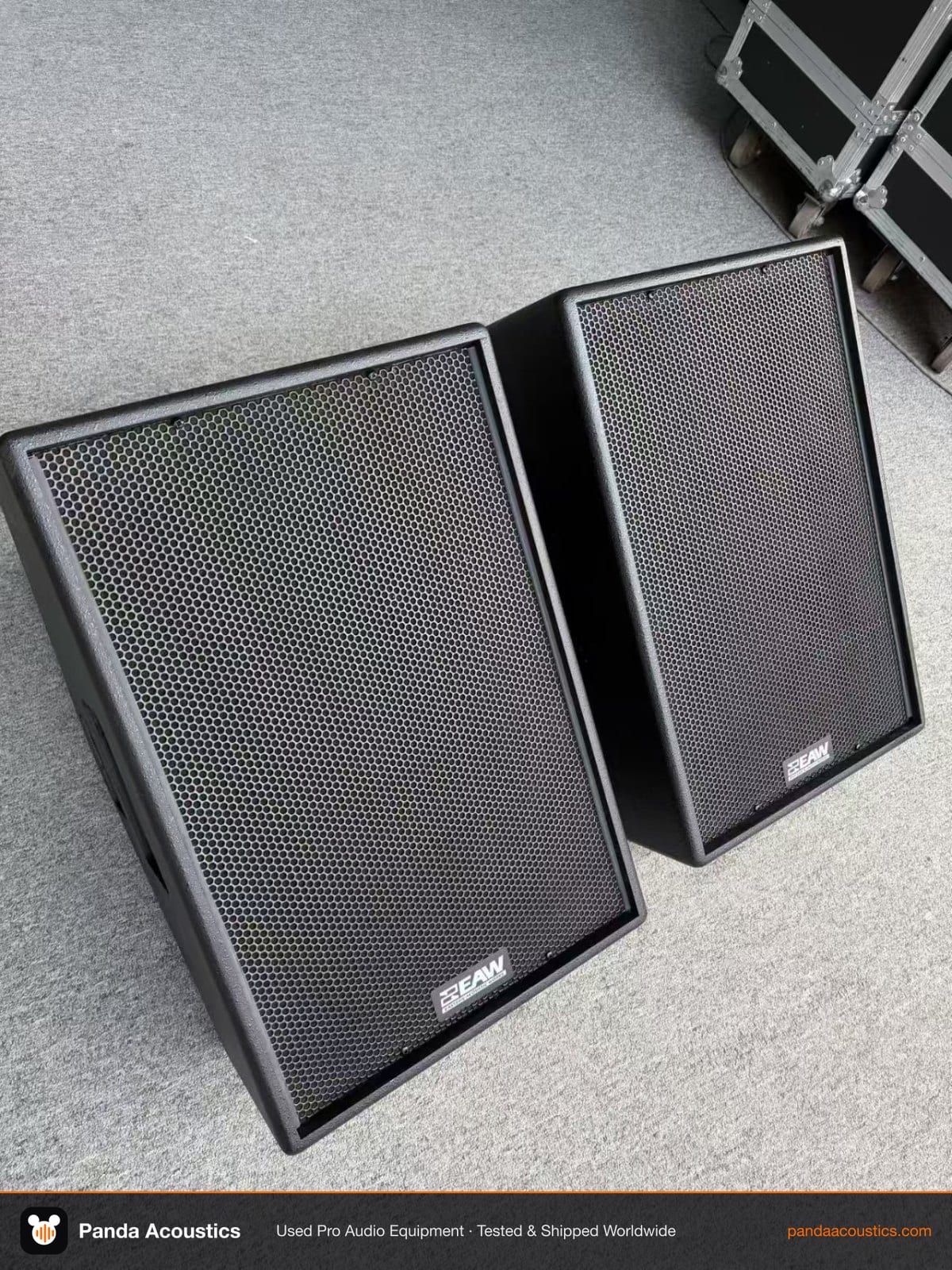
Used bar sound system equipment from China is worth buying in bulk only when the seller documents condition grade, serial numbers, driver and connector condition before payment. For most bars and clubs, passive two-way full-range speakers and column arrays are the practical core of the system; active studio monitors are a poor fit for a bar floor.
Key takeaways
- Published price range for this speaker category is USD 200–1,500 per unit, so a bar system budget depends on unit count, not on brand alone.
- All listed models are Grade A and in stock, but Grade A does not mean new — the Barefoot MicroMain27 listing describes Grade A as minor dust and light handling wear.
- Impedance and connector data matter for system design: JBL KP4010 and DAS RF-15.85 are 8 ohms with speakON connectors; Dynaudio BM5 is 4 ohms.
- Ask for the inspection record and serial number match before paying; the inspection standard and grading pages define what that should cover.
The decision
You run a bar, club, KTV room or rental house and you need multiple matching speakers, not one collector piece. You are comparing a bulk order of used units from a China-based supplier against local new stock. The real question is not which brand sounds better on paper — it is whether the units you receive match the condition you were shown, and whether the total landed cost still beats local supply after freight and duties.
That decision splits by venue type. A bar or club with a fixed install and a house amplifier rack needs passive full-range boxes with predictable impedance and speakON connectivity. A venue that wants simple setup may prefer active units. A studio or small listening room is a different buyer entirely.
What the data says
The category price range is USD 200–1,500 per unit. Individual prices for the listed models are not published, so any per-unit quote must come from the supplier directly.
For passive install work, the DAS RF-15.85 is a two-way full-range speaker rated 400 W RMS at 8 Ω, with a frequency range of 50 Hz–20 kHz, an M-30 high-frequency driver (70 Wpgm, 8 ohms), a 15P low-frequency driver at 400 W, a 15SP woofer, and 2x Speakon input plus linked connectors. It is made in Spain.
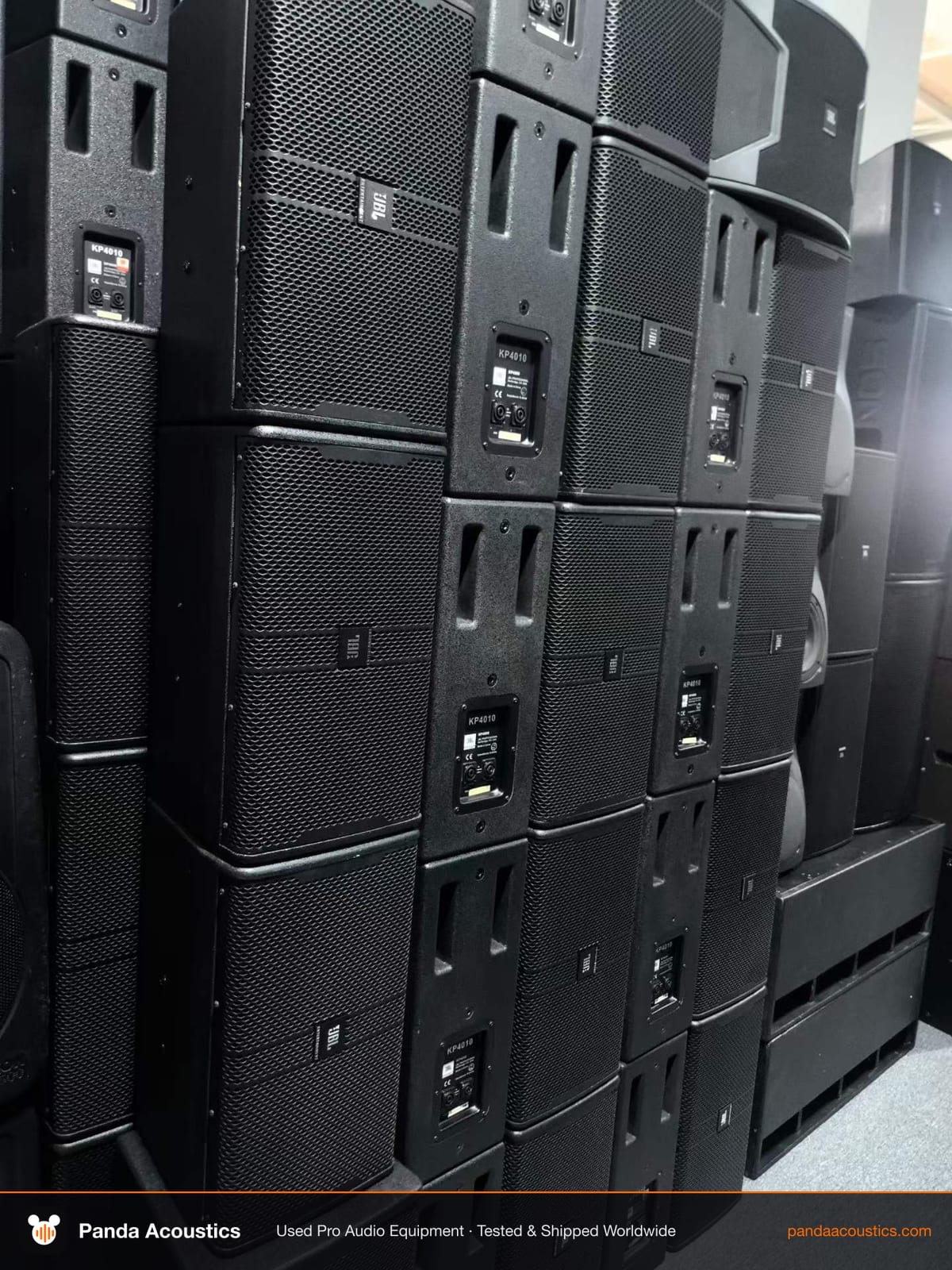
The JBL KP4010 is an 8 ohm two-way loudspeaker from the KP4000 series with 2x speakON IN/THRU connectors, manufactured in China. The JBL CMX6403 is a column array speaker at 8 ohms. The RCF ART 310A is an active two-way speaker pair; its listed data covers the ND1411-M compression driver and ROYAL403 and ROYAL573 crossover capacitors.
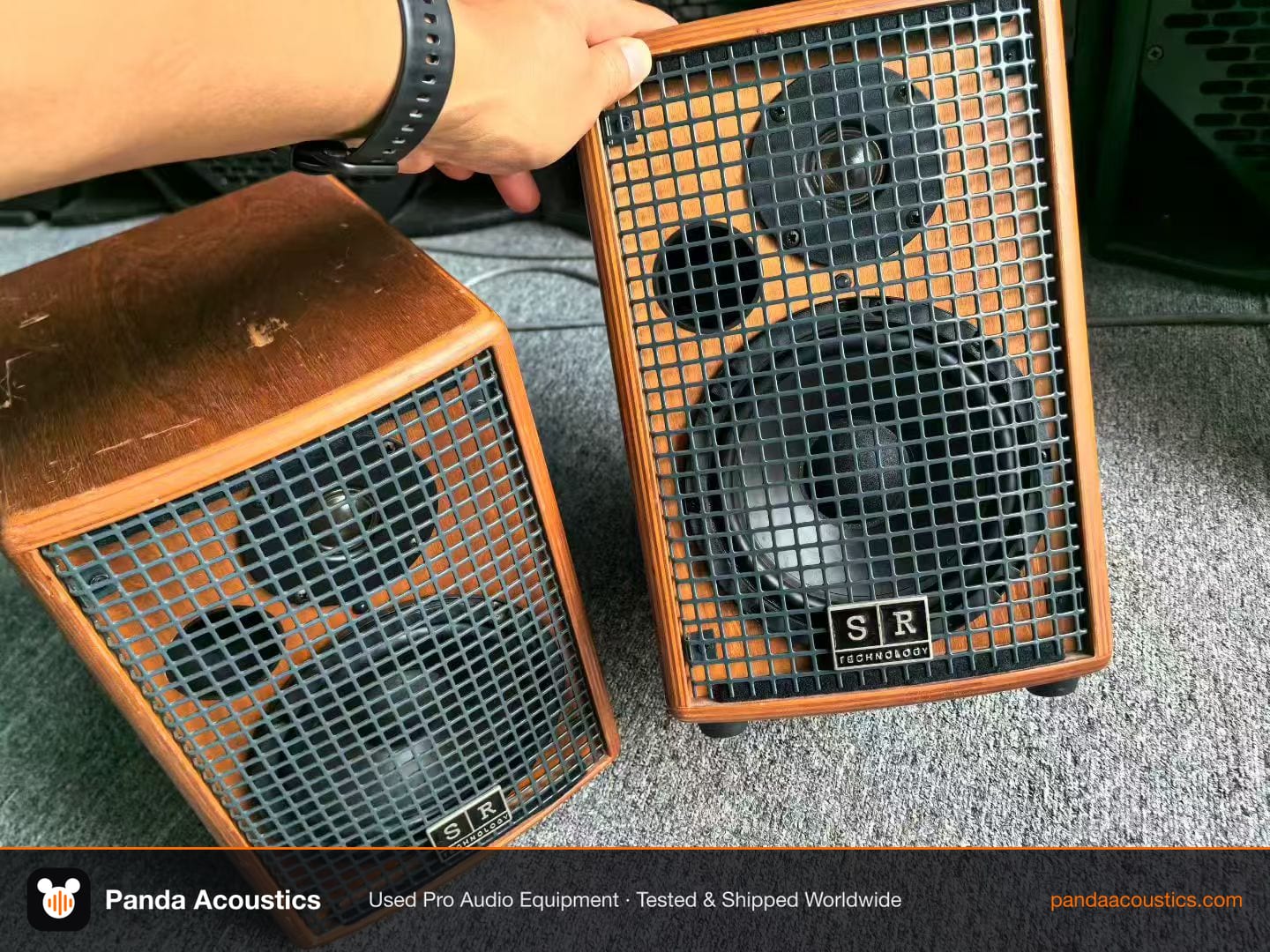
The Dynaudio Acoustics BM5 is a two-way studio monitor pair at 4 ohms, 50–100 RMS watts amplifier power, serial number 849635, made in Denmark. The Barefoot Sound MicroMain27 is an active studio monitor pair, hand crafted in the USA, with XLR inputs and a volume control, listed as Grade A with minor dust and light handling wear.
Every one of these models is listed as condition A and in stock. The grading standard page defines the condition scale, and the inspection standard page defines what inspection covers — read both before you treat “Grade A” as a quality guarantee.
What the datasheet/docs don't tell you
Several things a bar buyer needs are not disclosed in the listings. Cabinet cosmetic condition beyond the general grade is not itemized. Driver history — whether a woofer or compression driver was ever reconed or replaced — is not stated. Hours of use are unknown. Amplifier module service history on the active units is unknown. Warranty terms are not published on the listings. Lead time and minimum order quantity are not stated. Certification for any market is not disclosed.
Why it matters: a bar install fails on the weakest unit, not the average. A matched pair with one tired compression driver will sound uneven across the room, and you will discover it after freight, not before. That is why the inspection record and serial number match are the documents that actually protect your money.
Who should not choose this
Do not buy this if you need certified new equipment with a published warranty, or if your tender requires certification documents that the supplier cannot provide — none is stated in the materials. Do not buy if you cannot review an inspection record before payment, or if you are buying a single unit where freight and handling erase the price advantage. And do not buy active studio monitors like the Dynaudio BM5 or Barefoot MicroMain27 for a bar floor: they are nearfield monitoring tools, not a venue PA, and the Barefoot listing itself notes handling wear.
Comparison and trade-offs
Passive versus active is the first trade-off. The DAS RF-15.85 and JBL KP4010 are passive boxes: you supply amplification, but there is no amp module to fail inside the cabinet. The RCF ART 310A and the two studio monitors are active, which simplifies setup but adds electronics that age.
Connector and impedance consistency is the second. JBL KP4010 and DAS RF-15.85 both use speakON and are 8 ohms, so they can share amplifier channels and cabling practice. The Dynaudio BM5 at 4 ohms and 50–100 RMS watts sits in a different power and wiring class.
Form factor is the third. The JBL CMX6403 column array suits narrow, reverberant rooms where you want controlled vertical spread; a 15-inch two-way like the DAS RF-15.85 suits a floor with more low-end demand. The materials give you impedance and driver data, not coverage angles or SPL figures — those are Unknown, so do not design a room around them without asking.
Implementation / next step
Before paying, request a per-unit quote, the inspection record for each serial number, and confirmation that the units you receive match the grade shown. Cross-check the quote against the condition grading standard and the inspection standard, then confirm freight and terms on the shipping and logistics and payment terms pages. Shortlist from the speaker category page once you know your impedance and connector standard.
FAQ
Is Grade A used equipment the same as new? No. The Barefoot MicroMain27 listing describes Grade A as minor dust and light handling wear, so Grade A means tested and cosmetically clean, not unused.
What is the price range for bar speakers? The category range is USD 200–1,500 per unit. Individual model prices are not published, so ask for a quote.
Which model suits a bar install best? For passive installs, the JBL KP4010 or DAS RF-15.85 fit an 8 ohm, speakON-based system. For narrow rooms, the JBL CMX6403 column array is the relevant option.
Can I use studio monitors in a bar? Not recommended. The Dynaudio BM5 and Barefoot MicroMain27 are nearfield studio monitors, not venue PA speakers.
What should I verify before paying? Serial number match, inspection record, cosmetic condition beyond the grade, driver history, and the final landed cost including freight.