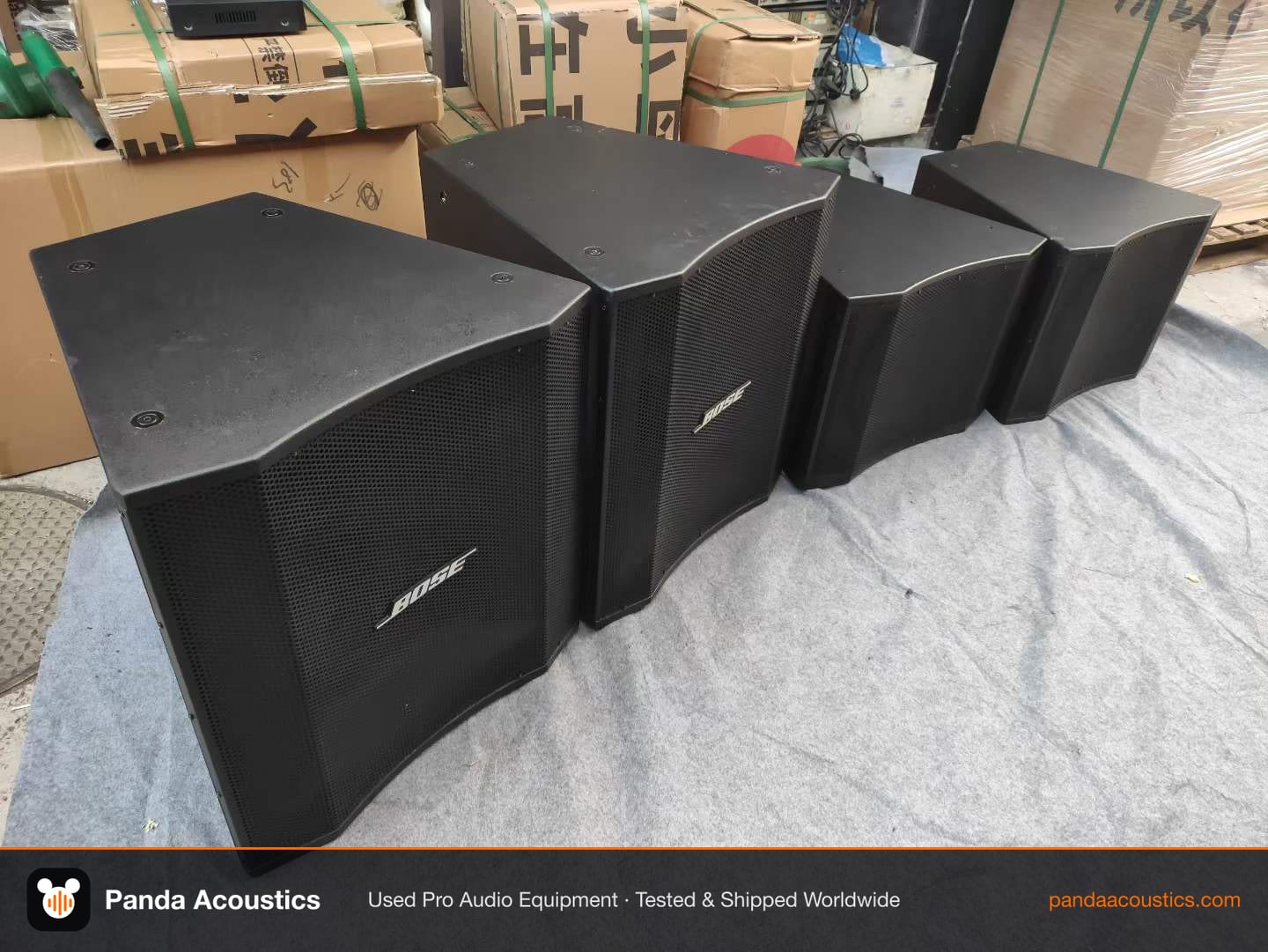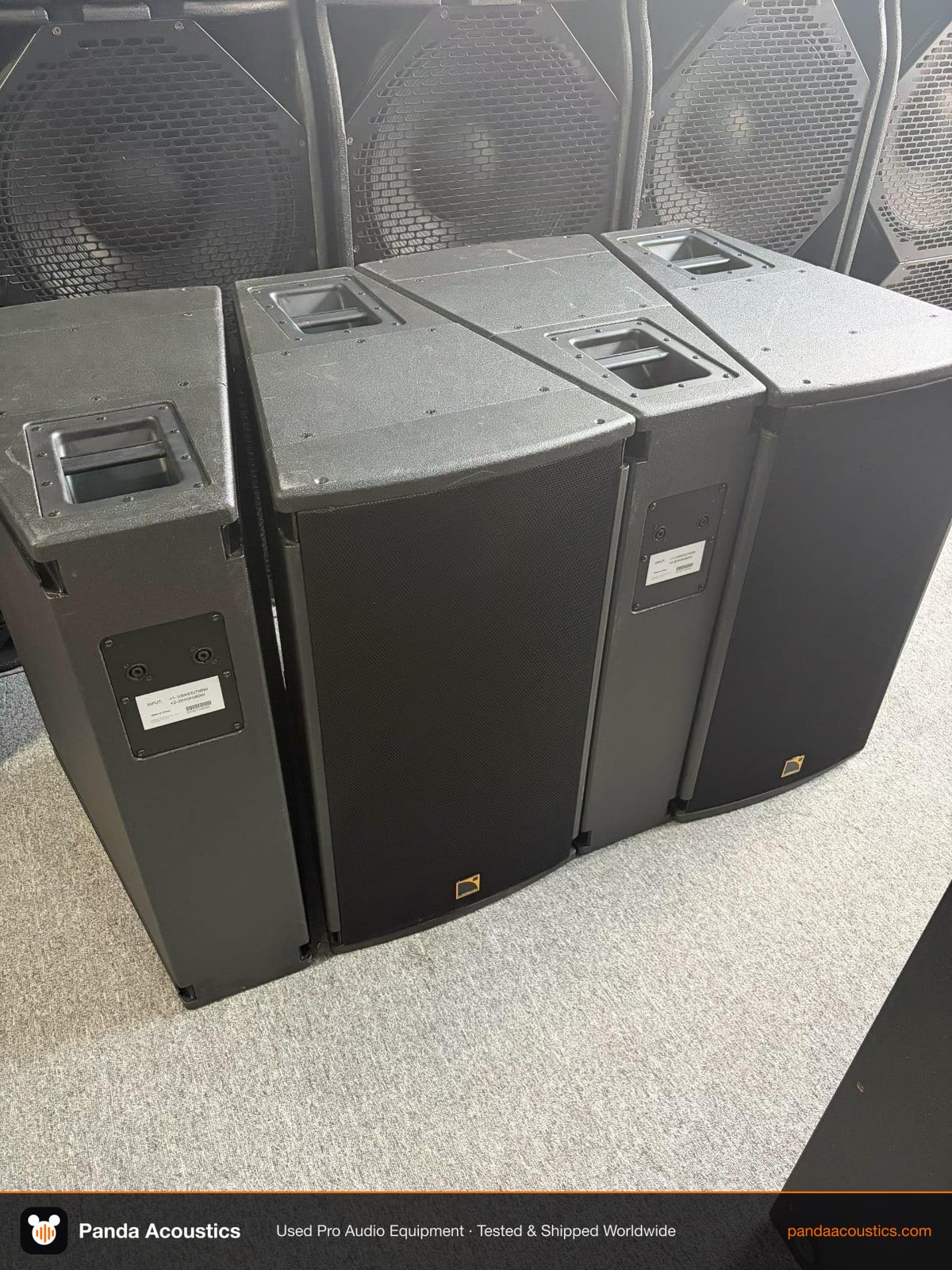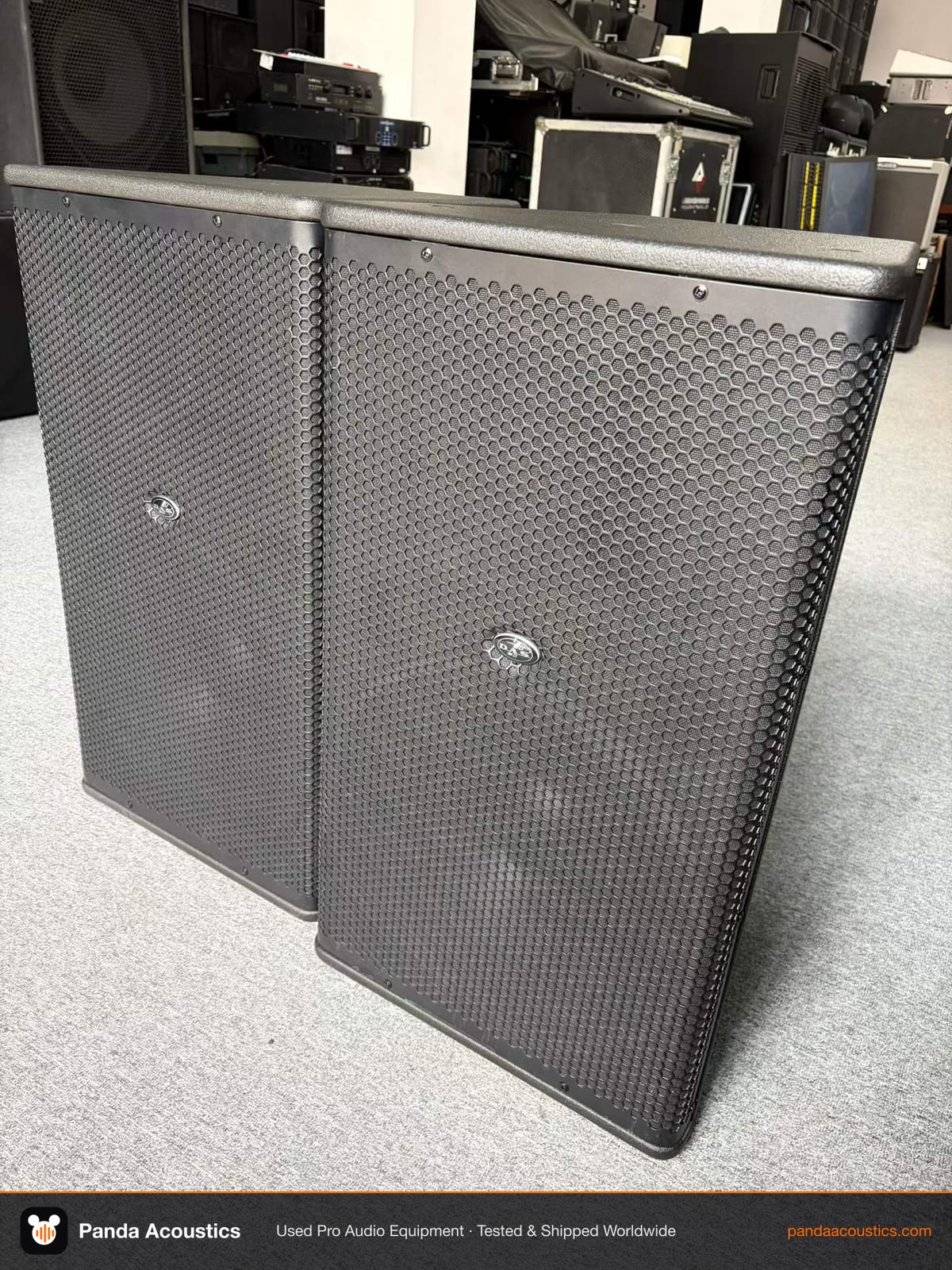
A used DAS RF-15.85 is a passive two-way full-range speaker rated 400 W RMS at 8 Ω, made in Spain, and it can be a sensible bulk purchase for KTV rooms, bars and small rental stock — but only if the seller documents driver originality, HF diaphragm condition and cabinet integrity before you pay. The published spec sheet alone is not enough to price or accept a used lot.
Quick answer
The RF-15.85 is a 15-inch two-way box with a 400 W RMS power rating, 8 Ω impedance and a 50 Hz – 20 kHz frequency range. For bulk buyers sourcing from China, the question is not whether the model is good on paper — it is whether the specific units you are offered still have original DAS drivers and intact diaphragms. Buy on documented condition, not on the model name.
Key takeaways
- The RF-15.85 is rated 400 W RMS at 8 Ω, with a 50 Hz – 20 kHz frequency range and a 15-inch woofer (15SP).
- It uses a DAS M-30 HF driver rated 70 Wpgm at 8 ohms and a 15P LF driver rated 400 W.
- Connections are 2x Speakon (input plus linked), so it is a passive box that needs external amplification and processing.
- It is listed as Made in Spain, which matters for buyers comparing it against unbranded 15-inch two-way boxes.
- Price for used RF-15.85 units falls within the general used speaker range of USD 200–1,500 per unit; the exact listing price is Not disclosed.
The decision
You are a KTV operator, rental house, bar or club buyer in Russia, the Middle East, South America or Africa. You are buying volume, not one box. You have a quote for used DAS RF-15.85 units from a China-based supplier and you need to decide whether to commit a container or a pallet, and what to demand before the payment clears.
The decision has two parts. First, does a passive 400 W 15-inch two-way box fit your rooms and your amplifier stock? Second, can the seller prove the condition of the drivers and cabinets on the actual units you will receive? If the second answer is weak, the first answer does not matter.
What the data says
Everything below comes from the published listing for the DAS RF-15.85.
- Power (RMS): 400 W.
- Impedance: 8 Ω.
- Frequency range: 50 Hz – 20 kHz.
- HF driver: M-30, 70 Wpgm, 8 ohms.
- LF driver: 15P, 400 W.
- Woofer: 15SP.
- Connectors: 2x Speakon (input plus linked).
- Origin: Made in Spain.
- Condition: A, in stock, sold per unit; the listing is titled as a pair.
- Price: Not disclosed on the listing. The general used speaker range in our catalogue is USD 200–1,500 per unit.
Read those numbers as a deployment profile. At 8 Ω and 400 W RMS, the RF-15.85 is an easy load for most professional amplifiers, and a linked Speakon output lets you chain boxes on one run. The 50 Hz low end means it can carry a KTV vocal-and-music mix without a subwoofer in small rooms, but it is not a subwoofer substitute in a club. The 15-inch 15SP woofer and M-30 compression driver are the two parts that decide whether a used unit is worth its price.
What the datasheet/docs don't tell you
The listing gives you the factory specification, not the condition of the units on the pallet. Several things stay unknown, and each one changes what you should pay.
- Driver originality. The spec names a 15P LF driver and an M-30 HF driver, but nothing confirms the units you are offered still carry those. A reconed or substituted woofer changes both sound and resale value. Not verified on the listing.
- HF diaphragm condition. The M-30 is rated 70 Wpgm; a used diaphragm may be tired, non-original or already replaced. This is the most common failure point on a used two-way box and it is Not disclosed.
- Cabinet and grille history. Condition A is a grade, but the listing does not state whether cabinets were toured, flown, or repaired. Scuffs matter less than cracked baffles and loose Speakon panels.
- Age and service history. Not disclosed. A 400 W box that ran for years at clipping behaves differently from one used at moderate levels.
- Price. Not disclosed per unit; only the general USD 200–1,500 per-unit range applies. You cannot benchmark a quote against the listing.
- Warranty, MOQ, lead time and certification. Not stated in the materials. Do not assume any.
Why this matters: two RF-15.85 lots can look identical in a photo and differ by hundreds of dollars per unit once diaphragms and woofers are counted. The spec sheet cannot separate them.
Who should not choose this
Do not buy used RF-15.85 units if you need high output per box for a touring main system. A single 400 W passive 15-inch two-way is a fill, monitor or small-room box, not a line array element, and stacking it will not turn it into one.
Do not buy if you cannot get driver and diaphragm photos, or a written statement of what was replaced, before paying. A seller who will not open a grille for a bulk order is telling you something. Also skip this model if your amplifier stock is built around active boxes with onboard processing — the RF-15.85 is passive and needs outboard amplification and, in most rooms, a system processor.
Finally, do not choose it if your rooms are large clubs where 50 Hz extension and 400 W per box will be pushed hard every night. Buy a subwoofer-supported system instead.
Comparison and trade-offs
Within our own catalogue, three alternatives sit near the RF-15.85 and each trades something different.
- BOSE Panaray LT 9400: passive, 8 Ω, 100 W power handling, NL4 connections. Far lower power than the RF-15.85's 400 W RMS, so it suits distributed low-level installs rather than KTV or club mains.
- faitalPRO 15-inch two-way: 700 W bass power and 80 W high power, with a 15FX560 woofer rated 1400 W at 8 Ω and 2x NL4 speakON. Higher power ceiling than the RF-15.85, but a different driver ecosystem and a different price point within the same USD 200–1,500 range.
- Two-way full-range PA speaker: a generic category listing with no published specs, condition or stock status — useful only as a price reference, not a like-for-like comparison.
The trade-off is straightforward. The RF-15.85 gives you a known Spanish-made model with published driver part numbers, which makes verification possible. The faitalPRO box gives you more rated power. The BOSE gives you lower output but a well-known install footprint. None of these figures tell you which used lot is in better condition — that is what inspection is for.
Implementation / next step
Before paying, request a per-unit condition file for the exact serial range you are buying: photos of each woofer cone and surround, photos of each HF diaphragm and its mounting, a note on any replaced parts, and a photo of each rear panel and Speakon connector. Ask the seller to confirm the units are graded against the published condition grading standard and checked against the inspection standard. Then confirm landed cost — freight, duty and handling — against the USD 200–1,500 per-unit range before you compare quotes, and review payment terms so the balance is tied to the inspection file, not to the order date.
Concrete next step: open the DAS RF-15.85 listing, send the serial range you were quoted, and ask for the per-unit driver and diaphragm photo file before any deposit.