When you are buying used subwoofers in volume, you cannot rely on photos or a seller's word. You need to know how to check if a subwoofer is good using your hands, your eyes, and a test signal. This guide walks you through the checks that matter for KTV rooms, touring rigs, bars, and clubs.
Start with a physical inspection
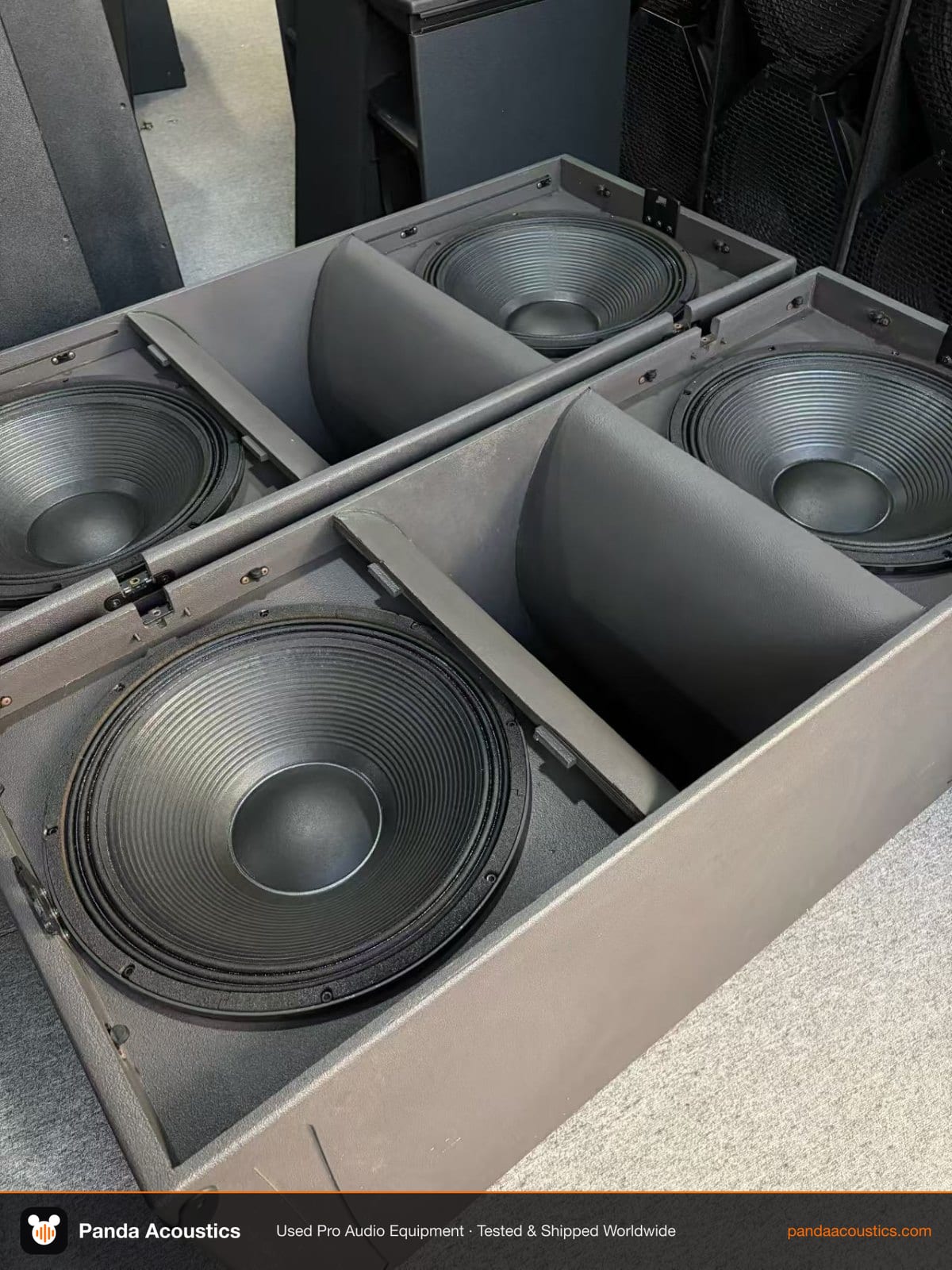
Ask the seller to remove the grille. Look at the cone. It should be clean, free of tears, and not warped. A little dust is normal; deep gouges or water stains are not. Check the surround (the ring that connects the cone to the frame). It should be flexible, not cracked or separated. If the surround is foam, it may have rotted on older units. Rubber surrounds last longer but can still dry out.
Press gently on the cone with your fingers. You should feel smooth resistance from the spider (the inner suspension). If you hear a scraping sound, the voice coil is rubbing against the magnet gap. That subwoofer is on its way out. Also check the frame for bends or cracks. A bent frame can misalign the motor and cause distortion.
Test the voice coil and terminals
Use a multimeter to measure the DC resistance of the voice coil. For an 8-ohm subwoofer, you should read around 6 to 7 ohms. For a 4-ohm sub, expect 3 to 4 ohms. A reading of 0 ohms means a short. A reading of infinite ohms means an open coil. Both are bad. If the subwoofer has dual voice coils, test each one separately. Also wiggle the terminals. They should be tight and not corroded. Loose terminals can cause intermittent cutting out during heavy bass.
If you cannot use a multimeter, at least connect the subwoofer to an amplifier and play a low-frequency test tone. Listen for crackling or silence. A good subwoofer will produce a clean, even tone.
Listen for mechanical noise
Play a sine sweep from 20 Hz to 100 Hz at a moderate level. Put your ear near the cone (but not too close). You should hear only the tone. Any buzzing, rattling, or ticking indicates a problem. Common causes include a loose dust cap, a damaged spider, or debris in the magnet gap. Sometimes the cabinet itself rattles. Tighten all screws and try again. If the noise persists, the driver is likely faulty.
For a more thorough test, use a test track with heavy bass content. Music with deep synth notes or kick drums works well. Turn it up to a realistic level and listen for distortion. A good subwoofer should stay clean even when pushed. If it starts to sound muddy or compressed, the driver may be reaching its limits or the amplifier may be clipping.
Check the cabinet and ports
Inspect the cabinet for cracks, especially around the corners and mounting points. A cracked cabinet can buzz and leak air, reducing output. Check the port (if ported). It should be free of obstructions and not have any loose material inside. Shine a light into the port to look for debris or damage to the internal walls. Also check the input panel. The connectors should be tight and not oxidized. SpeakON and XLR connectors are common; make sure they lock properly.
If the subwoofer has a built-in amplifier, test it separately. Power it on and listen for hum or hiss with no input. A little noise is normal, but loud hum indicates a grounding issue or failing capacitors. Test the crossover and level controls. They should turn smoothly without crackling.
Compare against a known reference
If you are buying multiple subwoofers, test them side by side. Play the same signal through each one and listen for differences. A good subwoofer will sound consistent with its siblings. If one is noticeably quieter or distorted, it may have a failing component. For high-value models like the L-Acoustics KS28, you can also check the serial number and ask for service history. But do not rely on paperwork alone; always perform the physical and listening tests.
Remember that room acoustics affect bass. A subwoofer that sounds weak in one room may sound fine in another. If possible, test in a space similar to where it will be used. For KTV rooms, a subwoofer that sounds good at low volumes may not handle the demands of a live band. Always test at the levels you expect in your venue.
Final checks before you commit
Once you have passed the physical and listening tests, do a final check of all screws, gaskets, and connectors. Make sure the subwoofer is clean and free of any signs of moisture or corrosion. If the seller allows, remove the driver to inspect the inside of the cabinet. Look for water damage, mold, or loose bracing. A well-built cabinet should feel solid and heavy. If it feels light or flimsy, it may not last long under heavy use.
Finally, trust your ears. If something sounds off, it probably is. Do not let a low price pressure you into buying a faulty unit. A good subwoofer is an investment that will pay off in reliable performance. For more detailed checklists, see our guide on how to test a used subwoofer.