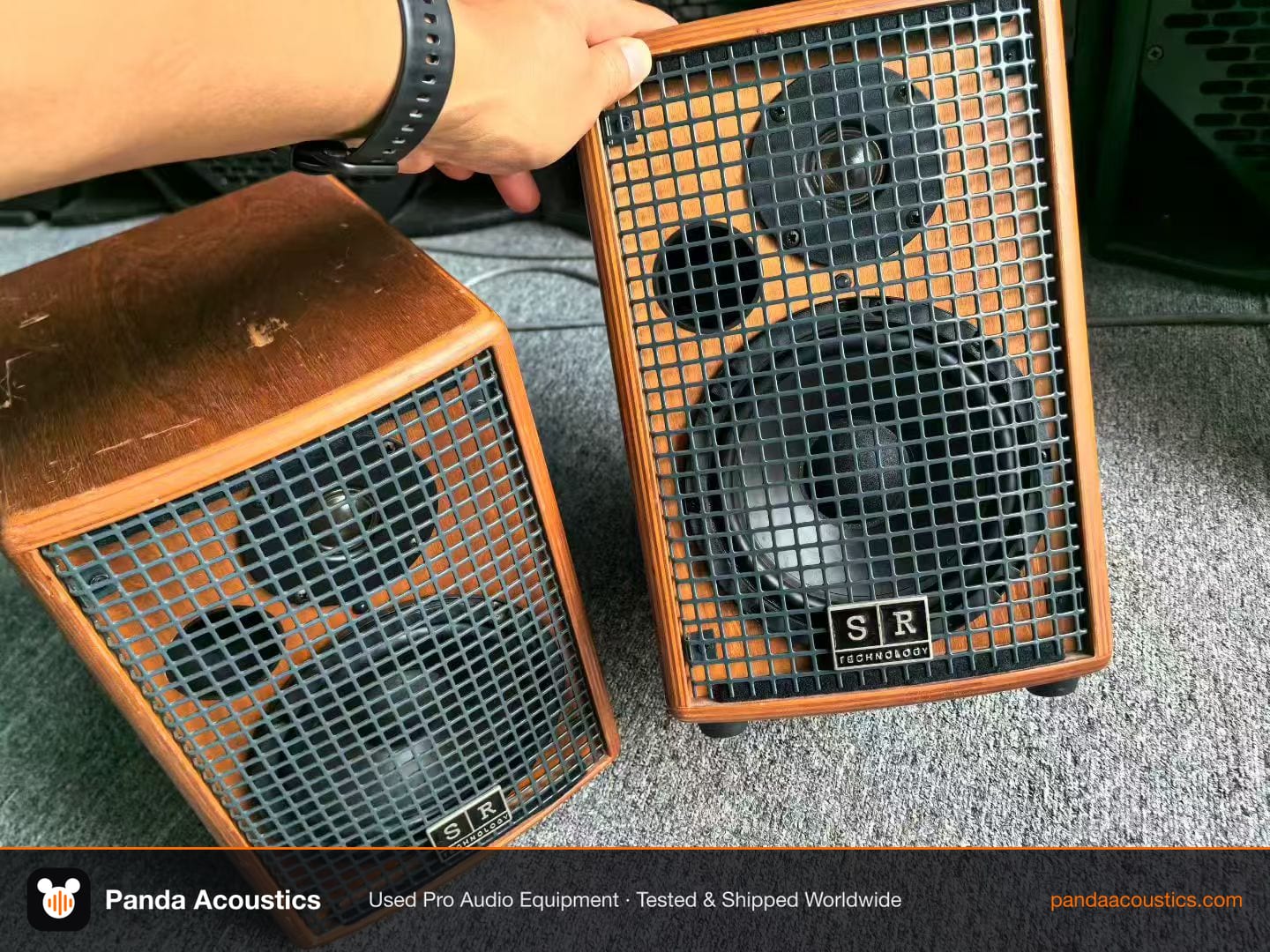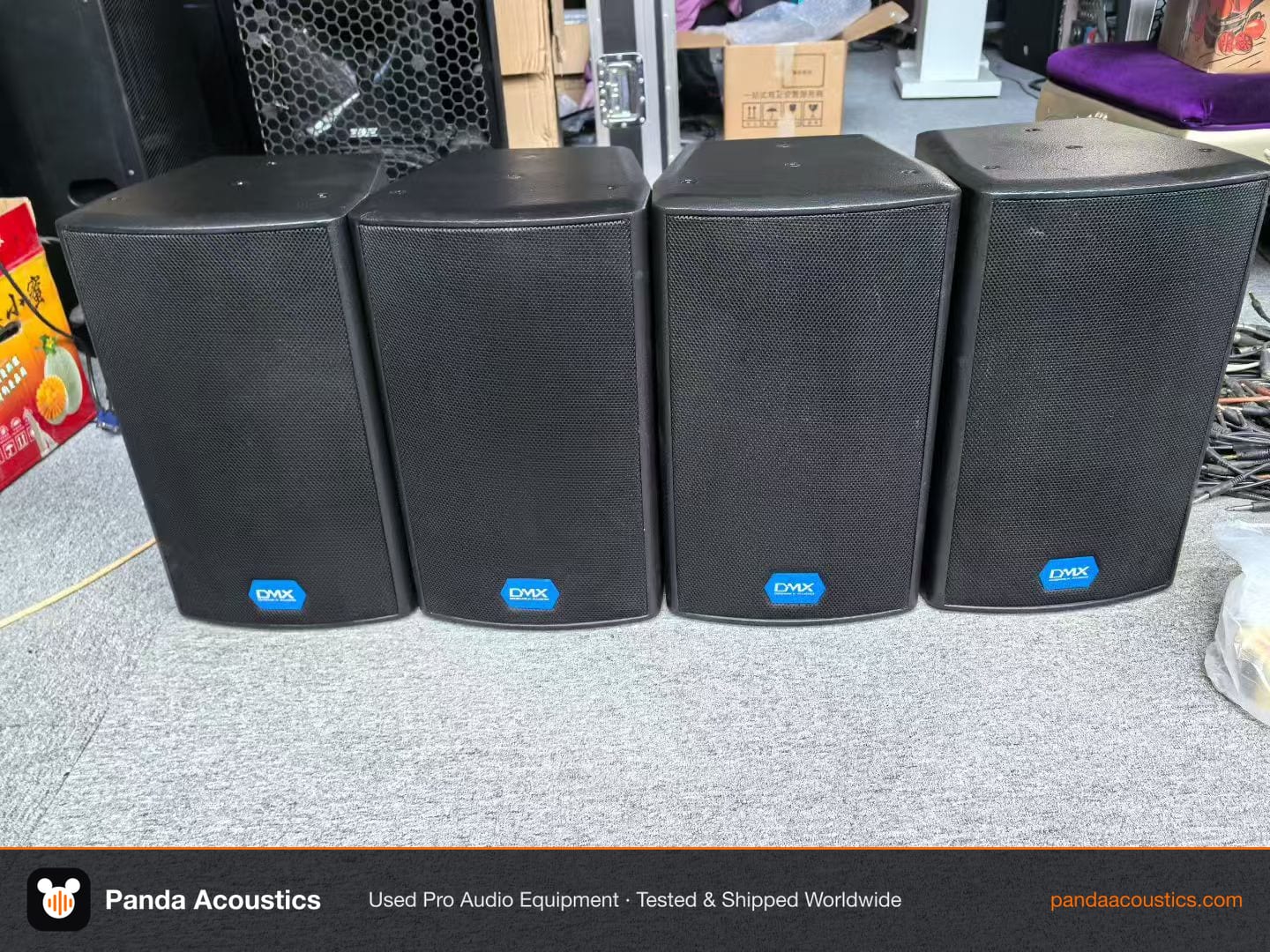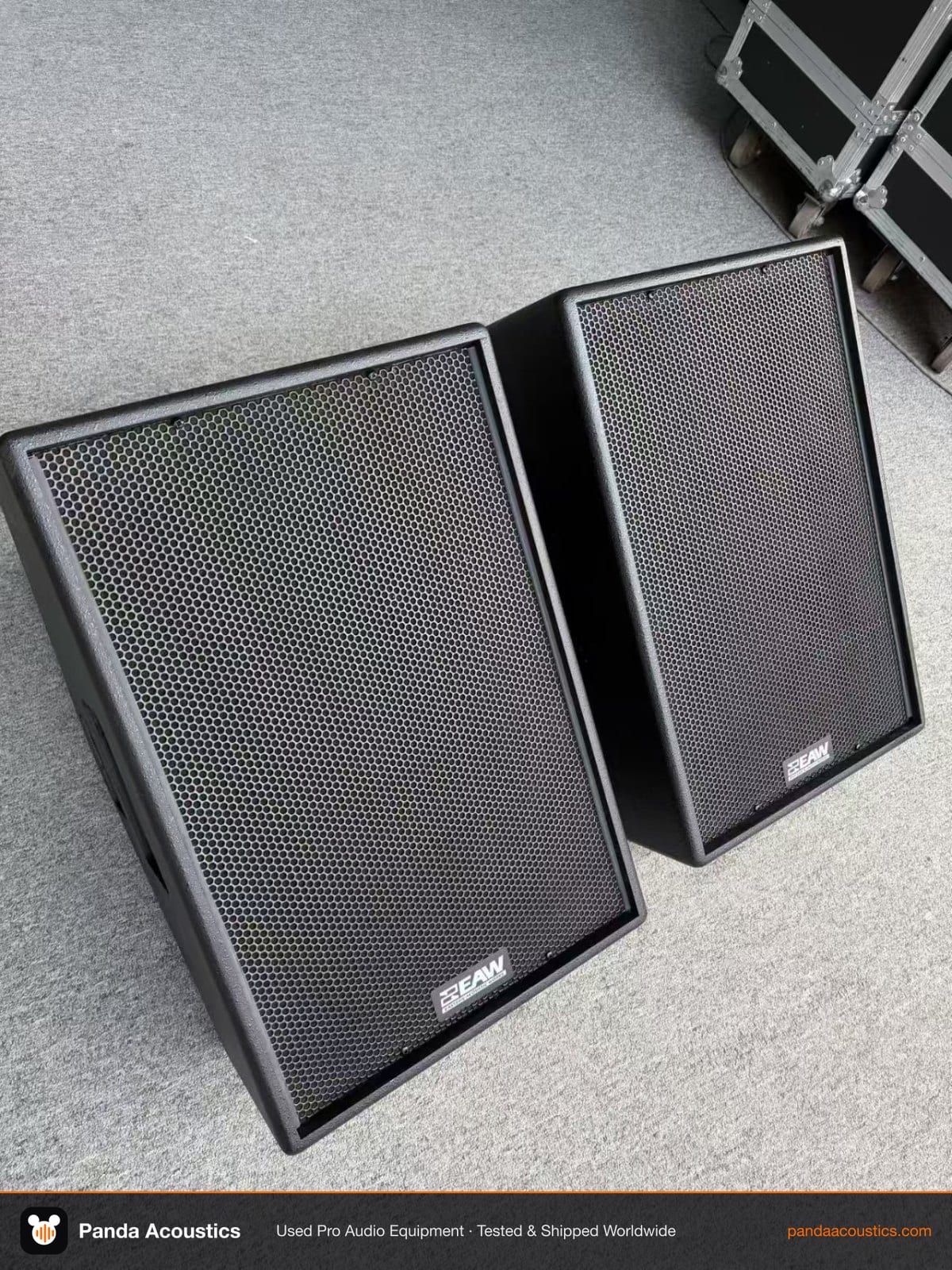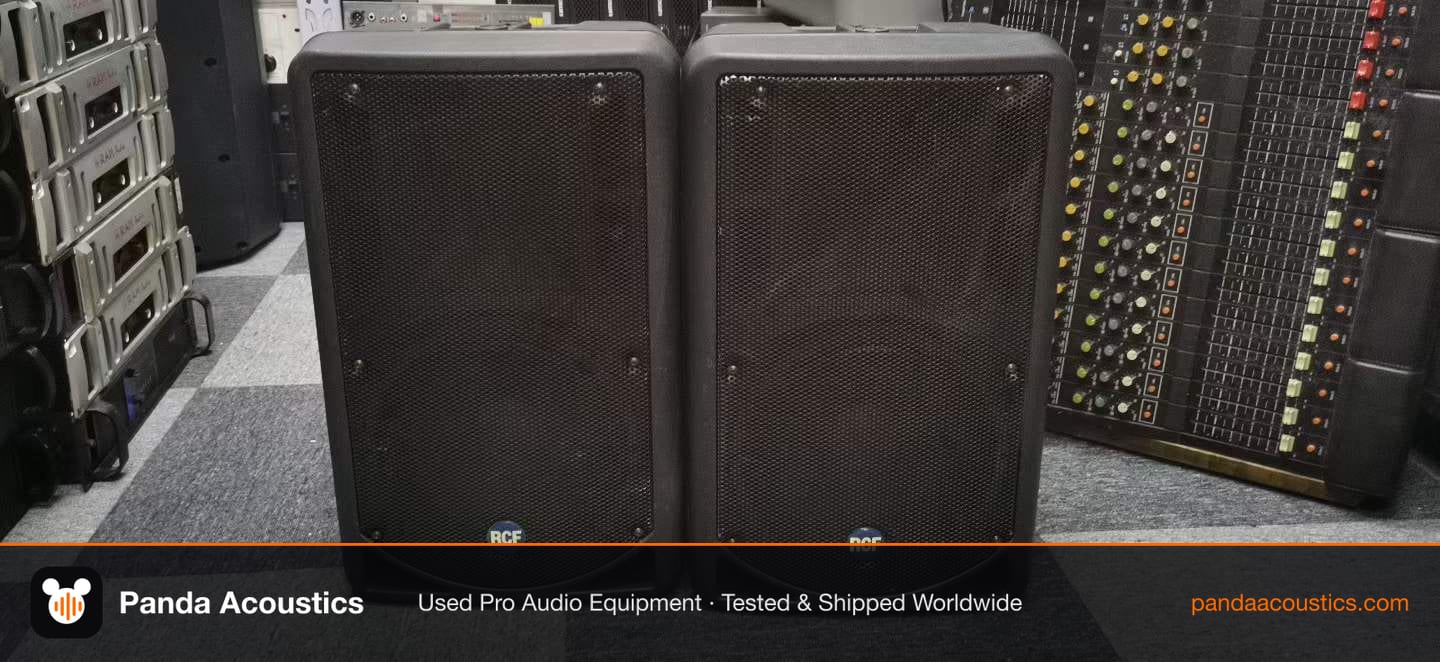
A used speaker inspection checklist should verify four things before payment: physical condition against a stated grade, driver and crossover part numbers against the model's documented specs, electrical readings (impedance and continuity), and serial or origin markings that confirm the unit is what the listing says. If the seller cannot supply those four items per unit, the lot is not verifiable and should not be bought in bulk.
Key takeaways
- Inspection must be model-specific: a JBL KP4010 is checked against 8 ohms and 2x speakON connectors, while a DAS RF-15.85 is checked against 400 W RMS, 8 Ω, and its M-30 HF driver and 15P LF driver.
- Ask for part-number evidence, not just photos: RCF ART 310A listings can be verified by the ND1411-M compression driver and ROYAL403 / ROYAL573 crossover capacitor codes.
- Condition grade must be stated in writing; a Grade A Barefoot Sound MicroMain27 pair is described as having minor dust and light handling wear, which sets the acceptable cosmetic baseline.
- Serial numbers and country of manufacture are inspection data points: the Dynaudio Acoustics BM5 carries serial 849635 and is made in Denmark; the JBL KP4010 is made in China.
- Budget range for this category is USD 200 to USD 1,500 per unit; individual listing prices are not published, so landed cost must be quoted before payment.
The decision
You are a KTV operator, touring sound company, rental house, bar or club buying used professional speakers in volume from China. You are not choosing between one used speaker and one new speaker; you are deciding whether a lot of units is consistent enough to deploy across rooms, stages or rental stock. The decision point is before payment, when you still have leverage to request inspection evidence, reject a unit, or renegotiate. After payment, cosmetic and electrical faults become your cost. The checklist below is built to force that evidence into the open while the seller still needs your order.
What the data says
The materials available for this category give concrete, checkable figures. Use them as the reference values during inspection.
- Dynaudio Acoustics BM5: nominal impedance 4 ohms, amplifier power 50–100 RMS watts, serial number 849635, made in Denmark.
- JBL CMX6403: impedance 8 ohms.
- Barefoot Sound MicroMain27: active studio monitor pair, XLR inputs, volume control, hand crafted in the USA, Grade A with minor dust and light handling wear.
- RCF ART 310A: compression driver ND1411-M ART 310A; crossover capacitors ROYAL403 20W 6.25J and ROYAL573 20W 2.5J.
- JBL KP4010: 8 ohms, KP4000 series, 2x speakON (IN / THRU), made in China.
- DAS RF-15.85: 400 W RMS, 8 Ω, 50 Hz–20 kHz, HF driver M-30 (70Wpgm, 8 ohms), LF driver 15P (400W), woofer 15SP, 2x Speakon (Input + Linked), made in Spain.
- Category price range: USD 200 to USD 1,500 per unit. Individual product prices are not published.
These figures are the inspection targets. If a unit is presented as an RCF ART 310A but the compression driver is not an ND1411-M, the unit is not what the listing claims. If a DAS RF-15.85 is offered but the HF driver is not an M-30, the same applies. Part numbers are harder to fake than cosmetics.
What the datasheet and docs don't tell you
Several critical facts are not disclosed in the materials and cannot be assumed. Treat each as Unknown until the seller provides written evidence.
- Test results per unit: the materials describe an inspection standard page but do not publish individual frequency-response, distortion, or power-handling test data for each unit. Unknown.
- Warranty period: Not disclosed. Do not assume any warranty exists.
- MOQ and lead time: Not disclosed for any product. Confirm in writing before planning deployment.
- Certification: No CE, RoHS, UL, FCC or ISO certification appears in the materials. Do not claim or assume it.
- Individual prices: Not published for any listed product. Only the category range of USD 200–1,500 per unit is available.
- Cosmetic grade consistency across a lot: Grade A is defined for the Barefoot pair as minor dust and light handling wear, but how that maps to a 50-unit lot is Unknown.
- History: Previous use environment, hours of operation, and repair history are Not disclosed.
Why this matters: a speaker can pass a visual check and still have a fatigued driver, a drifted crossover capacitor, or a repaired voice coil. Without per-unit electrical and acoustic evidence, you are buying cosmetic condition, not performance. For bulk buyers, one bad unit in ten is a rental failure and a reputation cost.
Who should not choose this
Do not buy used speakers from this channel if you need a manufacturer warranty, factory-sealed packaging, or certification documents for a tender or installation contract. The materials do not disclose a warranty period or any CE, RoHS, UL, FCC or ISO certification, so any project requiring those documents should source new or certified stock. Also do not buy if you cannot inspect part numbers and impedance before payment, or if your deployment requires identical cosmetic condition across a large lot and the seller will not confirm grade consistency in writing. If your business model depends on sub-renting to clients who demand documented compliance, used stock from this channel is the wrong fit.
Comparison and trade-offs
Within the materials, the trade-offs are between model types and verification effort, not between brands in the abstract.
- Passive vs active: The JBL KP4010 and DAS RF-15.85 are passive designs with speakON connectors and stated impedance (8 ohms and 8 Ω), so inspection focuses on driver part numbers and crossover components. The RCF ART 310A is an active two-way speaker, so inspection must also cover amplifier and crossover capacitor codes. The Barefoot Sound MicroMain27 is an active studio monitor pair with XLR inputs and a volume control, adding electronics to the checklist.
- Part-number verifiability: The RCF ART 310A and DAS RF-15.85 offer the most checkable internal references (ND1411-M driver; M-30 and 15P drivers). The JBL CMX6403 materials list only 8 ohms, so internal verification is weaker and you must rely more on physical and electrical checks.
- Origin and serial: The Dynaudio Acoustics BM5 (serial 849635, Denmark) and JBL KP4010 (China) give origin data points; the DAS RF-15.85 is made in Spain. Origin alone is not a condition indicator, but it helps confirm the unit matches the listing.
- Price positioning: All products sit inside the USD 200–1,500 per unit category range, but individual prices are not published, so you cannot compare value until you request quotes.
The trade-off is clear: models with more published internal part numbers are easier to verify and therefore lower-risk in bulk. Models with sparse published specs require more physical and electrical testing, which you must budget for.
Implementation and next step
Before paying, run this sequence and require written responses.
- Request the condition grade in writing and compare it to the condition grading standard.
- Ask for per-unit photos of driver part numbers: ND1411-M for RCF ART 310A; M-30 and 15P for DAS RF-15.85; serial 849635 for the Dynaudio Acoustics BM5 if that model is in the lot.
- Require an impedance reading per unit and compare it to the stated value (4 ohms for BM5, 8 ohms for CMX6403 and KP4010, 8 Ω for DAS RF-15.85).
- Ask for the inspection evidence described on the inspection standard page, and confirm what is tested versus what is only visually checked.
- Get a landed-cost quote covering freight and any import charges, since individual prices are not published and only the USD 200–1,500 per unit range is known.
- Confirm MOQ, lead time, and warranty status in writing; all are Not disclosed in the materials.
- Review the speaker category page to confirm which models are in stock before building the lot.
Concrete next step: send the seller a written request for the seven items above for each model in your intended lot, and do not release payment until every item is answered with a part number, a reading, or an explicit 'Not disclosed'.