When you are buying used subwoofers in volume, the condition of each unit directly affects your bottom line. Whether you run a KTV chain, a touring company, or a club, a failed subwoofer means lost revenue and unhappy clients. This guide walks you through the essential tests you can perform before money changes hands. No marketing fluff, just the checks that matter.
1. Visual Inspection: Look for the Obvious
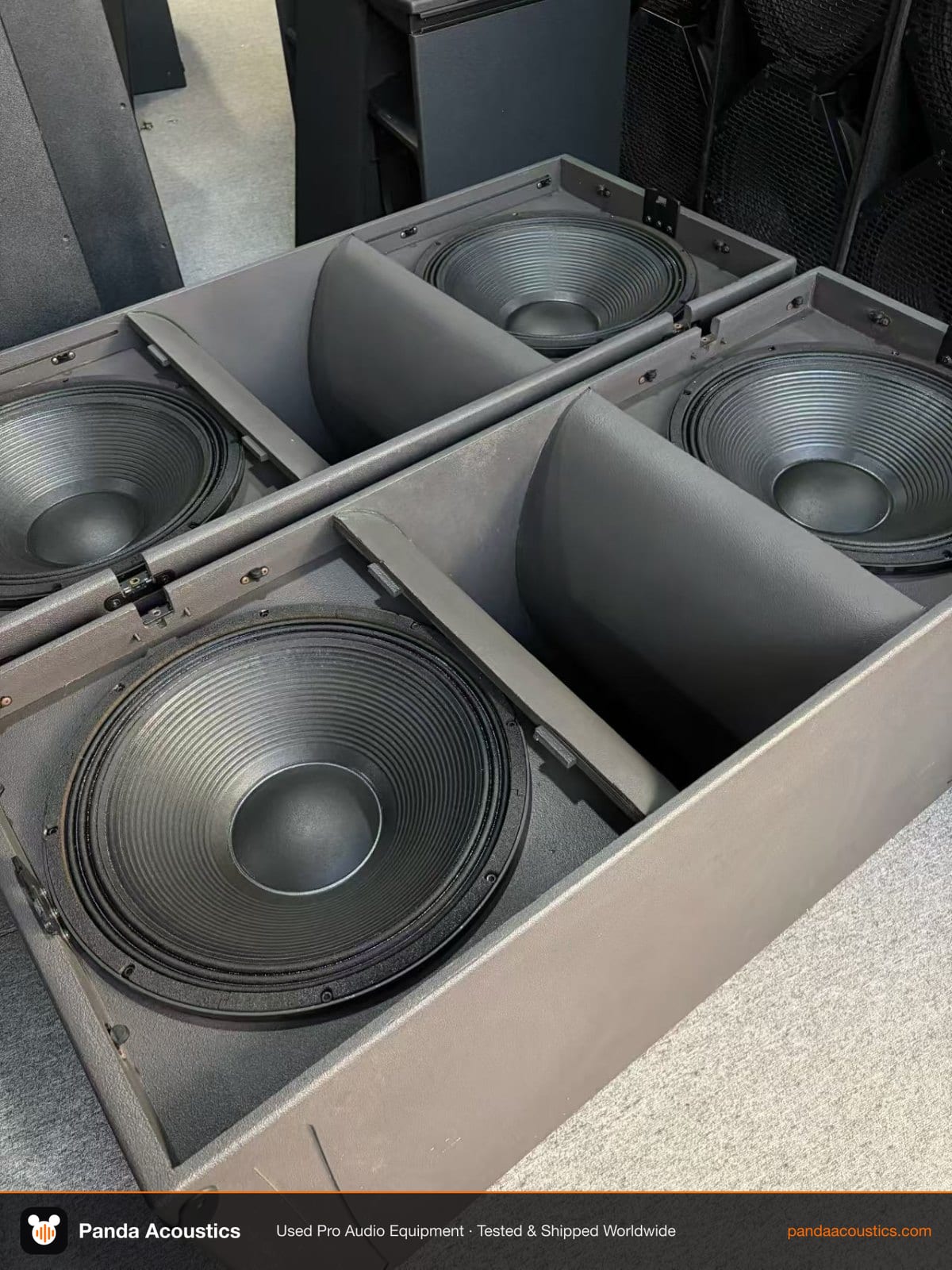
Start with a thorough visual inspection. Check the cabinet for cracks, deep gouges, or signs of water damage. Water exposure often leads to internal corrosion and driver failure. Look at the grille: if it is pushed in or missing, the driver may have been damaged. Inspect the cone for tears, creases, or separation from the surround. A repaired cone can work, but it may not handle full power. Also check the terminals and connectors for rust or looseness. On powered subwoofers, look at the amplifier panel for burn marks or a burnt smell. If the seller does not allow a visual inspection, walk away.
2. Check the Driver with a Multimeter
Bring a digital multimeter. Set it to measure resistance (ohms). Disconnect the subwoofer from any amplifier and touch the probes to the speaker terminals. You should read a DC resistance that is slightly lower than the nominal impedance. For example, an 8-ohm subwoofer typically reads between 5 and 7 ohms. A reading of 0 ohms indicates a shorted voice coil. A reading of infinite resistance (OL) means an open voice coil. Both are fatal. If the reading is significantly higher than expected, the voice coil may be damaged or corroded. This test takes seconds and can save you from buying a paperweight.
3. The Push Test: Listen for Rub and Rattle
Gently push the cone inward with your fingers, evenly on both sides. You should feel smooth resistance and hear no scraping or rubbing sounds. A scraping noise means the voice coil is rubbing against the magnet assembly, often due to a bent frame or shifted magnet. That subwoofer will fail soon. Also listen for a rattling sound, which could indicate loose internal parts or a damaged spider. Do this test on every subwoofer you consider. It is quick and requires no tools.
4. Play Real Program Material
If possible, connect the subwoofer to an amplifier and play music with heavy, continuous bass. Avoid test tones that are too short; you want to hear how the subwoofer handles sustained low frequencies. Listen for distortion, pops, or crackling. Distortion at moderate levels suggests the driver is damaged or the amplifier (on powered models) is failing. Also check for unusual mechanical noises, like a buzzing or ticking sound. If the subwoofer has a built-in amplifier, test all its controls and inputs. Make sure the crossover and phase adjustments work without noise.
5. Test at High Volume (If Allowed)
Many sellers will not let you crank a subwoofer to full power, but if they do, take advantage. Play a bass-heavy track at a level that would be typical for your application. Listen for any signs of stress. A healthy subwoofer should reproduce bass cleanly and without compression. If the sound becomes muddy or the subwoofer starts to bottom out, the driver may be worn. Be careful not to damage the subwoofer during testing; you are there to assess, not abuse. If the seller refuses any playback test, consider that a red flag.
6. Check the Cabinet and Ports
Inspect the cabinet for air leaks. A sealed subwoofer should not have gaps around the driver or terminals. For ported designs, check that the port is not blocked or damaged. A blocked port changes the tuning and can cause the driver to over-excursion. Also, knock on the cabinet; a dull thud may indicate internal bracing is loose. If the cabinet is made of cheap particle board, it may not survive touring. Professional-grade subwoofers like the L-Acoustics KS28 use robust materials, but even used units can have hidden damage.
7. Verify the Model and History
Ask the seller for the exact model number and, if available, the serial number. Research common failure points for that model. For example, some subwoofers are known for amplifier issues or cone failures. If the seller claims the subwoofer was recently reconed, ask for documentation. A reputable seller will provide it. Also, ask about the previous use: was it in a fixed install or on tour? Touring subwoofers may have more wear. If you are buying multiple units, test a sample from the batch, but ideally test each one. For high-value models like the L-Acoustics KS28, a thorough inspection is worth the time.
Testing used subwoofers is not complicated, but it requires patience and a systematic approach. By following these steps, you can avoid buying dead weight and ensure your investment delivers reliable low-end for years. If you need tested used subwoofers, explore our L-Acoustics KS28 and other options in our products section.